Middle East Tensions Escalate as Saudi-Led Coalition Strikes Houthi Targets
|
Getting your Trinity Audio player ready...
|
The Middle East is witnessing another period of heightened tension following reports of major military strikes against Houthi targets in Yemen, attacks and interception reports involving Gulf countries, and a maritime incident in the strategically important Strait of Hormuz.
The latest developments highlight the growing complexity of regional security conditions, where military operations, maritime threats, political tensions and diplomatic efforts are unfolding simultaneously.
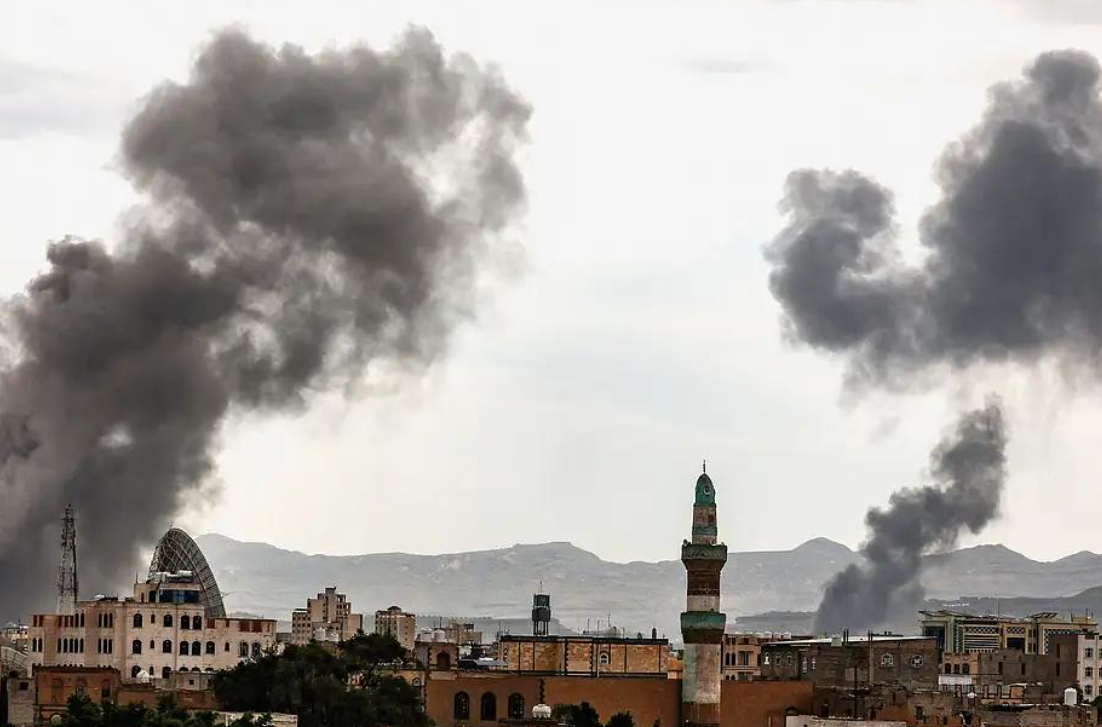
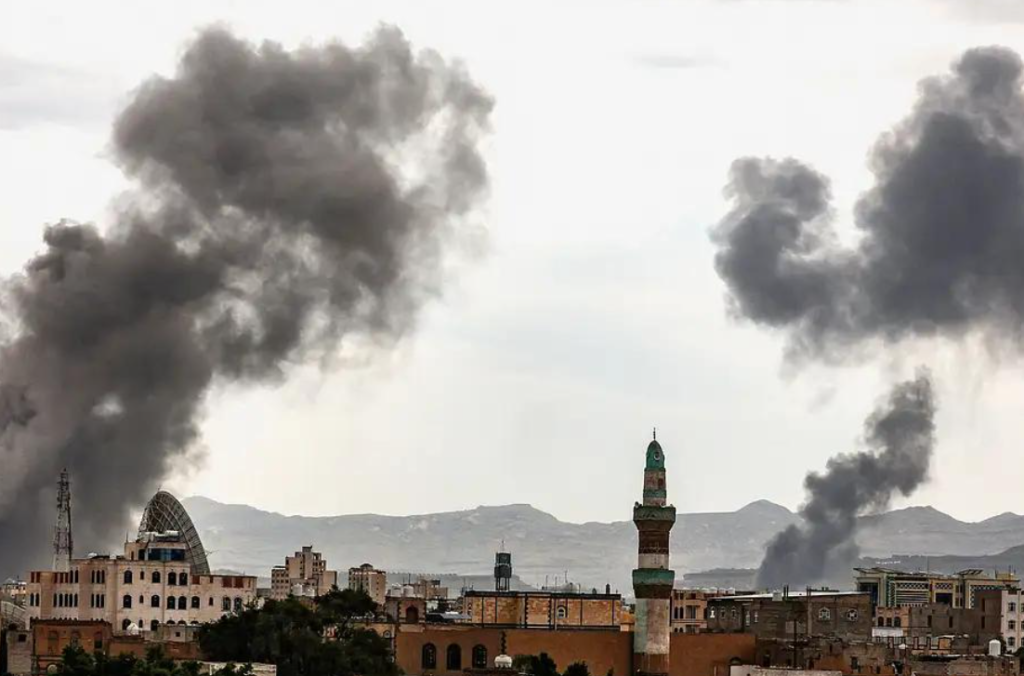
According to reports, the Saudi-led coalition announced that it had carried out a large-scale operation targeting military facilities associated with the Houthi movement in Yemen. The coalition reportedly said the operation focused on missile and drone capabilities, including facilities believed to be connected with the storage, production or deployment of weapons.
The Houthis, meanwhile, reported casualties following the strikes and accused the coalition of targeting facilities that included civilian locations. The competing claims underline the difficulty of independently assessing the full impact of military operations during an active conflict.
Saudi-Led Coalition Reports Major Military Operation
The Saudi-led coalition reportedly announced that its forces had targeted numerous locations across areas controlled by the Houthis. The reported targets included facilities associated with missiles, drones, storage infrastructure and military operations.
The coalition’s stated objective was to weaken the group’s ability to launch attacks and reduce the threat posed by its weapons capabilities.
Yemen has experienced years of conflict involving multiple political and military actors. The Houthi movement controls significant territory, including the capital Sanaa, while the internationally recognised Yemeni government and other forces have continued to operate in different parts of the country.
The conflict has also become connected to wider regional tensions, including relations between Saudi Arabia and Iran.
Reports of Casualties and Damage
The Houthis reported casualties following the airstrikes, including deaths and injuries at locations they described as industrial or civilian facilities.
The coalition, however, reportedly described its targets as military-related locations. Such conflicting accounts are common during active military operations, and independent verification can be difficult when access to affected areas is limited.
The humanitarian impact of the conflict remains a major concern. Yemen has faced years of economic hardship, displacement, food insecurity and damage to essential infrastructure.
Any further escalation could place additional pressure on civilians and humanitarian organisations operating in the country.
Missile and Drone Threats
The latest operation reportedly focused on reducing missile and drone capabilities associated with the Houthi movement.
Missiles and drones have become increasingly important in modern regional conflicts because they can threaten military installations, transportation infrastructure, shipping routes and population centres.
The ability to launch long-range or remotely operated weapons has created new security challenges for countries across the Middle East.
Regional governments have invested heavily in air defence systems, surveillance technology and interception capabilities. However, the threat remains difficult to eliminate completely, particularly when attacks involve multiple weapons or complex operational patterns.
Strait of Hormuz Maritime Incident Raises Concerns
Another major development involved a reported attack on a vessel transiting the Strait of Hormuz.
The waterway is one of the world’s most important maritime routes, connecting the Persian Gulf with the Gulf of Oman and the Arabian Sea. It is a critical passage for international energy transportation and commercial shipping.
Reports indicated that a vessel associated with the United Arab Emirates’ state energy sector was attacked, with injuries reported among crew members and one person reportedly missing.
The incident has raised renewed concerns about maritime security in the region.
The Strait of Hormuz is particularly sensitive because a substantial portion of international energy transportation passes through or near the waterway. Disruptions could affect shipping costs, insurance premiums, energy markets and international supply chains.
Iran and Gulf Security
The latest developments also involved reports of attacks or attempted attacks affecting Gulf countries, including Kuwait and Bahrain.
Iran reportedly claimed military action against facilities connected with US forces in the region. Gulf authorities, meanwhile, reported air-defence activity and condemned attacks that they said threatened their security.
The situation reflects the broader regional confrontation involving Iran, the United States, Israel and several Gulf states.
Military facilities in the region are strategically important because they support defence operations, logistics, surveillance and regional security partnerships.
Any attack affecting these facilities could increase tensions and potentially trigger further military responses.
The Wider Regional Conflict
The Middle East has experienced repeated cycles of escalation involving military strikes, retaliatory operations, maritime incidents and diplomatic initiatives.
The situation is complicated by the involvement of multiple actors, including state governments, armed groups and international military forces.
Yemen’s conflict is closely connected to regional rivalries. Saudi Arabia has supported forces opposing the Houthis, while Iran has been accused by regional governments of supporting the movement. The Houthis have repeatedly denied or disputed some of the accusations made against them.
The conflict’s broader implications extend beyond Yemen because of the strategic importance of the Red Sea, Bab el-Mandeb Strait and the Strait of Hormuz.
These waterways are critical for international trade, energy transportation and maritime logistics.
Impact on International Shipping
The increasing number of maritime security incidents could affect international shipping operations.
Shipping companies may need to reconsider routes, security arrangements and insurance coverage when operating through areas considered high risk.
A rise in maritime threats can lead to higher insurance costs and additional expenses for cargo operators. If ships are diverted to alternative routes, transportation times may increase and supply chains may face delays.
Energy markets may also respond to concerns about potential disruptions. The Strait of Hormuz is particularly important for crude oil and other energy products transported from Gulf countries to international markets.
Humanitarian Concerns
Yemen remains one of the world’s most challenging humanitarian environments. Years of conflict have affected infrastructure, healthcare, education, food distribution and access to basic services.
Escalating military operations could increase the number of displaced people and place additional pressure on humanitarian agencies.
International organisations have repeatedly called for civilian protection, access to humanitarian assistance and efforts to reduce violence.
The latest developments could make humanitarian operations more difficult if security conditions deteriorate or transportation routes become unsafe.
Diplomatic Efforts and the Risk of Escalation
Regional governments and international partners continue to face the challenge of balancing security concerns with diplomatic efforts to prevent a wider conflict.
Military operations may be intended to reduce immediate threats, but they can also increase the risk of retaliatory action.
The situation therefore requires careful monitoring, particularly because incidents involving missiles, drones, maritime vessels and military installations could rapidly influence regional security.
Diplomatic communication remains important to reduce the risk of miscalculation and prevent local incidents from developing into a broader confrontation.
What the Developments Mean for the Global Economy
The Middle East remains a crucial region for global energy markets and international trade. Any major disruption to shipping routes could affect oil prices, transportation costs and economic activity.
Businesses operating internationally may monitor developments closely because energy costs can influence manufacturing, transportation, agriculture and consumer prices.
Maritime security is also important for the global economy because goods moving between Asia, Europe and other markets frequently depend on major shipping routes in the region.
The longer regional tensions remain elevated, the greater the potential for economic uncertainty.
Conclusion
The latest developments in Yemen and the wider Gulf region demonstrate the continued volatility of Middle East security conditions.
The reported Saudi-led strikes against Houthi targets, maritime incident in the Strait of Hormuz and reports of attacks affecting Gulf countries have raised concerns about the possibility of further escalation.
While military operations may aim to reduce immediate security threats, the broader regional situation remains complicated by competing interests, long-running conflicts and strategic rivalries.
The international community will be watching closely for further military developments, diplomatic responses and possible changes in maritime security conditions.
The situation remains fluid, and additional information may emerge as authorities and international organisations continue to assess the latest incidents.