Air India AI-171 Crash Probe Nears Completion: Centre Tells Supreme Court, Seeks Two Weeks
|
Getting your Trinity Audio player ready...
|
The investigation into the June 12, 2025, Air India Flight AI-171 crash in Ahmedabad has entered its final stage, the Union government told the Supreme Court on November 18. Solicitor General Tushar Mehta, appearing for the Centre, informed a Bench headed by Chief Justice of India Surya Kant that investigators were nearing completion and requested two to three weeks before the matter was taken up again. The court agreed to list the petitions after approximately two weeks. The development was reported on November 19.
The update is significant because the crash killed 260 people and has been the subject of continuing questions about the investigation, the preliminary findings and the level of information being shared with victims’ families. Petitions before the Supreme Court seek an independent or court-monitored inquiry. The government, however, has maintained that the Aircraft Accident Investigation Bureau (AAIB) is the statutory authority responsible for conducting the technical investigation under Indian law and international aviation procedures.
The latest hearing also brought renewed attention to the timeline for the final report. The government had earlier informed the court that the draft final report was expected to be ready around October 2026. Petitioners have now pointed out that the report has not been made public. The Centre says the investigation is in its final stages and that international protocols must be followed before the process is completed
What happened on June 12, 2025?
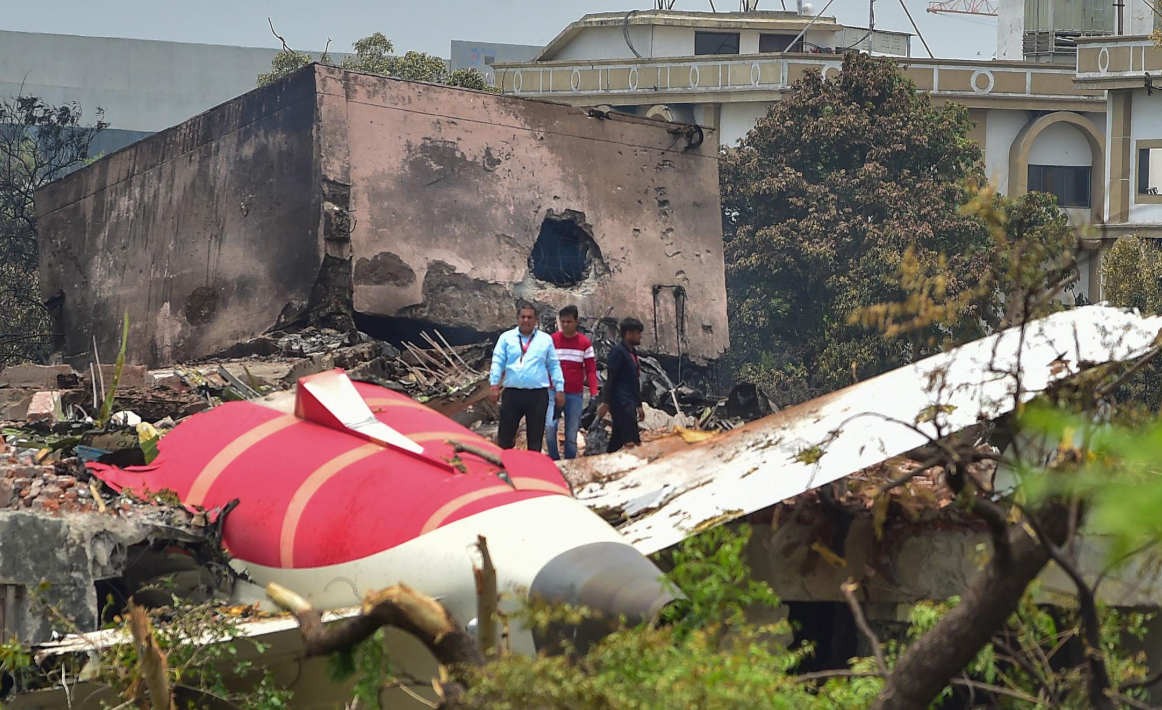
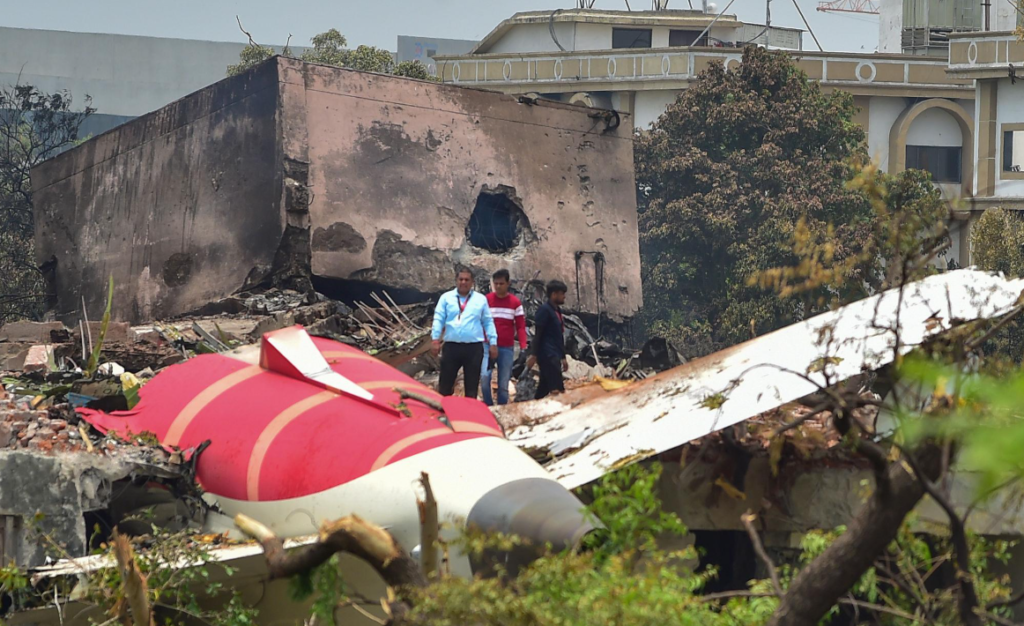
Air India Flight AI-171 was operating from Ahmedabad to London Gatwick on June 12, 2025. The aircraft was a Boeing 787 Dreamliner. It crashed shortly after taking off from Ahmedabad airport, striking a medical college hostel complex.
The accident was one of the most serious aviation disasters in India in recent years. There were 242 people on board. All but one of them died, bringing the number of fatalities among passengers and crew to 241. Nineteen people on the ground also lost their lives. The total death toll was therefore 260. Reuters+1
The two pilots, Captain Sumeet Sabharwal and First Officer Clive Kunder, were among those killed. The crash triggered rescue operations, recovery work, identification procedures and assistance for affected families. It also raised major questions about aircraft systems, flight operations, emergency procedures and aviation safety.
Who is conducting the investigation?
The technical investigation is being conducted by India’s Aircraft Accident Investigation Bureau, or AAIB. The bureau is responsible for investigating aircraft accidents and serious incidents. Its principal purpose is to establish the circumstances and technical causes of an accident and recommend measures that could prevent similar incidents in the future.
In its response to the Supreme Court, the AAIB said the investigation was being conducted in accordance with Indian law and Annex 13 of the International Civil Aviation Organization (ICAO). Since the aircraft was manufactured by Boeing and the flight was international, the investigation also involves procedures for technical participation and consultation with other countries.
International aviation investigations can involve the state where the accident occurred, the state of aircraft registration, the state of the operator and the states associated with the aircraft’s design and manufacture. In this case, the United States’ National Transportation Safety Board (NTSB) has a recognised technical role as the accredited representative of the state of design and manufacture.
This does not mean that another country is independently conducting the investigation. Rather, international rules provide for participation and technical input from relevant states so that the findings can be reviewed in accordance with established procedures.
What did the Centre tell the Supreme Court?
During the November 18 hearing, Solicitor General Tushar Mehta told the court that the investigation was at its “fag end”, indicating that it was nearing completion. He said there was no deliberate attempt to delay the process and argued that aviation accident investigations must follow international protocols.
The Centre requested two to three weeks. The Supreme Court agreed to list the matter after approximately two weeks. Advocate Prashant Bhushan, appearing for a petitioner, pointed out that the final report had not been made public and referred to the government’s earlier assurance that the AAIB’s draft final report was expected by October 2026
It is important to distinguish between the preparation of a draft report, circulation to participating states, consideration of technical comments and publication of the final report. These are separate stages. The government’s position is that the relevant international consultation and procedural requirements must be completed before the investigation is formally concluded.
Why was October mentioned as the expected timeline?
In July 2026, the AAIB informed the Supreme Court that the investigation activities were expected to be completed in approximately six weeks, subject to pending external dependencies. The bureau indicated that the draft final report could be ready around October 2026. The Centre also explained that the draft would have to be circulated to relevant participating states for significant and substantiated technical comments.
According to the government’s earlier explanation, the consultation process could take between 30 and 60 days, depending on the complexity of the comments received. The process is intended to allow relevant technical authorities to review factual and technical material before the final report is completed.
The draft report’s expected October timeline has passed without the final report being made public. This has led petitioners to question the delay and seek greater clarity about the progress of the investigation. The Centre’s latest statement that the probe is in its final stage is therefore an important development, although it does not itself establish a publication date for the final report.
What did the preliminary report reveal?
The preliminary investigation report contained important information about the aircraft’s engine fuel-control switches. According to the preliminary findings, shortly after take-off, the fuel-control switches for both engines moved from the “RUN” position to the “CUTOFF” position. This interrupted the supply of fuel to the engines.
The preliminary report also referred to cockpit voice recordings. According to the reported account, one pilot asked the other why the fuel had been cut off, while the other pilot denied doing so. The preliminary information did not establish which pilot was speaking in each part of the exchange.
These details are important, but they should not be treated as a complete explanation of the accident. A preliminary report records information available at an early stage of the investigation. The final report must assess why the switches changed position, whether a technical malfunction or another factor was involved, and how the aircraft’s systems and operating conditions contributed to the sequence of events.
The AAIB has also urged caution against premature conclusions while the investigation remains underway. In February 2026, the bureau clarified that reports suggesting the investigation had already been finalised were speculative and that no final conclusions had been reached at that time.
Has the investigation blamed the pilots?
No final finding of responsibility should be inferred from the preliminary report. The fact that the fuel-control switches changed position is a technical observation that requires further examination. It does not, by itself, establish why the switches moved or who, if anyone, caused the change.
The father of Captain Sumeet Sabharwal, Pushkar Raj Sabharwal, has raised concerns about the investigation and the public discussion that followed the preliminary findings. He has sought an independent and court-monitored inquiry, arguing that the circumstances of the accident must be established fairly and transparently.
The issue of public speculation has also been raised in court. In July, the AAIB informed the Supreme Court that media narratives attributing blame to the pilots had made some witnesses restrictive and less responsive during the investigation.
This is why the distinction between technical investigation and the determination of legal responsibility is important. An aviation safety report is intended to establish what happened and how future accidents can be prevented. It is not, by itself, a criminal judgment or a finding of civil liability.
Why have petitioners demanded an independent investigation?
Petitions before the Supreme Court include requests for an independent or court-monitored investigation into the crash. The petitioners include the father of the deceased pilot and the NGO Safety Matters Foundation. They have argued that the investigation must be fair, transparent and technically robust.
The Supreme Court will have to consider the legal and procedural questions raised by the petitions while assessing the status of the ongoing investigation.
The black box and cockpit recording debate
The aircraft’s flight recorders, commonly referred to as the black box, are among the most important sources of evidence in an aviation accident investigation. The Flight Data Recorder captures technical information about the aircraft’s operation, while the Cockpit Voice Recorder records cockpit conversations and sounds.
These recordings can help investigators reconstruct the sequence of events before an accident. They may provide information about aircraft speed, altitude, engine performance, system warnings, control inputs and communications between the pilots.
The AAIB has told the Supreme Court that sensitive cockpit voice recordings, transcripts and other protected investigative material cannot simply be disclosed to external committees or the public. It has referred to confidentiality requirements under the Aircraft (Investigation of Accidents and Incidents) Rules, 2025.
Some families of the victims have demanded greater access to black box information and cockpit voice recorder transcripts. They have also sought a permanent memorial at the crash site.
The issue involves a balance between transparency and the protection of sensitive investigative material. Publishing a final report does not necessarily mean that every raw recording, transcript or confidential witness statement must be made public. The investigation must comply with the applicable rules while providing a clear account of the findings and safety recommendations.
Why does an international investigation take time?
An aircraft accident investigation is technically complex. Investigators may need to examine the wreckage, engines, flight-control systems, electrical components, maintenance records, air traffic control communications, weather information and operational procedures.
The investigation may also involve specialists from the aircraft manufacturer, engine manufacturer and relevant national authorities. Technical findings need to be checked against physical evidence and recorded data.
Under the ICAO framework, other states with recognised connections to the aircraft can participate through accredited representatives and technical advisers. The United States’ NTSB has a role in this case because the aircraft was designed and manufactured in the United States. The government has previously told the Supreme Court that the draft report must be shared with relevant participants for technical comments.
The purpose of this process is to improve the accuracy and completeness of the investigation. It is not intended to replace the Indian investigation authority but to ensure that the relevant technical perspectives are considered.
What questions should the final report answer?
The final report is expected to provide a more complete explanation of several important issues:
- Why did the fuel-control switches for both engines move from “RUN” to “CUTOFF” shortly after take-off?
- Was there a technical, electrical or systems-related malfunction?
- What warnings and indications were available in the cockpit, and how were they handled?
- Did aircraft maintenance, inspection or pre-flight procedures reveal any relevant issues?
- Were there operational or air traffic control factors that contributed to the sequence of events?
- What safety recommendations should be made to prevent similar accidents?
These questions cannot be answered reliably through speculation. They require a detailed assessment of flight recorder data, technical examinations, witness statements and other evidence gathered during the investigation.
Why the report matters to victims’ families
The crash killed 260 people, leaving families across different communities and countries dealing with a major loss. For these families, the investigation is not simply a technical exercise. They want to understand what happened, why the aircraft crashed and what steps will be taken to prevent another tragedy.
Some representatives of victims’ families have sought greater transparency, access to black box information and a permanent memorial at the crash site.
Conclusion: The Air India AI-171 investigation has reached a significant stage, with the Centre telling the Supreme Court that the probe is close to completion and requesting additional time. However, the exact cause of the crash, the role of technical or operational factors and the final safety recommendations will only become clearer after the AAIB completes its investigation and issues its final report. Until then, no individual or organisation should be treated as having been conclusively responsible for the disaster.