India–ASEAN Relations: PM Modi Proposes Free E-Visas
|
Getting your Trinity Audio player ready...
|
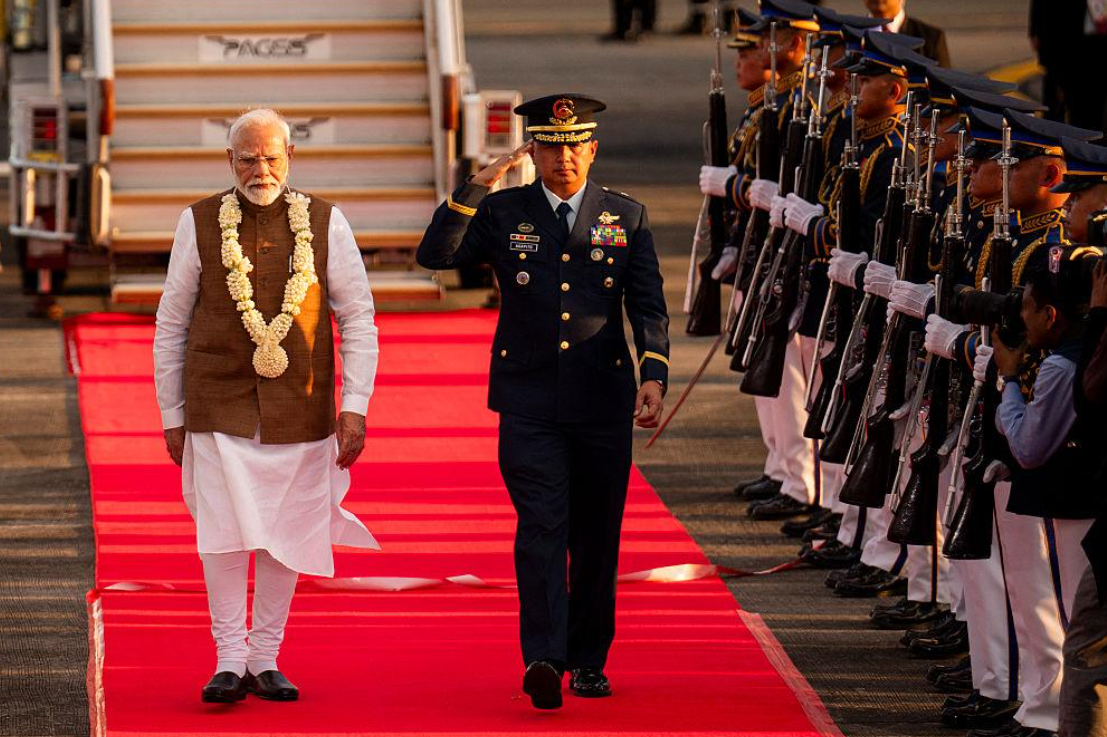
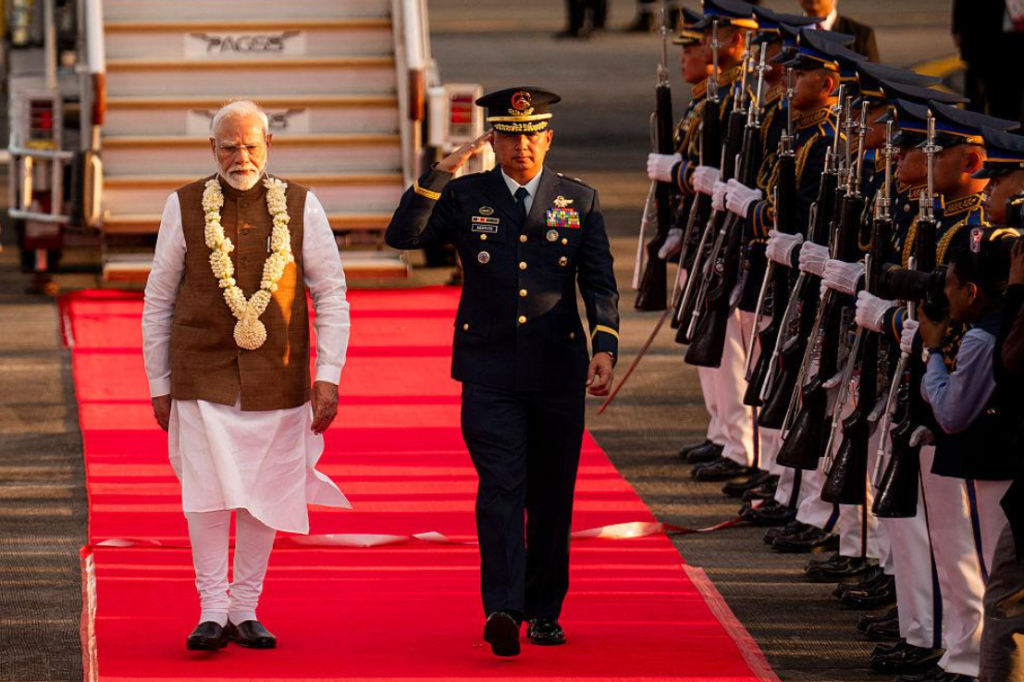
New Delhi/Manila, November 18, 2026: Prime Minister Narendra Modi has proposed several initiatives aimed at strengthening India’s strategic, economic, and diplomatic relations with Southeast Asian countries during the ASEAN-India Summit in Manila. The proposals include free electronic visas for ASEAN citizens visiting India, stronger maritime cooperation, joint cybercrime training, collaboration in critical minerals, technical exchanges in nuclear energy, cooperation in space-related fields and initiatives focused on youth and education.
The proposals are being viewed as part of India’s broader effort to strengthen its partnership with ASEAN countries amid changing regional strategic dynamics. India and ASEAN collectively represent a major economic region with a large population, growing markets, important maritime routes, and significant opportunities for trade, investment, tourism, and technology cooperation.
he initiatives discussed during the summit are not limited to diplomatic engagement. They aim to expand people-to-people contact, improve economic connectivity, strengthen regional security and create new opportunities in emerging sectors.
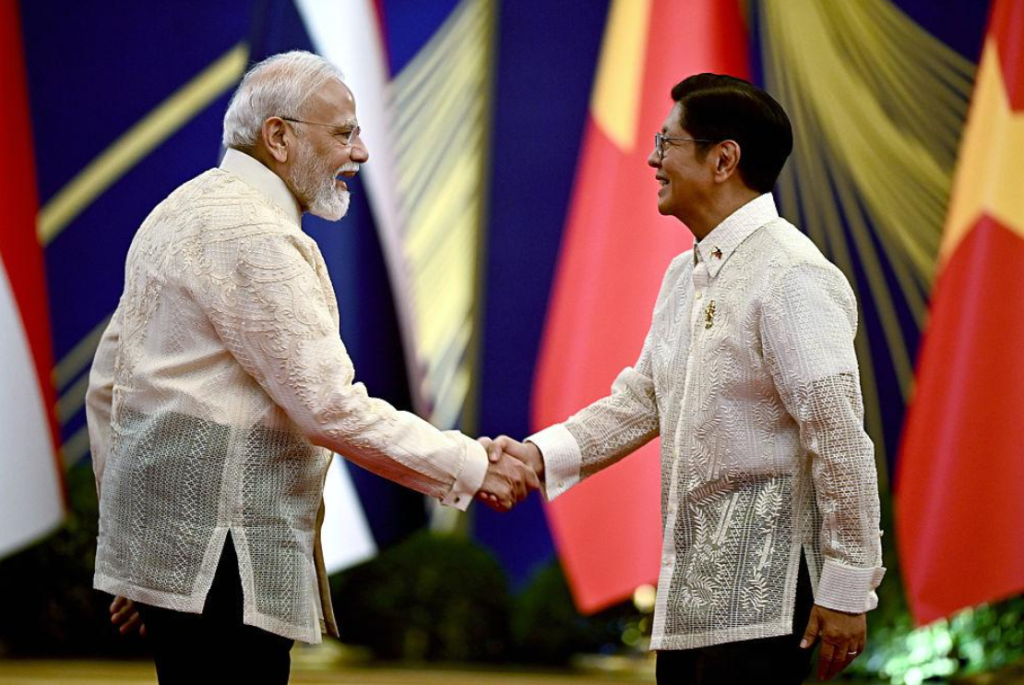
Prime Minister Modi emphasised the importance of cooperation between India and ASEAN countries and highlighted the need to strengthen partnerships in areas such as tourism, maritime security, digital technology, education, energy and youth engagement.
Free E-Visas for ASEAN Citizens
One of the major proposals presented during the summit is the initiative to provide free electronic visas to tourists from ASEAN countries visiting India.
The proposal aims to make travel to India easier for visitors from Southeast Asia and encourage tourism between the two regions. India has a wide range of tourism destinations, including religious sites, historical monuments, cultural centres, natural landscapes, medical tourism facilities and spiritual destinations.
ASEAN countries also have historical and cultural connections with India. The influence of Indian traditions, Buddhism, Hindu cultural links, historical trade routes and maritime exchanges has contributed to long-standing relations between India and several Southeast Asian countries.
If implemented, the free e-visa initiative could make the travel process more convenient for visitors. It could potentially benefit airlines, hotels, tourism companies, local transport operators, travel guides and businesses connected with the tourism industry.
However, the actual implementation of the proposal would depend on the eligibility rules, visa procedures, government arrangements and official guidelines announced in the future.
Long-Term Maritime Cooperation Plan
Maritime cooperation was another important area highlighted during the summit. Prime Minister Modi proposed strengthening maritime cooperation between India and ASEAN through a long-term partnership plan.
The proposed cooperation may include maritime connectivity, scientific research, disaster management, Coast Guard coordination, maritime safety, environmental protection and cooperation in monitoring activities across maritime regions.
The Indo-Pacific region is strategically important for global trade. Large quantities of energy, industrial goods and commercial products are transported through important sea routes in this region.
India’s geographical position gives it a significant role in the Indian Ocean region. Stronger maritime cooperation with ASEAN countries could improve regional connectivity, maritime security and coordination during emergencies.
Cooperation in maritime research, environmental monitoring and disaster response could also help countries respond more effectively to natural disasters, maritime accidents and other emergencies.
Joint Training to Fight Cybercrime
With the rapid growth of digital technology, cybercrime has become a major security challenge for governments, businesses and individuals. Online fraud, financial scams, identity theft, cyberattacks and data breaches are increasingly affecting people across international borders.
The proposed ASEAN-India Cyber Forensics Training Programme aims to improve cooperation in investigating cybercrime and strengthen the technical capabilities of law enforcement agencies.
Cyber forensics involves the scientific examination of digital devices, computers, mobile phones, servers, networks and other digital evidence. Such evidence can play a crucial role in modern criminal investigations.
Joint training programmes could help investigators and technical experts share knowledge, improve investigative techniques and develop stronger capabilities to analyse digital evidence.
International cooperation is particularly important in cybercrime cases because criminals may operate from different countries and use international networks to carry out illegal activities.
Cooperation in Critical Minerals
India and ASEAN countries are also expected to explore greater cooperation in mining and critical minerals.
Critical minerals are increasingly important for modern industries. They are used in electronics, electric vehicles, batteries, energy storage systems, defence equipment, semiconductors and several other technology-related industries.
The global supply chains for these minerals are often dependent on multiple countries. Disruptions in production, exports or transportation can affect industries across the world.
Cooperation between India and ASEAN could create opportunities in resource identification, technological development, investment, mineral processing, supply-chain management and industrial partnerships.
Such cooperation could help both regions strengthen their economic resilience and reduce supply-chain vulnerabilities.
Nuclear Energy Technical Exchanges
The summit also included a proposal for ASEAN-India technical exchanges in nuclear energy.
The initiative could focus on scientific cooperation, technical knowledge-sharing, research, training and discussions on nuclear energy technology.
As countries look for reliable and cleaner energy sources to meet growing energy demand, nuclear energy remains an important part of the energy discussion in several nations.
Technical exchanges could provide opportunities for experts to share knowledge and experiences. Any cooperation in this field would need to follow relevant safety regulations, technical standards and national policies.
Youth Cooperation and Start-up Opportunities
India and ASEAN are also looking to strengthen youth engagement through initiatives such as Youth Summits, Young Parliamentarian Exchanges and Start-up Hackathons.
Young people play an increasingly important role in digital economies, entrepreneurship, innovation and technological development.
Youth programmes could provide opportunities for students, entrepreneurs, researchers and young professionals to interact, exchange ideas and develop international partnerships.
Start-up hackathons could encourage participants to develop solutions to real-world challenges, explore new technologies and build innovative business ideas.
India’s start-up ecosystem has expanded significantly, while several ASEAN countries are also developing rapidly in the fields of technology and digital entrepreneurship.
Greater cooperation between young entrepreneurs from both regions could create opportunities for investment, joint projects and new business partnerships.
Scholarships for ASEAN Students at Nalanda University
Another proposal involves expanding scholarship opportunities for ASEAN students at Nalanda University.
Educational exchanges can strengthen long-term relationships between countries by creating academic, cultural and professional connections.
Students studying in another country gain access to new academic opportunities, research facilities, cultural experiences and professional networks.
Nalanda University has historical significance as an important centre of education and knowledge in Asia. In the modern context, it can serve as a platform for strengthening regional educational cooperation.
Scholarship programmes and student exchanges could help improve academic collaboration and encourage greater cultural understanding between India and ASEAN countries.
Creative Partnership Pavilion at WAVES 2027
India and ASEAN are also expected to explore creative cooperation through a Creative Partnership Pavilion at WAVES 2027.
Creative industries include film, music, entertainment, digital content, gaming, design, media and other cultural sectors.
India has a large entertainment and creative industry, while ASEAN countries also have growing creative economies.
Joint programmes could create opportunities for artists, filmmakers, producers, designers, media professionals and technology experts to collaborate.
Such partnerships could help strengthen cultural relations while also creating new opportunities for the creative economy.
The Broader Importance of India–ASEAN Cooperation
India and ASEAN have longstanding cultural, economic, historical and strategic relations.
Their cooperation has traditionally included trade, tourism, maritime connectivity, cultural exchanges and diplomatic engagement. In the modern era, regional security, digital technology, cybercrime, energy, critical minerals, climate change and maritime trade have become increasingly important areas for cooperation.
The proposals discussed during the summit aim to make the partnership more comprehensive and future-oriented.
If implemented effectively, these initiatives could create new opportunities in tourism, education, cybersecurity, investment, research, trade and entrepreneurship.
What Happens Next?
The next stage will involve the implementation of the proposals, the development of relevant programmes and the announcement of timelines and guidelines.
The benefits of initiatives such as free e-visas, maritime cooperation, cyber training and educational exchanges will depend on how effectively they are converted into practical programmes.
India and ASEAN’s future partnership will largely depend on the ability of both sides to translate the announcements into concrete projects and long-term cooperation.
The proposals presented during the Manila summit could potentially provide a new direction to India–ASEAN relations and strengthen cooperation across several strategic and economic sectors.