Bhutan Glacier Lake Burst Triggers Flash Flood Threat in Assam and West Bengal; Thousands Evacuated
|
Getting your Trinity Audio player ready...
|
hutan/India, October 30, 2026: A sudden glacial lake outburst in Bhutan has triggered a major flash flood situation, raising concerns across India’s northeastern and eastern regions. Authorities in Assam and West Bengal have issued flood alerts in vulnerable areas, fearing a possible rise in water levels in rivers flowing from Bhutan into India.
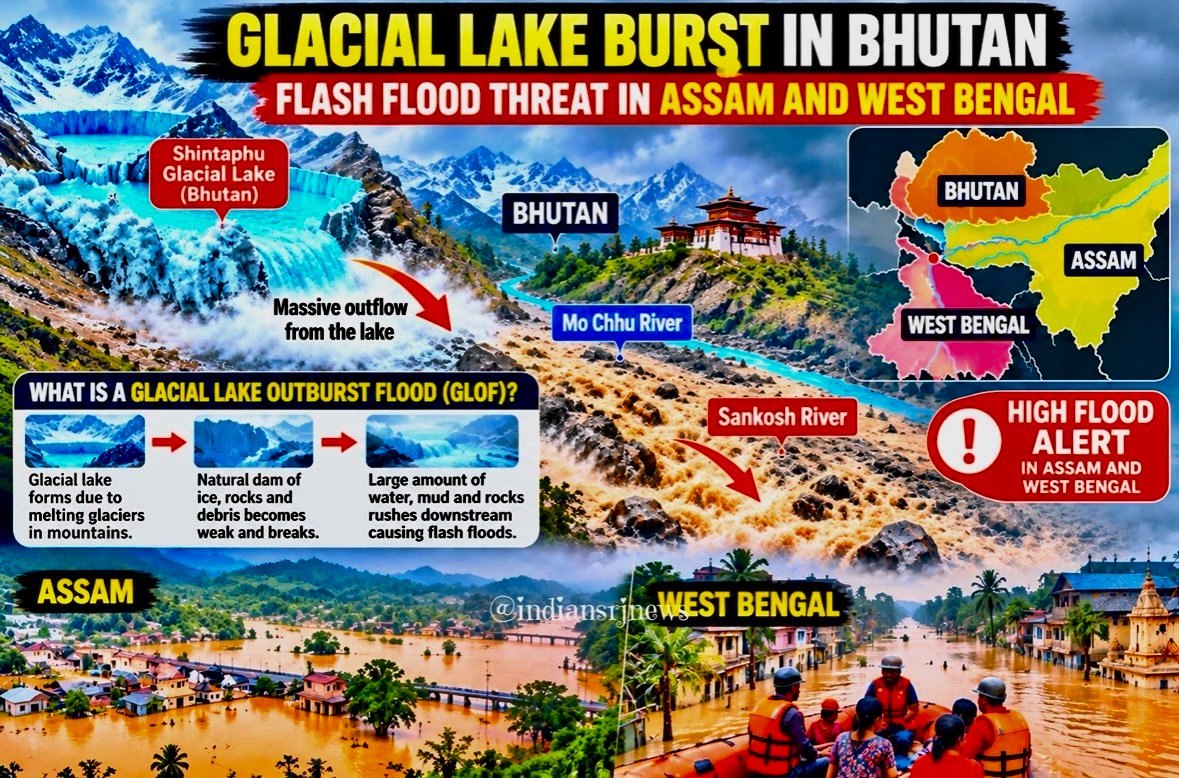
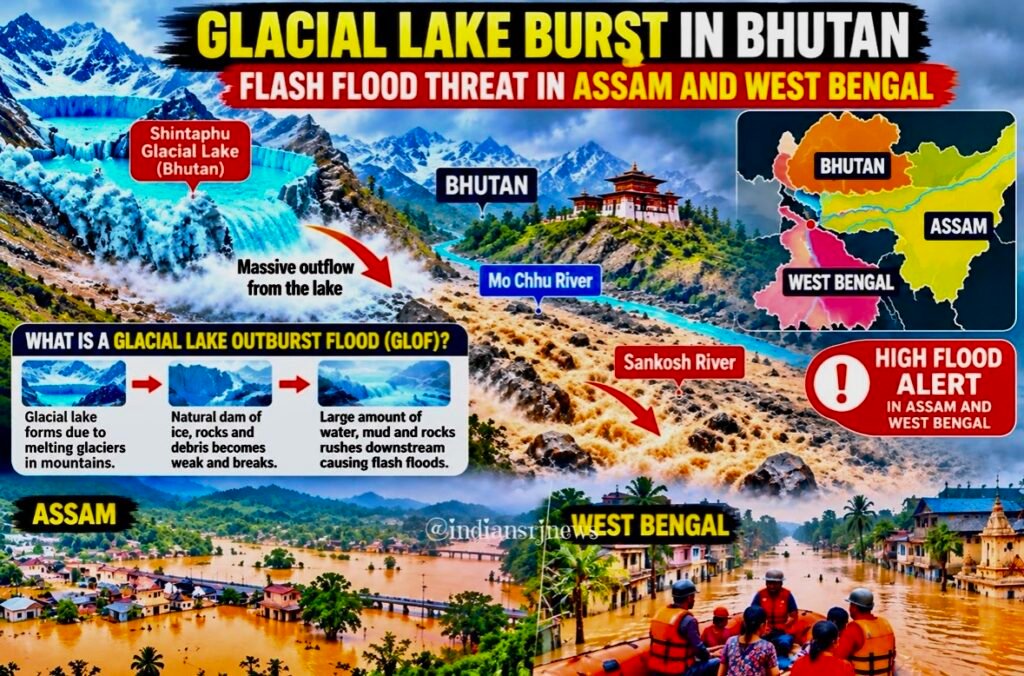
According to preliminary reports, the incident occurred at Shintaphu Glacial Lake in Bhutan’s Gasa district. A massive volume of water reportedly rushed out of the lake, creating strong downstream currents and raising concerns about flooding in nearby areas.
The incident has also increased concerns in India’s border regions, particularly in parts of Assam and North Bengal.
What Happened in Bhutan?
A glacial lake outburst flood was reported in Bhutan’s Gasa district on Thursday evening. The phenomenon is known as a Glacial Lake Outburst Flood (GLOF).
Initial reports indicate that approximately 7.4 million cubic metres of water were released from the lake.
The powerful water flow reportedly carried mud, rocks and debris downstream, damaging infrastructure in its path.
The Gasa Tshachu hot spring complex, a popular tourist destination, reportedly suffered significant damage, with several facilities washed away.
Parts of the Punakha-Gasa Highway were also reportedly affected by debris and disrupted road connectivity.
According to preliminary information, evacuation measures were taken before the situation worsened, and no fatalities were initially reported in Bhutan.
Why Are Assam and West Bengal at Risk?
The biggest concern following the glacial lake outburst is the possibility of floodwater reaching downstream areas in India.
The water is moving through the Mo Chhu river system and towards the Sankosh River basin.
The Sankosh River is important for several areas along the Assam-West Bengal border. A sudden increase in its water level could threaten nearby villages, agricultural land and low-lying settlements.
Authorities have increased monitoring in vulnerable areas of North Bengal, including Alipurduar, Jalpaiguri and Cooch Behar. In Assam, the Dhubri district is also being monitored due to the potential flood threat.
Thousands of People Moved to Safer Locations
Authorities in West Bengal have reportedly started relocating people living near rivers and other vulnerable areas as a precautionary measure.
According to preliminary reports, around 4,000 to 5,000 people have been moved to relief camps in North Bengal, while information about more than 6,000 people being shifted to safer locations has also emerged.
Residents living near the Sankosh River and its tributaries have been advised to stay away from riverbanks.
Disaster management teams and the National Disaster Response Force (NDRF) have been placed on alert to respond to any emergency.
Authorities are continuously monitoring river water levels and flow conditions to ensure that rescue and relief operations can begin immediately if required.
Shintaphu Among Bhutan’s Potentially Dangerous Glacial Lakes
Shintaphu is reportedly among Bhutan’s glacial lakes identified as potentially hazardous.
Bhutan has approximately 567 glacial lakes, of which 17 have been classified as potentially dangerous.
Glacial lakes form when melting glaciers release water that accumulates in natural depressions in mountainous regions. These lakes are often held back by natural barriers made of ice, rocks and debris.
When these natural barriers weaken or collapse, large volumes of water can suddenly rush downstream.
This phenomenon is known as a Glacial Lake Outburst Flood (GLOF).
Such floods can be particularly dangerous because they carry enormous amounts of water, mud, rocks and other debris, causing extensive destruction along their path.
Climate Change Is Increasing the Risk
Experts have warned that rising temperatures and the rapid melting of glaciers are changing the Himalayan landscape.
As glaciers melt, some glacial lakes expand, increasing pressure on natural barriers and potentially raising the risk of sudden lake outbursts.
These events can cause severe damage not only in mountainous regions but also in downstream settlements and low-lying areas.
The latest incident in Bhutan has once again highlighted the growing risks associated with glacial lakes in the Himalayan region and the vulnerability of neighbouring Indian states.
Authorities Closely Monitoring the Situation
Following the glacial lake outburst in Bhutan, authorities in both Bhutan and India are closely monitoring the situation.
In Assam and West Bengal, disaster management agencies have increased preparedness in potentially affected areas.
The immediate priority is to monitor the water levels of the Sankosh River and ensure the safety of people living in vulnerable locations.
Residents have been advised not to spread or believe unverified information and to follow official instructions issued by local administrations and disaster management authorities.
Disclaimer: This report is based on preliminary information available as of October 30, 2026. Details regarding affected areas, water levels, evacuation figures, and damage may change as further official updates become available.