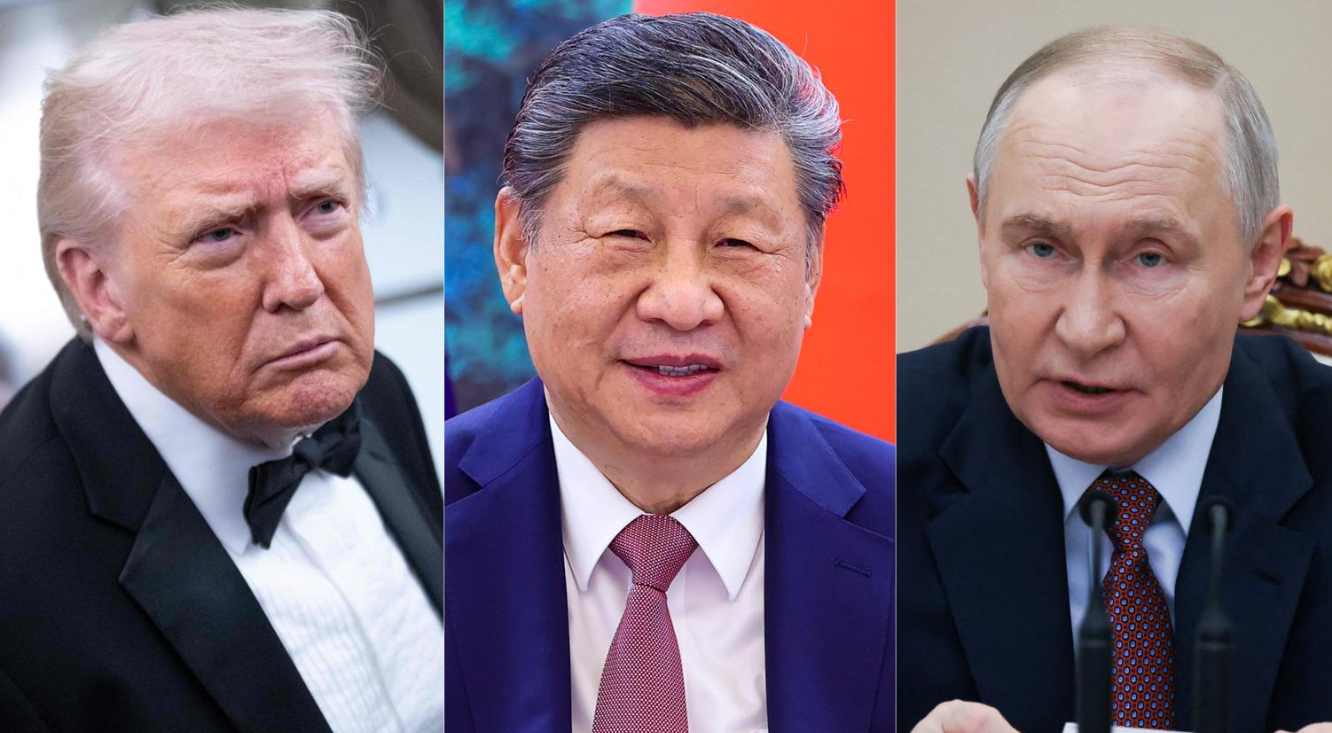
Trump, Xi Jinping, and Vladimir Putin to Hold Historic Trilateral
|
Getting your Trinity Audio player ready...
|
SHENZHEN, November 15, 2026: In a significant development in international diplomacy, the leaders of the United States, China and Russia are preparing for an unprecedented trilateral meeting in Shenzhen, China, on November 19, on the sidelines of the Asia-Pacific Economic Cooperation (APEC) summit.
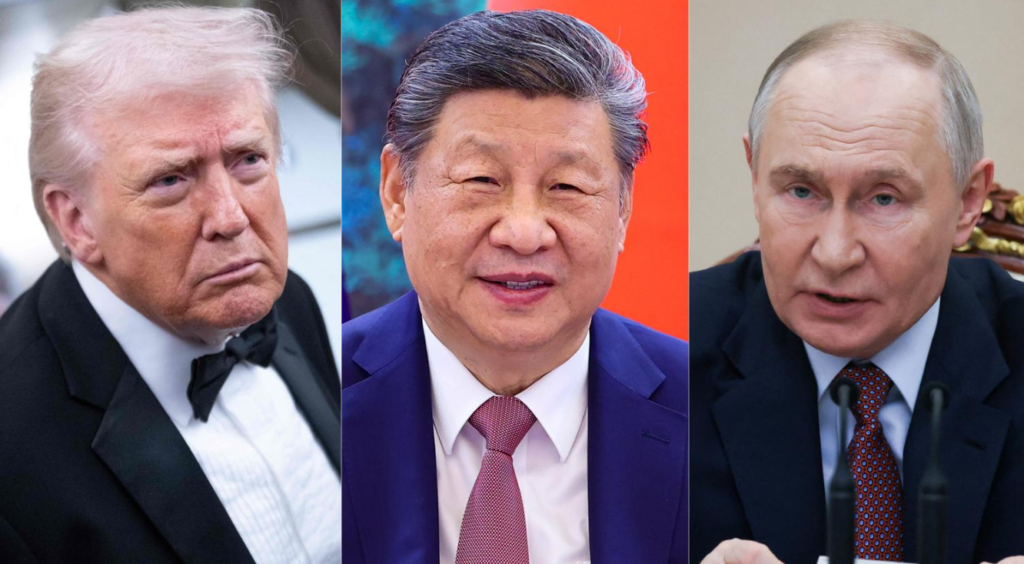
US President Donald Trump, Chinese President Xi Jinping and Russian President Vladimir Putin are expected to participate in discussions that could influence international relations, global security, nuclear diplomacy and the balance of power among the world’s leading nations
The meeting has been confirmed by the White House and the Kremlin. It is particularly significant because the three countries possess some of the world’s largest nuclear arsenals and have considerable influence over international security, trade, technology and energy markets.
According to reports by The Associated Press, expectations of immediate diplomatic breakthroughs remain limited. Analysts believe the gathering could carry greater symbolic importance than producing binding agreements. Nevertheless, the decision to bring the three leaders together at a time of multiple international conflicts makes the meeting one of the most closely watched diplomatic events of the year.
Why Is This Meeting Historically Significant?
The United States, China and Russia are three major global powers with different political systems, economic interests and strategic priorities.
Taiwan and military competition. Meanwhile, relations between Washington and Moscow remain complicated by the ongoing Russia-Ukraine war, economic sanctions and disagreements over European security.
China and Russia have strengthened their strategic relationship over recent years, particularly in energy, trade and diplomatic cooperation.
A direct meeting involving all three presidents could provide an opportunity to discuss issues that affect international stability.
Although the leaders have previously met bilaterally, a joint gathering involving all three countries at the presidential level represents an unusual diplomatic moment.
Nuclear Weapons Control Could Become a Central Issue
One of the most important subjects expected to feature in the discussions is nuclear arms control.
The previous nuclear arms agreement between the United States and Russia, known as the New START treaty, expired in February 2026. Its expiration removed the existing limits on the strategic nuclear arsenals of the world’s two largest nuclear powers.
President Trump has expressed interest in developing a new and modernised nuclear agreement that would include China.
However, bringing Beijing into a nuclear arms control framework could prove difficult.
According to estimates cited by the Pentagon and reported by AP, China possesses more than 600 nuclear warheads, while the United States and Russia each possess arsenals exceeding 5,000 warheads.
China has historically been reluctant to participate in a trilateral nuclear agreement because its arsenal is considerably smaller than those of Washington and Moscow.
The challenge for diplomats will be finding a framework that addresses the security concerns of all three countries without requiring any participant to accept restrictions it considers unfair.
No major nuclear agreement is currently expected to emerge from the November 19 meeting. However, the gathering could provide an opportunity to begin discussions about future arms-control arrangements.
Iran Conflict Adds Another Dimension to the Summit
The ongoing conflict involving Iran is another major issue that could feature prominently in the discussions.
The United States and Iran have experienced months of military confrontation and diplomatic uncertainty. The conflict has also affected regional security, maritime transportation and international energy markets.
Washington is likely to seek diplomatic support or cooperation from Beijing and Moscow regarding the situation.
China has significant economic interests in the Middle East, particularly because of its energy requirements and commercial relationships with countries in the region.
Russia also maintains strategic and diplomatic relations with Tehran.
The different relationships of these three powers with Iran could make discussions particularly complicated.
A possible diplomatic understanding among Washington, Beijing and Moscow could influence future negotiations, although there is no confirmation that the meeting will produce an agreement on the conflict.
Ukraine War and European Security Remain Sensitive Issues
The Russia-Ukraine war continues to be one of the most difficult issues in international diplomacy.
President Vladimir Putin’s participation in the summit is likely to attract attention from Ukraine and European governments.
Ukrainian President Volodymyr Zelenskyy has expressed concern that major powers could discuss a possible settlement involving Ukraine without Kyiv’s direct participation.
According to AP reporting, a senior US official indicated that President Trump intends to discuss Iran and nuclear issues with the other leaders but will avoid discussing Ukraine during the planned trilateral meeting.
This position could become important because Ukraine and its European partners have repeatedly emphasised that any settlement concerning the country’s territory and security must involve Ukraine directly.
Russia, meanwhile, continues to maintain its military objectives and diplomatic position regarding the conflict.
China has described its position as neutral while maintaining close economic and diplomatic ties with Moscow.
Why China Is Hosting the Meeting in Shenzhen
The summit will take place in Shenzhen, one of China’s most important technology and manufacturing centres.
The city has developed from a relatively small settlement into a major international economic hub over several decades.
It is home to major technology companies, manufacturing industries, research institutions and financial businesses.
The meeting will take place alongside the APEC summit, which brings together 21 member economies to discuss regional trade, economic cooperation and development.
For President Xi Jinping, hosting such an extraordinary gathering provides an opportunity to demonstrate China’s growing diplomatic influence.
It also allows Beijing to present itself as an important participant in discussions concerning global governance and international security.
However, the meeting also creates diplomatic challenges for China, particularly because its position on Ukraine, Iran and international trade differs from that of Washington.
What Could Be the Global Economic Impact?
Any improvement in relations between the United States, China and Russia could have implications for international markets.
The three countries are important players in global energy, manufacturing, technology and trade.
Diplomatic progress could help reduce uncertainty surrounding international supply chains and energy transportation.
A reduction in geopolitical tensions could also influence crude oil prices, investor confidence and international trade flows.
On the other hand, disagreements over nuclear weapons, technology restrictions, sanctions and regional conflicts could increase uncertainty.
Financial markets will therefore be watching the meeting closely, particularly for any statements concerning energy security, trade restrictions and international cooperation.
Conclusion: A Critical Moment for Global Diplomacy
The planned November 19 meeting in Shenzhen represents an important moment in international relations.
The participation of Donald Trump, Xi Jinping and Vladimir Putin brings together three leaders whose decisions can influence global security, economic policy and international diplomacy.
Although expectations of immediate agreements remain limited, discussions on nuclear arms control, Iran and broader strategic relations could establish the direction of future diplomatic engagement.
The world will be watching closely to see whether the meeting becomes the beginning of meaningful cooperation or remains primarily a symbolic gathering of three major global powers.