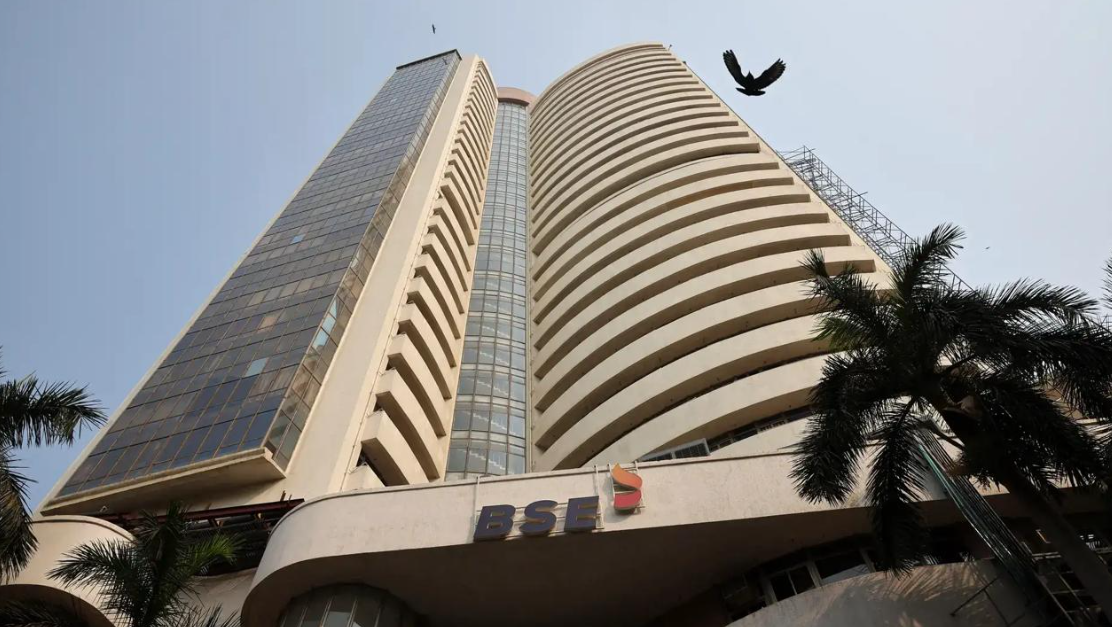
Foreign Investors Return to the Indian Stock Market
|
Getting your Trinity Audio player ready...
|
Mumbai, November 15, 2026: India’s equity market has witnessed a significant shift in foreign investment activity during November, with foreign portfolio investors returning to Indian stocks after several months of substantial selling.
The renewed buying has supported the market’s recent rally and strengthened investor interest in Indian equities.
Market reports published on November 13 indicated that foreign investors had purchased more than ₹75,000 crore worth of Indian equities during November. Other available figures placed net equity purchases at approximately ₹84,291 crore through November 13, reflecting differences in reporting periods and calculation methods.
According to Reuters, foreign investors purchased approximately $6.43 billion worth of Indian shares during November as of November 12. This was reported as the largest monthly purchase in more than two years.
The rally also helped India regain its position as the world’s fifth-largest equity market by market capitalisation, moving ahead of Taiwan.
Why Is the Return of Foreign Investors Important?
Foreign Portfolio Investors, commonly known as FPIs, are overseas investors and institutions that invest in financial assets such as equities and bonds in other countries.
Their investment decisions can influence stock prices, market liquidity and overall investor sentiment.
When foreign investors make substantial purchases, demand for Indian shares can increase. This can provide support to major market indices and individual stocks.
However, foreign buying does not guarantee that markets will continue rising. Investment flows depend on global interest rates, currency movements, economic growth, crude oil prices and corporate earnings.
The latest buying activity is particularly important because foreign investors had withdrawn significant amounts of capital from Indian equities during several months of 2026.
November Sees Strong Foreign Equity Purchases
Market reports published on November 13 indicated that foreign investors had invested more than ₹75,000 crore in Indian equities during November.
The Economic Times reported that foreign investors had purchased substantial quantities of Indian shares while domestic institutional investors had sold approximately ₹46,835 crore worth of equities during the reported period.
This created an interesting situation in the market, with overseas investors buying shares while domestic institutions booked profits.
Domestic institutional investors include mutual funds, insurance companies and other Indian financial institutions.
The activity demonstrates how different investor groups can follow different strategies even when they are participating in the same market.
Sensex and Nifty Performance
According to Reuters data published on November 12, the BSE Sensex closed at 81,911.01, gaining 0.04 per cent.
The NSE Nifty 50 advanced 0.18 per cent to close at 25,299.35.
Both major indices had gained approximately 10 per cent during November, according to the report.
However, the rally was not equally distributed across all sectors.
Eleven of the sixteen major sectors declined during the November 12 trading session.
Small-cap stocks gained 1.1 per cent, while mid-cap stocks increased 0.9 per cent.
Financial stocks performed relatively well, while automobile shares declined.
This highlights an important feature of equity markets: even when major indices rise, individual sectors and companies may experience different performances.
India Regains the World’s Fifth-Largest Equity Market Position
One of the important developments during November was India’s improvement in global equity market rankings.
According to Reuters, the market capitalisation of stocks listed on the National Stock Exchange reached approximately $5.42 trillion, compared with around $4.4 trillion for Taiwan.
This helped India move ahead of Taiwan and regain the position of the world’s fifth-largest equity market.
The development reflects the rising valuation of Indian listed companies and renewed investor interest.
However, international market rankings can change because of movements in share prices and currency exchange rates. They should therefore be viewed as a snapshot of market conditions rather than a permanent ranking.
What Is Driving Foreign Investors Back to India?
Several factors may have contributed to the renewed interest in Indian equities.
1. Valuation opportunities: After periods of market weakness, certain Indian stocks may have become more attractive to investors. Improved valuations can encourage overseas funds to reconsider their exposure to Indian equities.
2. Corporate earnings expectations: Investors are closely monitoring the earnings outlook of Indian companies. Businesses with stronger revenue growth, profitability and balance sheets may attract greater interest.
3. Lower crude oil prices: India imports a substantial portion of its crude oil requirements. Lower international oil prices can reduce import costs and potentially improve inflation and economic conditions.
Reuters reported Brent crude trading around $92 per barrel on November 12.
4. Global investment allocation: International investors compare opportunities across several economies, including the United States, Europe, China and emerging markets. Changes in global technology investment and market valuations can influence capital allocation.
5. Currency movements: Foreign investors evaluate returns in their own currencies. A stronger rupee can improve the dollar-denominated returns of investments in Indian equities.
Domestic Investors and Foreign Investors Follow Different Strategies
The interaction between foreign and domestic institutional investors has become increasingly important for India’s equity market.
Domestic mutual funds and insurance companies have expanded their role in the market, supported by growing participation in systematic investment plans and other investment products.
When foreign investors sell shares, domestic institutions can sometimes absorb the selling pressure through their own purchases.
Similarly, when foreign investors return to the market, domestic institutions may use the opportunity to book profits.
This means investors should avoid relying exclusively on daily foreign institutional investor or domestic institutional investor figures.
Longer-term investment trends, corporate fundamentals and overall market conditions provide a more comprehensive picture.
Which Sectors Are Investors Watching?
Banking and financial services, automobiles, information technology, pharmaceuticals, infrastructure and energy are among the important sectors in India’s equity market.
Financial stocks performed relatively well during the recent foreign investment-led rally.
Banking companies are closely linked to economic activity, credit demand, interest rates and the overall financial health of consumers and businesses.
Automobile stocks had benefited from optimism around festival-season sales before experiencing a decline during the November 12 session.
Information technology companies remain sensitive to global technology spending, demand for digital services and developments in artificial intelligence.
Infrastructure and capital goods companies can benefit from public investment and private-sector capital expenditure.
However, sector performance varies depending on business conditions and company-specific developments.
What Could Influence the Market in the Coming Weeks?
Several indicators will be important for determining the next direction of Indian equities.
The first is the continuation of foreign portfolio investment. Sustained foreign buying could provide additional support to the market.
The second is corporate earnings. A long-term market rally requires companies to demonstrate healthy revenue growth, profitability and sustainable business performance.
The third is inflation and monetary policy. Changes in consumer prices can influence the Reserve Bank of India’s policy decisions, borrowing costs and consumption demand.
International crude oil prices, the US dollar, global interest rates and geopolitical developments will also remain important factors.
Is This the Right Time to Invest?
The return of foreign investors provides a positive signal, but it does not mean that every stock has become an attractive investment.
Investors should consider their financial goals, investment horizon, risk tolerance and the fundamentals of individual companies.
Long-term investors may evaluate revenue growth, debt levels, cash flows, profitability and business competitiveness.
Short-term traders should pay attention to market volatility and risk management.
Buying shares solely because foreign investors are purchasing them is not a reliable investment strategy.
Conclusion: Foreign Investor Confidence Returns to Indian Equities
November 2026 has brought an important change in foreign investment activity in India’s equity market.
Purchases exceeding ₹75,000 crore, gains in major market indices and India’s improved position in global market capitalisation rankings have attracted significant attention.
Nevertheless, the market’s future direction will depend on corporate earnings, inflation, interest rates, crude oil prices, currency movements and continued foreign investment.
The return of overseas investors can provide a positive signal for Indian equities, but disciplined investing, proper valuation analysis and long-term financial planning remain essential.