COP31 Climate Summit Faces Major Disagreement Over Fossil Fuels
|
Getting your Trinity Audio player ready...
|
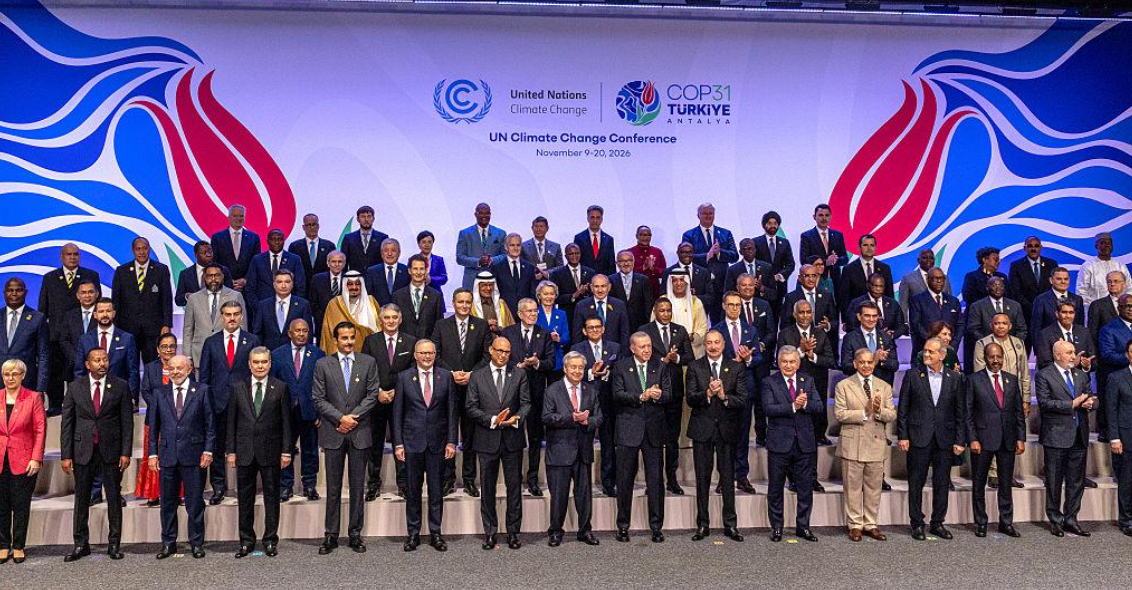
ANTALYA, TURKEY, November 15, 2026: The United Nations Climate Change Conference COP31 has entered a critical phase as international negotiators struggle to reach an ambitious agreement on reducing greenhouse gas emissions and addressing the growing threat of climate change.
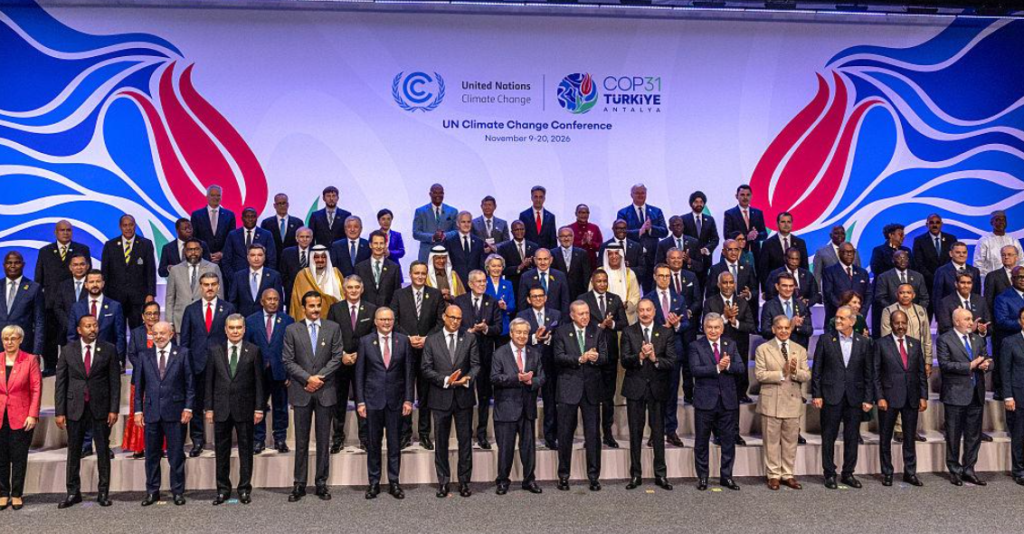
The conference, being hosted in Antalya, Turkey, has brought together government representatives, climate experts, international organisations and environmental groups to discuss the future of global climate policy.
One of the most difficult issues dominating the negotiations is the future of fossil fuels, particularly coal, oil and natural gas
UN Secretary-General António Guterres has called for an immediate and substantial reduction in greenhouse gas emissions, warning that the world must accelerate climate action to preserve the possibility of limiting global warming to 1.5 degrees Celsius.
However, major fossil fuel producers and consumers remain divided over whether the final agreement should include firm commitments to move away from conventional energy sources.
The disagreement has emerged as one of the biggest obstacles facing the conference during its second week.
Why COP31 Is Important for the World
COP31 is part of the annual United Nations climate negotiation process established under the UN Framework Convention on Climate Change.
The conference provides countries with an international platform to discuss climate change, emissions reduction, climate financing, adaptation and the transition towards cleaner energy.
The Paris Agreement, adopted in 2015, established the international objective of keeping global temperature increases well below 2 degrees Celsius while pursuing efforts to limit warming to 1.5 degrees Celsius above pre-industrial levels.
However, achieving this objective has become increasingly difficult.
Global emissions remain high, extreme weather events are creating significant economic losses and many countries are struggling to finance climate adaptation.
The COP31 negotiations are therefore important because decisions made during the conference could influence national climate policies, energy investment and international financing arrangements.
UN Chief Demands Immediate Reduction in Greenhouse Gas Emissions
UN Secretary-General António Guterres has urged countries to take much stronger action against climate change.
Speaking during the first week of the conference, Guterres warned that the world must rapidly reduce greenhouse gas emissions if it wants to maintain a realistic possibility of meeting the 1.5-degree climate target.
The UN chief’s warning reflects growing concern among scientists and climate policymakers that current global climate policies are not sufficient.
Greenhouse gases, including carbon dioxide and methane, trap heat in the atmosphere and contribute to rising global temperatures.
The burning of fossil fuels remains a major source of carbon dioxide emissions.
Climate scientists have repeatedly warned that continued emissions could increase the frequency and intensity of heatwaves, droughts, heavy rainfall and other extreme weather events.
Fossil Fuels Become the Biggest Point of Disagreement
One of the most difficult questions facing negotiators is whether the final COP31 agreement should include specific commitments to reduce the use of fossil fuels.
Several countries support stronger language on reducing dependence on coal, oil and natural gas.
However, major energy producers and countries that depend heavily on conventional fuels have resisted proposals containing strict new targets.
Their concerns include energy security, economic development, industrial competitiveness and the cost of transitioning to cleaner alternatives.
Developing economies have also emphasised that climate policies should recognise differences in historical emissions, financial resources and development requirements.
This disagreement has made negotiations particularly complicated.
Turkey, as the host country, and Australia, which is leading the negotiations, face the challenge of building consensus among countries with different economic priorities.
Turkey Promotes a Global Electrification Plan
Turkey has proposed making global electrification a central part of the conference’s eventual political declaration.
The proposal aims to accelerate the replacement of fossil-fuel-powered vehicles, industrial equipment, heating systems and other technologies with electricity-based alternatives.
Electrification can help reduce emissions, particularly when the electricity is generated through renewable sources such as solar, wind and hydropower.
Electric vehicles, heat pumps and industrial electrification are examples of technologies that could support this transition.
However, the proposal has also attracted criticism because it does not require the additional electricity to come specifically from renewable sources.
Environmental groups and several delegations want a clearer commitment to renewable energy and a defined pathway away from fossil fuels.
This highlights a central challenge of the global energy transition: increasing electricity consumption alone does not guarantee lower emissions if electricity generation continues to depend heavily on coal and natural gas.
Climate Finance Remains a Major Challenge
Climate financing is another important issue in the COP31 negotiations.
Developing countries face significant financial requirements to strengthen infrastructure, improve disaster preparedness and transition towards cleaner energy systems.
Many countries are already experiencing the economic consequences of extreme weather events, including floods, droughts, cyclones and prolonged heatwaves.
However, the resources required to address these challenges are not equally available across the world.
Wealthier economies generally possess greater financial and technological capacity, while poorer nations often face greater exposure to climate-related risks.
Climate finance discussions therefore focus on how developed economies, multilateral institutions and private investors can support developing countries.
The availability of affordable financing is especially important for countries that need to expand renewable energy while maintaining economic growth and energy access.
Why Developing Countries Are Demanding Climate Justice
Developing countries have repeatedly argued that climate agreements must recognise differences in historical responsibility and economic capacity.
Many industrialised nations built their economies over decades using large quantities of fossil fuels.
Developing countries argue that they should not be expected to abandon affordable energy sources without adequate financial assistance and access to technology.
At the same time, many developing economies are already investing in renewable energy, electric mobility and energy-efficiency programmes.
The challenge is to balance economic development with the need to reduce global emissions.
India, for example, has emphasised the importance of affordable energy access, climate finance and the principle of common but differentiated responsibilities.
These concerns are expected to remain central to international climate negotiations.
What Happens If Countries Fail to Reach an Agreement?
A weak agreement could undermine confidence in the international climate negotiation process.
Countries might continue pursuing different national energy strategies without a sufficiently coordinated global framework.
This could make it harder to reduce emissions at the speed required by climate science.
It could also increase uncertainty for businesses and investors planning long-term investments in renewable energy, electric mobility and industrial technology.
On the other hand, even a limited agreement could provide a foundation for further cooperation if countries establish clear mechanisms for implementation and future negotiations.
The effectiveness of any agreement will depend on whether governments translate international commitments into domestic policies.
Economic Consequences of the Climate Transition
The transition away from fossil fuels will create both opportunities and challenges.
Renewable energy, battery manufacturing, electric vehicles, energy storage and modern electricity networks could attract substantial investment.
These industries can support technological innovation and create new employment opportunities.
However, traditional energy-producing regions may face economic disruption as demand for conventional fuels changes.
Industries that depend heavily on coal, oil and gas may also need to invest in cleaner production technologies.
The transition will therefore require investment in infrastructure, worker training, research and industrial modernisation.
Conclusion: A Critical Test for International Climate Cooperation
COP31 has reached a crucial stage as countries attempt to find common ground on emissions reduction, fossil fuel use and climate financing.
The warnings from UN leadership highlight the urgency of global action, while disagreements between major energy producers and developing economies demonstrate the difficulty of achieving consensus.
The outcome of the Antalya conference could influence international climate policy and investment decisions for years to come.
Ultimately, the challenge is not simply to produce another international declaration. It is to turn climate commitments into measurable reductions in emissions, stronger resilience and sustainable economic development.