Iran-Bahrain Tensions Escalate as Yemen Conflict Intensifies
|
Getting your Trinity Audio player ready...
|
MANAMA/SANA’A, November 16, 2026: Tensions across the Middle East have intensified following a new series of Iranian drone attacks targeting US military infrastructure in Bahrain, while developments in Yemen have created additional concerns about the security of important international shipping routes.
The latest developments have raised questions about the future of diplomatic negotiations between Washington and Tehran and the possibility of a wider regional confrontation.
On Sunday, November 15, Iran’s Islamic Revolutionary Guard Corps (IRGC) said it had launched six drones targeting a US air-defence radar facility at Bahrain’s Al-Riffa helicopter base.
Bahrain said its air-defence systems intercepted the incoming drones before they reached their intended targets.
The incident represented another serious development in a conflict that has already affected regional security, energy transportation and international diplomatic relations.
At the same time, Saudi-backed forces supporting Yemen’s internationally recognised government withdrew from positions near the Bab el-Mandeb Strait to reinforce their defences around Aden.
The developments have created a complicated security situation involving Iran, the United States, Gulf countries, Saudi Arabia and the Houthi movement in Yemen.
1. Iran’s Latest Drone Attack on Bahrain
The latest escalation began with reports of explosions and air-defence activity over Bahrain on Sunday.
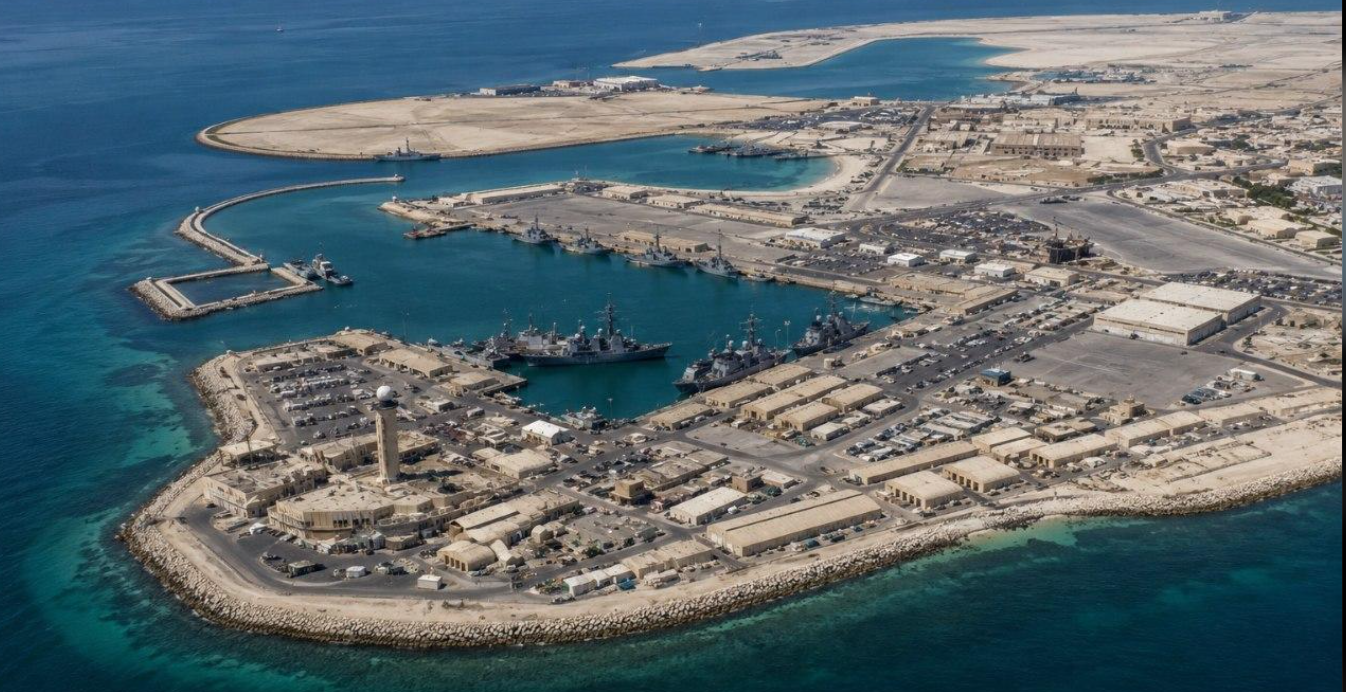
Iran’s Revolutionary Guards claimed that six drones were directed towards a US air-defence radar system at the Al-Riffa helicopter base.
The facility is located in Bahrain, a country that hosts important American military infrastructure.
Bahrain’s authorities said the incoming attacks were intercepted.
The country’s interior ministry also issued safety alerts, advising residents to remain calm and follow official instructions.
The Iranian announcement described the attack as retaliation for US military actions against Iranian targets.
Bahrain strongly condemned the incident, describing the attacks as a violation of its sovereignty and international law.
Several regional countries, including Jordan, Egypt, Saudi Arabia and Qatar, expressed solidarity with Bahrain.
The latest attack is particularly significant because it represents a renewed period of tension after a relative reduction in reported attacks against the Gulf country
2. Why Is Bahrain Strategically Important?
Bahrain occupies an important position in the Persian Gulf.
The country hosts the headquarters of the US Navy’s Fifth Fleet and US Naval Forces Central Command.
These facilities support American naval operations across a strategically important region that includes the Persian Gulf, the Gulf of Oman and surrounding maritime routes.
The presence of American military infrastructure makes Bahrain an important security partner for Washington.
It also places the country within the wider strategic competition involving Iran and the United States.
Any attack targeting American military facilities in Bahrain therefore has implications beyond the country’s borders.
It can affect military planning, regional alliances, maritime security and diplomatic relations.
3. Iran-US Negotiations Face Additional Pressure
The latest attacks have raised further doubts about the possibility of restarting negotiations between Washington and Tehran.
The conflict began on February 28, 2026, following US-Israeli strikes against Iranian targets.
Since then, tensions have affected several parts of the Middle East.
Washington has maintained a naval blockade on Iranian ports, while Tehran has continued to exercise pressure over maritime movement through the Strait of Hormuz.
The two sides have struggled to reach an agreement that could establish a lasting political settlement.
Iranian officials have warned that the country will respond to further military aggression.
At the same time, the United States has continued to emphasise its security objectives and regional military presence.
The latest attack on Bahrain could make diplomatic negotiations more difficult by increasing pressure on governments to respond to security incidents.
4. Strait of Hormuz: Why the World’s Energy Market Is Watching
One of the most important concerns arising from the conflict involves the Strait of Hormuz.
The narrow maritime passage connects the Persian Gulf with the Gulf of Oman and the Arabian Sea.
It is one of the most strategically important shipping routes in the global energy industry.
A substantial share of internationally traded petroleum passes through this waterway.
Any disruption can affect oil transportation, shipping insurance, tanker operations and international energy prices.
Iran’s Revolutionary Guards have claimed that oil tankers struck naval mines while attempting to cross the southern part of the Strait of Hormuz.
Iranian state media also reported that a supertanker carrying more than two million barrels of crude oil sank following an explosion.
However, the claims have not been independently verified.
A British maritime monitoring organisation said it was aware of a report involving a tanker incident and indicated that the crew was safe, while the extent of damage and possible environmental impact remained uncertain.
The US military has previously stated that it cleared key shipping routes of mines.
These conflicting statements highlight the difficulty of establishing the full maritime situation during an ongoing conflict
5. Yemen’s Conflict Creates a Second Strategic Challenge
While tensions between Iran and Bahrain are attracting international attention, developments in Yemen have created another security concern.
Saudi-backed forces supporting Yemen’s internationally recognised government have withdrawn from positions near the Bab el-Mandeb Strait.
The forces announced that they were redeploying from the Dhubab Airport and surrounding areas towards Aden.
The move followed a six-week counteroffensive aimed at pushing Houthi forces away from the southern entrance to the Red Sea.
The withdrawal is significant because the Bab el-Mandeb Strait is an important international maritime corridor.
It connects the Red Sea with the Gulf of Aden and provides access to the Suez Canal shipping route.
A disruption in this area can affect vessels travelling between Europe and Asia.
The Houthi movement, which is aligned with Iran, has become an important military and political actor in Yemen’s conflict.
Its influence over areas near the Red Sea has repeatedly raised concerns about the safety of commercial vessels.
6. Why the Bab el-Mandeb Strait Matters to Global Trade
The Bab el-Mandeb Strait is one of the world’s most important maritime chokepoints.
It is located between Yemen on the Arabian Peninsula and Djibouti and Eritrea in the Horn of Africa.
Commercial vessels travelling between the Indian Ocean and the Mediterranean Sea frequently use this passage.
The route is particularly important for shipments travelling through the Suez Canal.
If security conditions deteriorate, shipping companies may be forced to consider longer alternative routes around the Cape of Good Hope in southern Africa.
Such diversions can increase fuel consumption, transportation costs and delivery times.
The consequences can extend to global supply chains, including energy, consumer goods, industrial materials and agricultural products.
For countries dependent on international maritime trade, including India, maintaining secure access to these routes is particularly important.
7. Saudi Arabia and the Wider Gulf Security Situation
Saudi Arabia has a significant interest in developments across Yemen.
The country shares a long border with Yemen and has been involved in the conflict for several years.
The recent withdrawal of Saudi-backed forces from positions near the Bab el-Mandeb Strait creates additional challenges for the internationally recognised Yemeni government.
The situation also affects regional security cooperation among Gulf countries.
Saudi Arabia, Bahrain and other states have important economic and security interests in maintaining stable maritime transportation routes.
An expansion of military activity could place additional pressure on regional governments to strengthen defence arrangements and protect critical infrastructure.
8. International Implications for Oil Prices and Shipping
The latest developments could influence global energy markets even if no additional attacks take place.
Oil traders closely monitor events around the Strait of Hormuz because of the route’s importance to international petroleum transportation.
When shipping security becomes uncertain, tanker insurance premiums can increase.
Shipping companies may also reassess routes and operational risks.
The consequences can include higher transportation expenses, delayed deliveries and increased uncertainty in energy markets.
However, the actual impact on oil prices will depend on the duration and scale of any disruption, the availability of alternative supplies and the response of international markets.
It is important not to assume that every reported maritime incident automatically results in a long-term interruption to global oil supplies.
9. What Happens Next?
The immediate challenge for regional governments is to prevent additional military escalation.
Bahrain will continue to focus on protecting its territory and military infrastructure.
The United States will need to consider how to respond to attacks affecting its regional facilities while managing the wider conflict with Iran.
Iran, meanwhile, has continued to present its military actions as responses to US operations.
In Yemen, the withdrawal of government-aligned forces could change the balance of control around important coastal areas.
International governments and shipping organisations will also continue monitoring maritime security in both the Strait of Hormuz and the Bab el-Mandeb Strait.
Conclusion
The latest developments involving Iran, Bahrain and Yemen demonstrate how interconnected Middle Eastern security has become.
An attack on a military installation in Bahrain, a withdrawal of forces in Yemen and uncertainty surrounding oil tanker movements can collectively create pressure on international security and global trade.
The situation is especially important because the region contains some of the world’s most strategically significant maritime routes.
For international markets, governments and shipping companies, the coming days will be crucial in determining whether the current escalation remains limited or develops into a wider regional crisis