EBOLA OUTBREAK IN AFRICA
|
Getting your Trinity Audio player ready...
|
Over 5,000 Deaths Reported in Congo
Date: November 1, 2026
Ebola Outbreak in Africa 2026: Over 5,000 Deaths Reported in Congo as Virus Spreads Across Borders. Africa is facing a major public health challenge as a serious Ebola outbreak continues to affect the Democratic Republic of the Congo (DRC), with cases also detected in other countries.
The outbreak, caused by the Bundibugyo virus, has raised international concerns because of its high reported death toll, geographical expansion, and difficulties in controlling transmission in affected communities.
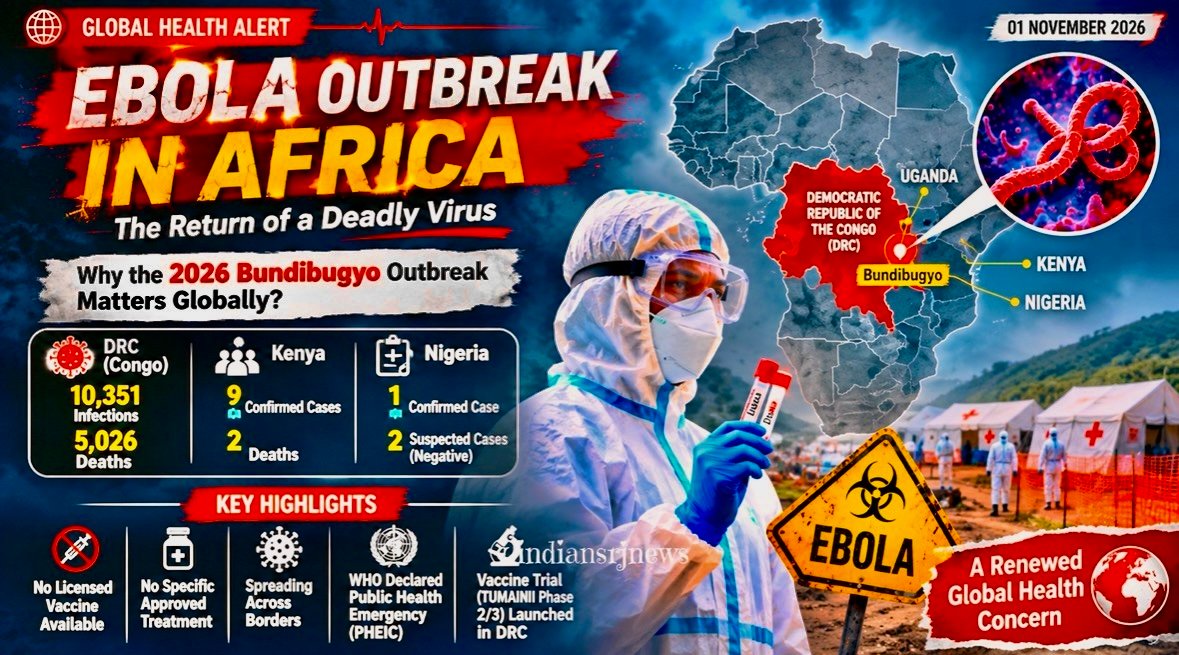
According to figures reported on November 1, 2026, the outbreak in the Democratic Republic of the Congo has resulted in approximately 10,351 infections and 5,026 deaths. The outbreak has spread across multiple provinces, putting significant pressure on local healthcare systems and emergency response teams.
The World Health Organization (WHO), African health authorities and international partners are supporting efforts to identify infections, monitor contacts and strengthen healthcare facilities.
What Is Happening in the Democratic Republic of the Congo?
The Democratic Republic of the Congo is currently at the centre of the Ebola crisis.
The outbreak was officially declared on May 15, 2026, after cases of Bundibugyo virus disease were identified in the country.
By the end of October, infections had been reported across eight provinces and 67 health zones. Ituri and North Kivu have remained among the most heavily affected areas.
The scale of the outbreak is particularly concerning because thousands of people have lost their lives, while many communities face difficulties accessing early medical care.
According to recent reporting, approximately 80% of newly detected infections were outside previously monitored contact chains. This makes it more difficult for health authorities to identify all potential transmission routes and prevent further infections.
What Is Bundibugyo Ebola Virus?
Bundibugyo virus is a member of the Ebola virus group and causes a serious infectious disease known as Bundibugyo virus disease (BVD).
It was first identified during an outbreak in Uganda in 2007.
Unlike some other Ebola virus types, Bundibugyo virus currently has no licensed vaccine or specifically approved treatment.
The disease can cause severe illness, particularly when patients do not receive timely medical attention.
The outbreak is therefore especially challenging for healthcare authorities, as prevention, early diagnosis, isolation and supportive medical care remain central to controlling the disease.
How Does Ebola Spread?
Ebola is not generally transmitted through the air like influenza or measles.
The virus spreads primarily through direct contact with the blood, bodily fluids, organs or secretions of an infected person who has developed symptoms.
Transmission can also occur through contaminated objects, medical equipment, clothing and materials used during unsafe burial practices.
People are not considered infectious before symptoms begin.
The incubation period, which is the time between infection and the appearance of symptoms, can range from 2 to 21 days.
Common early symptoms include:
- Fever
- Severe weakness and fatigue
- Headache
- Muscle pain
- Sore throat
As the disease progresses, patients may develop vomiting, diarrhoea, abdominal pain and serious complications affecting different organs. In some cases, internal or external bleeding may occur.
Because early symptoms can resemble malaria and other common infections, laboratory testing is essential for confirming the diagnosis.
Ebola Cases Reported Beyond Congo
The outbreak has become an international concern because infections have also been identified outside the Democratic Republic of the Congo.
Kenya: Kenya reported nine confirmed cases, including two deaths, by October 26, 2026. The cases were linked to the first imported infection. Authorities have been monitoring contacts and strengthening public health measures.
Nigeria: Nigeria confirmed an imported case on October 20. The patient, a Swiss woman who had travelled from Uganda, was subsequently medically evacuated to Switzerland for treatment. Her husband, a close contact, was also placed under medical supervision.
On November 1, Nigerian authorities announced that two additional suspected cases in the country’s northeast had tested negative after two rounds of laboratory testing. The imported case remained the country’s confirmed case at that time.
Uganda: Uganda had also reported cases during the wider outbreak response. WHO announced the end of its outbreak on August 27, 2026, following 42 days without a newly confirmed case.
The detection of cases in different countries highlights the importance of international coordination, travel surveillance and rapid information sharing.
Why Is This Outbreak So Difficult to Control?
Several factors are making the current outbreak particularly challenging.
1. High number of deaths
The reported death toll in Congo has exceeded 5,000, demonstrating the seriousness of the outbreak.
2. Limited medical countermeasures
There is currently no licensed vaccine or specific approved treatment for Bundibugyo virus disease.
3. Healthcare infrastructure challenges
Some affected communities have limited access to hospitals, laboratories, isolation facilities and emergency medical services.
4. Community transmission
Infections occurring outside known contact networks make it difficult to trace every possible source of exposure.
5. Security and humanitarian problems
Insecurity, population displacement and difficulties reaching remote communities can delay the response.
What Is the World Health Organization Doing?
The World Health Organization has been coordinating with governments, health agencies and international partners to strengthen the response.
The outbreak was declared a Public Health Emergency of International Concern (PHEIC) on May 15, 2026.
Major response activities include:
- Strengthening disease surveillance.
- Identifying and monitoring people who have been in contact with infected individuals.
- Expanding laboratory testing.
- Improving infection prevention and control in hospitals.
- Providing protective equipment to healthcare workers.
- Establishing isolation and treatment facilities.
- Promoting safe and dignified burial practices.
- Supporting cross-border cooperation.
An important development came on October 23, 2026, when the TUMAINI Phase 2/3 vaccine trial was launched in Bunia, Democratic Republic of the Congo. The study aims to evaluate candidate vaccines against Bundibugyo virus.
This is an important research development, but the trial does not mean that an approved vaccine is already available.
Is the Ebola Outbreak a Global Threat?
The outbreak is a serious international public health concern, but it is important to distinguish between regional risk and global risk.
WHO’s August 2026 assessment classified the risk as very high in the Democratic Republic of the Congo and high for countries sharing land borders with it. The risk for the rest of Africa and globally was assessed as low at that time.
However, WHO has indicated that the assessment is being reviewed as the situation evolves.
The spread of imported cases demonstrates why international surveillance and preparedness remain important.
Could This Affect India?
India is geographically distant from the main outbreak areas, but international health developments require attention.
The movement of people between countries makes disease surveillance and preparedness important for every nation.
For India, key priorities include:
- Monitoring international public health alerts.
- Maintaining appropriate screening and referral procedures where required.
- Strengthening laboratory and hospital preparedness.
- Ensuring healthcare workers understand Ebola infection prevention protocols.
- Providing accurate public information and avoiding unnecessary panic.
There is no basis for claiming that India is currently experiencing an Ebola outbreak because of these developments.
What Should People Know About Prevention?
There is no reason for unnecessary panic, but awareness is important.
People travelling to affected areas should follow official health advisories and avoid direct contact with sick individuals, bodily fluids, contaminated materials and deceased persons who may have died from Ebola.
Anyone who develops compatible symptoms after a possible exposure should seek urgent medical advice and disclose their travel and exposure history.
Healthcare workers should follow appropriate infection prevention and control procedures.
Conclusion: The World Watches Africa’s Ebola Response
The 2026 Bundibugyo Ebola outbreak is one of the most serious public health emergencies currently affecting Africa.
With more than 5,000 reported deaths in the Democratic Republic of the Congo, confirmed cases in neighbouring and other countries, and significant challenges in controlling transmission, the outbreak remains a major concern for international health authorities.
The launch of vaccine research offers a potential path towards better protection in the future. However, immediate control depends on early detection, effective medical care, contact tracing, community cooperation and international support.
The coming weeks will be crucial in determining whether health authorities can contain the outbreak and prevent further international spread.
The fight against Ebola is not just a challenge for Africa; it is a reminder of why global health preparedness and international cooperation matter to the entire world.
Disclaimer: This article is prepared for informational and educational purposes only. It is based on publicly available information and official health updates available as of November 1, 2026.