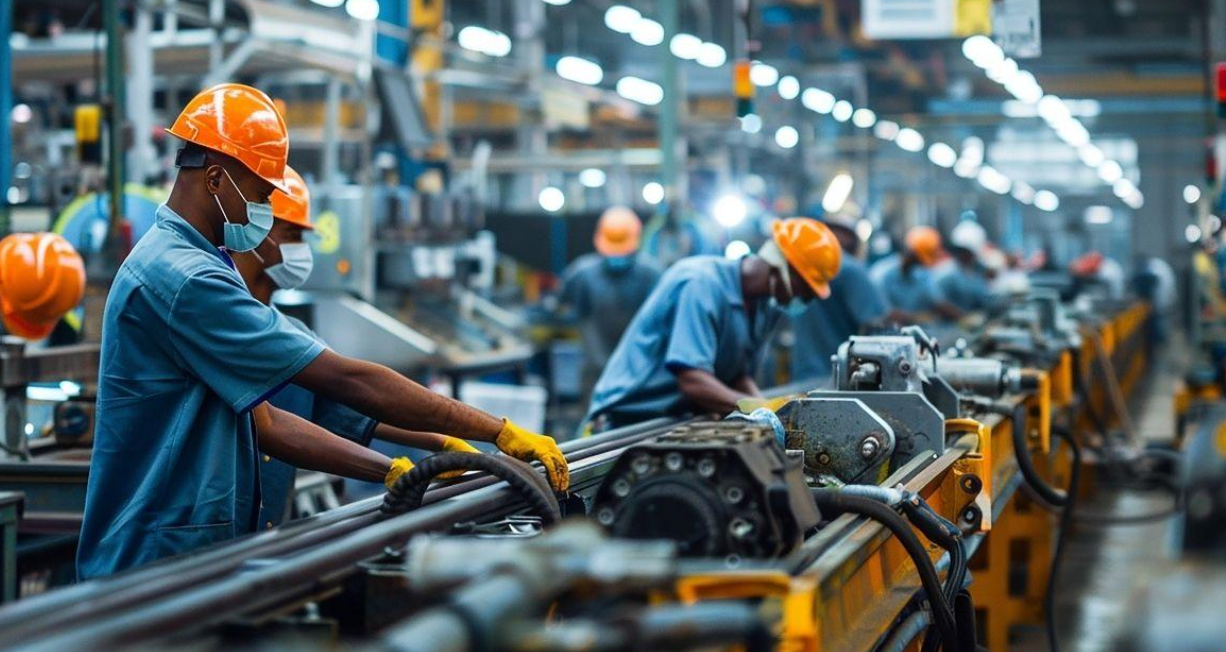
India’s Factory Workers See Only 0.7% Real Wage Growth
|
Getting your Trinity Audio player ready...
|
New Delhi | November 21, 2026
A growing gap between corporate profitability and employee earnings has once again brought India’s industrial wage structure into the spotlight. Recent figures from the Annual Survey of Industries (ASI) indicate that real wages for factory workers increased by only 0.7 per cent during the financial year 2024-25.
The development has raised important questions about how the benefits of economic growth are being distributed between businesses and their employees.
While several companies have reported strong financial performance and improved profitability, the purchasing power of industrial workers has not increased at a comparable pace.
The issue has gained further attention following Prime Minister Narendra Modi’s recent remarks urging Indian industry to invest more in employees, innovation and product quality.

What does the latest industrial data reveal?
The Annual Survey of Industries is an important source of information about India’s organised manufacturing sector.
It provides data on industrial production, employment, wages, capital investment and other aspects of factory operations.
According to the reported figures, workers’ nominal wages increased by approximately 5.3 per cent in 2024-25. However, after adjusting for inflation, real wage growth was only around 0.7 per cent.
This distinction is important.
Nominal wages refer to the actual amount of money an employee receives. Real wages measure the purchasing power of that income after accounting for changes in prices.
For example, if an employee receives a salary increase but the prices of food, housing, transportation and healthcare rise almost equally, the employee may not experience a meaningful improvement in living standards.
This is why economists often focus on real wage growth rather than salary increases alone.
Why are corporate profits and wages moving differently?
Corporate profitability depends on several factors, including production efficiency, market demand, operating costs, technology and pricing power.
Companies may increase profits by improving productivity, reducing expenses, expanding market share or adopting automation.
However, these improvements do not automatically result in higher wages for workers.
The distribution of corporate earnings depends on business decisions, labour-market conditions and the overall structure of the industry.
In some sectors, companies may prioritise investment in machinery, technology and expansion over immediate increases in employee compensation.
While such investments can improve productivity, the benefits for workers may take longer to emerge.
The impact on household budgets
For industrial workers, the difference between nominal and real wage growth can have direct consequences.
Households spend a significant portion of their income on essential requirements such as:
- Food and groceries
- House rent and accommodation
- School and college fees
- Healthcare and medicines
- Electricity and transportation
- Savings and loan repayments
When real income growth remains limited, families may find it difficult to increase savings or improve their financial security.
Some households may also reduce discretionary spending, including purchases of consumer goods, travel and entertainment.
This can eventually affect demand across different sectors of the economy.
Why employee purchasing power matters to India’s economy
Consumer spending is an important component of economic activity.
When households have sufficient purchasing power, they are more likely to purchase goods and services, supporting businesses across manufacturing, retail, transportation and hospitality.
If wage growth remains weak for a large section of the workforce, consumer demand may face pressure.
This makes employee compensation an important economic issue rather than simply an internal matter between companies and workers.
A sustainable industrial economy requires a balance between business profitability, investment, productivity and employee welfare.
What can companies do?
Industry leaders can consider several measures to improve employee compensation and productivity.
Performance-linked incentives: Companies can introduce transparent incentive systems that reward workers for measurable improvements in productivity and quality.
Skill development: Investment in employee training can help workers adapt to new technologies and higher-value manufacturing activities.
Better working conditions: Safe workplaces, predictable working hours and access to social security can improve employee welfare.
Wage transparency: Clear salary structures can improve trust between employees and management.
Productivity sharing: Businesses can explore mechanisms through which employees benefit when productivity and profitability improve.
The role of government policy
Government policy also has an important role in ensuring that industrial growth generates wider economic benefits.
Labour regulations, skill-development programmes, social security coverage and manufacturing incentives can influence the quality of employment.
Policymakers must also consider inflation when evaluating wage growth.
A salary increase that looks substantial in nominal terms may provide very limited improvement when essential living costs rise rapidly.
At the same time, it is important to recognise that ASI data covers the organised factory sector and should not automatically be treated as a complete picture of wages across agriculture, services and informal employment.
Conclusion
The reported 0.7 per cent increase in real factory wages during 2024-25 highlights an important challenge for India’s industrial economy.
Corporate profitability and manufacturing expansion are valuable indicators of economic performance, but they do not tell the entire story.
The quality of employment, employee purchasing power and access to social protection must also be considered.
For India to achieve sustainable and inclusive industrial growth, the benefits of higher productivity must increasingly translate into better opportunities and improved living standards for workers.