Is the World Investing Too Much Money in Artificial Intelligence?
|
Getting your Trinity Audio player ready...
|
November 3, 2026
HONG KONG: Artificial intelligence has become one of the biggest investment opportunities in the global economy. Technology companies, governments and financial institutions are committing enormous amounts of money to AI development, advanced computer chips and data centres. However, growing concerns about excessive investment and financial risks are raising an important question: Is the world investing too much money in artificial intelligence?
On November 3, a senior Chinese financial regulatory official warned that global investment in artificial intelligence is becoming increasingly concentrated. The warning comes at a time when technology companies are competing aggressively to build AI infrastructure and secure their positions in the rapidly expanding industry.
The discussion has attracted attention among global financial leaders as investors assess whether the enormous spending on AI will generate sufficient returns in the coming years.
China’s Financial Regulator Warns About Concentrated AI Investment
Xiao Yuanqi, deputy head of China’s National Financial Regulatory Administration, warned at the Hong Kong Monetary Authority’s Global Financial Leaders’ Summit that investment in artificial intelligence is becoming overly concentrated.
According to his remarks, the massive flow of capital into leading technology companies could increase financial leverage and encourage excessively rapid expansion.
He also highlighted the possibility that traditional industries could face higher borrowing costs as capital flows increasingly towards technology and AI-related businesses.
The warning highlights the need for policymakers to develop financial and regulatory frameworks that address the economic changes driven by artificial intelligence.
Global Technology Companies Are Increasing AI Spending
Some of the world’s largest technology companies are investing heavily in artificial intelligence infrastructure.
Companies including Microsoft, Google, Amazon, Meta and Oracle are expanding their data centre capacity and investing in advanced computing systems.
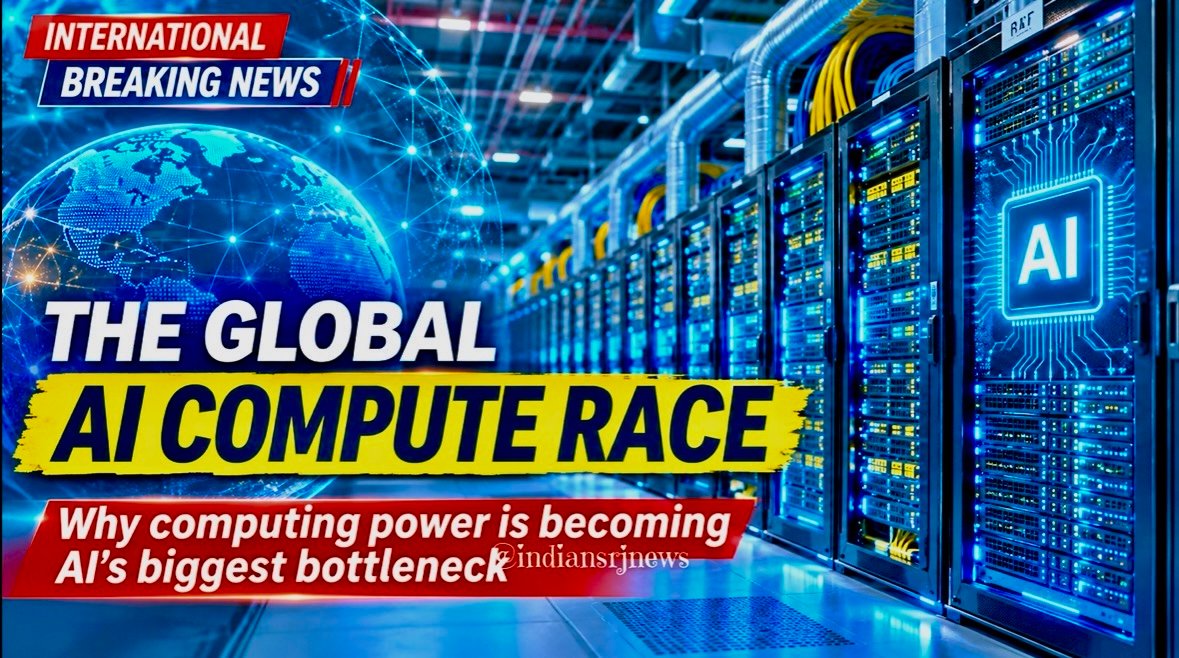
These investments are necessary because modern AI models require enormous computing power, advanced semiconductor chips, electricity and specialised infrastructure.
Industry estimates discussed by financial leaders suggest that combined AI-related spending could exceed $730 billion in 2026.
However, the rising cost of infrastructure has also increased questions about how quickly companies can turn their investments into sustainable profits.
Financial Leaders Warn About Possible AI Market Correction
The rapid expansion of artificial intelligence has created significant opportunities for investors, but financial experts are also warning about potential market risks.
At the Hong Kong financial summit, several prominent financial leaders discussed the possibility that some AI-related companies could face valuation corrections.
Goldman Sachs CEO David Solomon highlighted the importance of maintaining a balanced investment approach, while JPMorgan Vice Chairman Daniel Pinto expressed concerns that some AI-related companies may be priced for growth expectations that are difficult to achieve.
This does not mean the AI industry is necessarily heading towards a collapse. Instead, it reflects growing uncertainty about whether current investment levels and company valuations can be supported by future earnings.
South Korea Doubles Down on Artificial Intelligence
While some financial leaders are warning about investment risks, governments around the world continue to increase their AI budgets.
South Korea is among the countries making significant commitments to artificial intelligence and semiconductor development.
The country’s proposed 2027 budget includes approximately 21.3 trillion won for semiconductors, physical AI and AI data centres.
The government aims to strengthen its position in the global semiconductor industry and develop advanced domestic AI capabilities.
This reflects a growing international competition in which countries are treating artificial intelligence as a strategic economic and technological priority.
Why Does Artificial Intelligence Require So Much Investment?
Artificial intelligence is not limited to chatbots and digital assistants. It requires a large physical infrastructure to operate.
Some of the major investment areas include:
- AI Data Centres: Large facilities containing thousands of powerful computers that process information and run AI models.
- Advanced Semiconductor Chips: Specialised processors used to train and operate artificial intelligence systems.
- Electricity Infrastructure: AI facilities require substantial amounts of electricity to power servers and cooling equipment.
- Research and Development: Technology companies spend billions developing more advanced AI models and applications.
- Cloud Computing: Businesses increasingly depend on cloud infrastructure to access AI services.
These requirements explain why AI investment has become one of the largest technology spending trends in the global economy.
What Could Happen If AI Investments Do Not Generate Expected Returns?
One of the biggest concerns is that companies may invest more money in AI infrastructure than they can recover through future revenue.
If demand or profitability fails to meet expectations, heavily invested companies could face financial pressure.
Potential consequences include:
- Falling valuations of AI-related companies.
- Reduced investment in new data centres.
- Financial pressure on technology companies.
- Increased scrutiny from investors and regulators.
- Greater volatility in global technology markets.
However, these outcomes remain possibilities rather than confirmed predictions.
What Does This Mean for the Future of AI?
Artificial intelligence is expected to remain an important driver of technological and economic transformation.
From healthcare and education to manufacturing, finance and transportation, AI is changing how businesses operate.
The challenge for governments and investors will be to ensure that investment grows sustainably without creating unnecessary financial risks.
The coming years will reveal whether today’s enormous investments establish the foundation for a new technological era or create financial pressure for companies that expand too aggressively.
Conclusion
The global AI investment boom is entering an important phase. While countries and technology companies are competing to lead the artificial intelligence revolution, concerns about concentrated investment, rising costs, and financial stability are becoming increasingly important.
The warning from China’s financial regulator does not suggest that artificial intelligence has lost its potential. Rather, it highlights the importance of responsible investment and sustainable growth.
The future of AI may depend not only on how powerful the technology becomes, but also on whether the global economy can support its enormous financial requirements.
Disclaimer: This article is based on publicly available reporting and statements available as of November 3, 2026. Financial projections and potential market risks are subject to change.