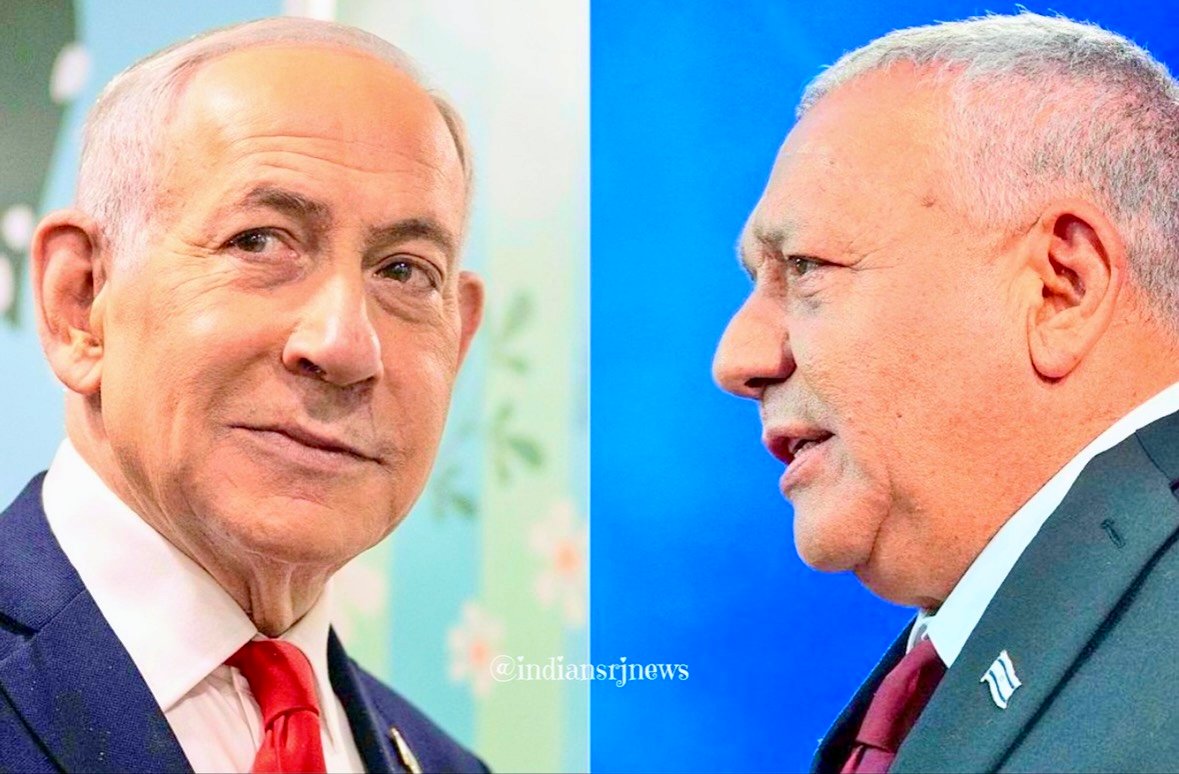
ISRAEL ELECTION DEADLOCK 🇮🇱
|
Getting your Trinity Audio player ready...
|
Netanyahu Leads, But Majority Remains Elusive
Israel Election 2026: Netanyahu’s Bloc Leads with 53 Seats but Falls Short of Majority as Arab Parties Emerge as Key Players
Jerusalem, October 29, 2026: Israel’s general election has left the country facing a complicated political situation, with Prime Minister Benjamin Netanyahu’s right-wing bloc leading in the initial seat projections but falling short of the majority required to form a government on its own. The opposition bloc led by Gadi Eisenkot has also failed to reach the majority mark, while Arab-led political parties have emerged as important players in the negotiations that could determine the country’s next government.
The election has attracted international attention because of its implications for Israel’s political leadership, national security, the war in Gaza and the country’s broader regional policy. With neither major political bloc securing a clear parliamentary majority in the initial count, the central question is whether Netanyahu can secure additional support to remain in office or whether opposition parties can build an alternative governing coalition.
Israel Election Results: What Do the Numbers Show?
Israel’s parliament, known as the Knesset, has 120 seats. A government generally needs the support of at least 61 members to command a parliamentary majority.
According to preliminary figures reported on October 28, when approximately 90% of votes had been counted, Netanyahu’s bloc was projected to win 53 seats. The opposition bloc led by Eisenkot was projected to secure 48 seats, while the two major Arab-led political groups, the Joint List and Ra’am, were expected to win a combined 19 seats.
These figures left Netanyahu’s bloc eight seats short of a majority. The opposition bloc, meanwhile, was 13 seats short of the 61-seat threshold.
Later updates on October 29 continued to show Netanyahu’s bloc at 53 seats, although the distribution remained provisional pending the completion and verification of outstanding ballots.
The figures illustrate the difference between leading the election and having enough parliamentary support to govern. Even if one bloc finishes ahead of its rivals, it must still secure sufficient support in the Knesset to form a government.
Netanyahu’s Likud Party Leads the Political Contest
Netanyahu’s Likud party emerged as the largest individual party in the preliminary count, with approximately 26 seats projected in an early update. Eisenkot’s Yashar party followed among the leading political parties.
However, Israel’s proportional parliamentary system makes coalition-building essential. Individual parties generally need to work with other political groups to assemble the numbers required to govern.
Netanyahu’s political bloc includes right-wing, far-right, and ultra-Orthodox religious parties. These include Likud, Shas, United Torah Judaism, Otzma Yehudit and Religious Zionism.
The parties share some broad political priorities but also have distinct demands concerning religious policy, military service, national security and the allocation of government resources. Maintaining the support of existing partners while attracting additional lawmakers could therefore be a significant challenge.
The preliminary results suggest that Netanyahu remains a central figure in Israel’s political landscape, but his bloc’s position does not automatically guarantee another term as prime minister.
Why Arab-Led Parties Could Play a Decisive Role
One of the most significant developments in the election has been the projected performance of Arab-led political parties.
The Joint List and Ra’am were projected to win a combined 19 seats in the preliminary count. Their combined representation would be historically significant and could give them considerable influence over negotiations to form the next government.
Arab citizens constitute an important part of Israel’s population and participate in the country’s political system through several parties. Arab-led political groups have campaigned on issues including civil rights, equality, public services, crime prevention and policies affecting Palestinian communities.
Their projected parliamentary strength could become particularly important if the opposition bloc seeks to assemble a majority. The opposition and Arab-led parties together would have enough seats numerically to cross the 61-seat threshold if they could agree on a workable arrangement.
However, parliamentary arithmetic does not automatically translate into a governing coalition. Parties must agree on political priorities, policy commitments and the nature of their cooperation.
Some opposition parties have been reluctant to rely on Arab-led parties for government formation, while others have considered cooperation necessary to create an alternative to Netanyahu’s leadership. The extent of any agreement remains uncertain.
Arab-led parties could potentially support a government from outside the coalition rather than join it directly. Whether such an arrangement would provide sufficient and durable parliamentary support remains an important question.
Can the Opposition Form a Government Without Netanyahu?
The opposition faces two major challenges: securing enough parliamentary support and reaching an agreement among parties with different political positions.
Eisenkot’s bloc could seek support from Arab-led parties and other lawmakers opposed to Netanyahu. Such an arrangement could theoretically provide the numbers needed for a majority, but the political differences between the potential partners could complicate negotiations.
Some parties may be unwilling to enter a government that depends on Arab-led support. Others may favour a broader agreement based on shared priorities, including government accountability, security policy and changes to domestic governance.
The opposition would need to establish not only that it has enough votes but also that its proposed government could function effectively. This would require agreement on key appointments, legislation, budgets and policy priorities.
If the opposition fails to secure sufficient backing, Netanyahu could remain in a stronger negotiating position despite his bloc’s lack of a majority. Alternatively, political talks could continue for an extended period as parties explore different coalition arrangements.
The election results therefore leave open several possible outcomes rather than pointing to a definitive winner in the contest to form the next government.
Could Netanyahu Remain Prime Minister?
Netanyahu’s failure to secure a parliamentary majority does not automatically mean that his political leadership has ended.
In a parliamentary system, the formation of a government depends on which leader can secure sufficient support in the legislature. The party or bloc with the most seats does not necessarily govern automatically if it cannot assemble a majority.
Netanyahu could seek additional partners, negotiate compromises with political rivals or explore a broader coalition arrangement. Opposition parties could pursue similar negotiations in an attempt to form an alternative government.
The possibility of a national unity government has also entered the political discussion. Such an arrangement could involve parties from different political camps agreeing to cooperate, although substantial disagreements would need to be resolved.
If no workable majority emerges, Israel could face a prolonged political deadlock. Another election is one possible outcome of an unresolved impasse, but it is not inevitable.
Netanyahu is expected to remain caretaker prime minister until a new government is formed. Israel’s President Isaac Herzog also has an important constitutional role in the process. Following the official results and consultations with political parties, the president will take the next steps in the government-formation process.
Gaza War and National Security Remain Major Issues
The election took place against the backdrop of continuing debate over national security and the consequences of the Gaza war.
The Hamas-led attacks on Israel on October 7, 2023, and the subsequent military campaign in Gaza placed Israel’s security institutions and political leadership under intense scrutiny.
Netanyahu and his allies have emphasised national security, confronting threats from Iran and maintaining Israel’s military capabilities. His opponents have raised questions about the security failures preceding the October 7 attacks, the conduct of the war, the return of hostages and the government’s accountability.
The humanitarian consequences of the war in Gaza and the future political arrangements for Palestinians remain subjects of international concern. The election outcome could influence the direction of Israel’s policy, but it would be premature to assume that the results represent a single, uniform public position on every aspect of the conflict.
The priorities of a new government will depend partly on the coalition agreement and the political demands of its constituent parties. Developments concerning Gaza, hostage negotiations, regional diplomacy and relations with the United States will therefore remain important areas to watch.
What Happens Next?
The next stage will depend on the final election results and negotiations among political parties.
Netanyahu’s bloc could attempt to secure additional support and build a government around its existing partners. The opposition could seek an agreement with Arab-led parties and other political groups to create an alternative parliamentary majority.
A broader coalition involving parties from different political camps is another possibility. However, such an arrangement would require compromises on significant policy questions and could prove difficult to sustain.
If negotiations fail, political uncertainty could continue. The possibility of another election may arise if no government can be formed, although the outcome of any future vote cannot be determined from the current figures.
The final distribution of seats, the positions adopted by individual parties and the president’s constitutional consultations will all help shape the next stage of the process.
Conclusion: Netanyahu Leads, but the Battle for a Majority Continues
Israel’s election has highlighted the importance of coalition-building in the country’s parliamentary system. Preliminary projections placed Netanyahu’s bloc ahead with 53 seats, but it remained short of the 61 seats needed for a majority. The opposition bloc, with 48 projected seats, also lacked the numbers to govern independently.
The projected 19 seats held by Arab-led parties could give them an influential role in the negotiations, although political differences may limit the arrangements that can be reached.
For Netanyahu, the challenge is to turn his bloc’s leading position into a workable parliamentary majority. For the opposition, the task is to build a coalition that can unite enough lawmakers behind an alternative government.
The outcome will depend on official results and political negotiations rather than the preliminary seat count alone.
The key question now is whether Netanyahu can secure enough additional support to remain in power, or whether opposition parties can agree on a viable alternative. Until a government is formally established, Israel’s political future remains uncertain.
Disclaimer: This article is based on preliminary election projections and publicly reported information available as of October 29, 2026. Seat estimates may change, and they should not be treated as final official results.