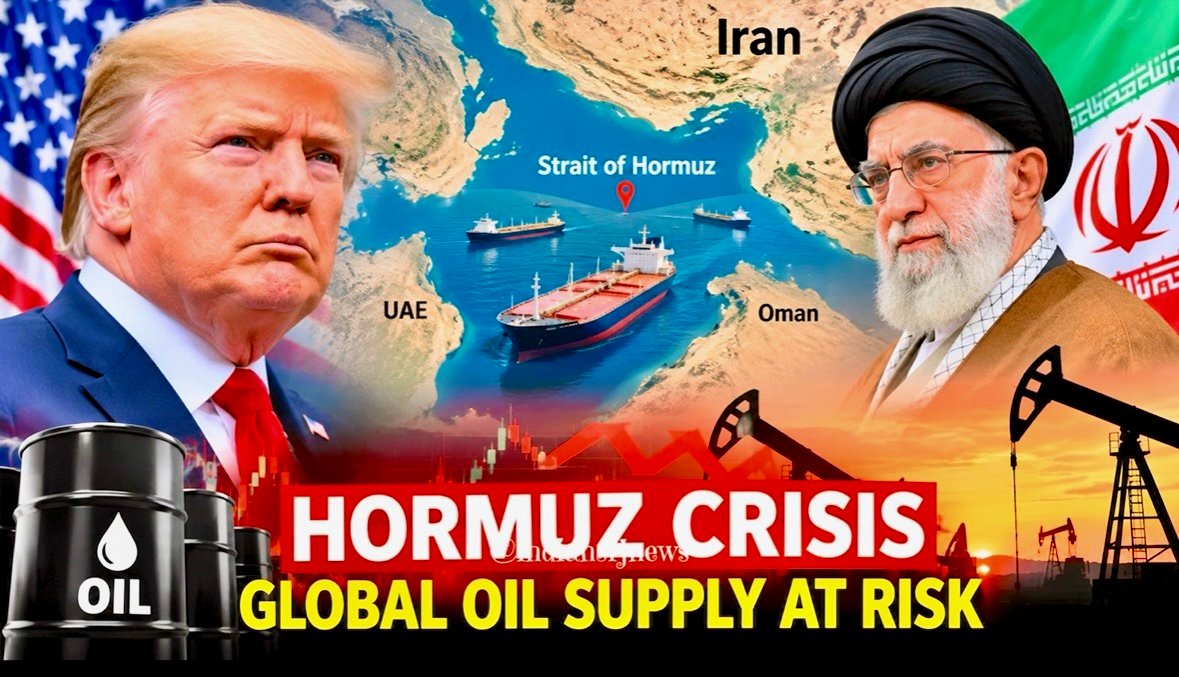
What Is Happening in the Strait of Hormuz?
|
Getting your Trinity Audio player ready...
|
November 6, 2026 | International News
The Strait of Hormuz has become one of the world’s most critical geopolitical flashpoints in 2026. A series of reported tanker attacks, rising tensions between Iran and the United States, and uncertainty surrounding diplomatic negotiations are threatening one of the most important routes for global energy transportation.
The latest developments on November 5 have renewed concerns about maritime security and international oil supplies. Iran’s military reported that multiple tankers had been damaged in separate incidents, while international maritime authorities continued to warn commercial vessels about security risks in the region.
The situation is creating uncertainty across global energy markets, with oil prices reacting to developments surrounding the conflict and the possibility of further disruption to shipping.
What Is the Strait of Hormuz and Why Is It So Important?
The Strait of Hormuz is a narrow but strategically important waterway located between Iran and the Arabian Peninsula. It connects the Persian Gulf with the Gulf of Oman and the Arabian Sea.
Although geographically small, its importance to the global economy is enormous.
According to the International Energy Agency (IEA), approximately 20 million barrels of crude oil and petroleum products passed through the Strait daily in 2025, representing around one-quarter of global seaborne oil trade.
The waterway is also essential for international natural gas transportation. Around 20% of global liquefied natural gas (LNG) trade passes through this strategic route, primarily from Qatar.
Major Asian economies, including China, India, Japan and South Korea, depend heavily on energy shipments passing through the Strait.
Any prolonged disruption could therefore affect international oil supplies, transportation costs, industrial production and consumer energy prices.
Tanker Attacks Raise Maritime Security Concerns
The latest escalation came on November 5, when Iran’s Islamic Revolutionary Guard Corps (IRGC) reported that oil tankers had caught fire following separate incidents in and around the Strait of Hormuz.
Iranian authorities claimed that several vessels had struck naval mines while attempting to use routes they described as unauthorised.
Separately, the United Kingdom Maritime Trade Operations (UKMTO) reported an incident involving a tanker struck by two unidentified projectiles off the coast of Qatar.
The incidents have increased concerns among shipping companies and international maritime operators.
However, the circumstances surrounding every reported incident have not been independently established, and the claims made by Iranian military authorities should be distinguished from independently verified maritime reports.
The continuing uncertainty is making commercial shipping operations increasingly difficult.
Iran-US Conflict: Why Is the Strait at the Centre of the Crisis?
The Strait of Hormuz has become a major strategic pressure point in the ongoing conflict between Iran and the United States.
Washington and Tehran remain divided over military operations, sanctions, maritime restrictions and Iran’s nuclear programme.
Recent diplomatic efforts, including mediation involving Qatar, have raised hopes of negotiations. However, significant disagreements remain.
Iran has linked the reopening of normal shipping operations to broader conditions for ending the conflict, while the United States continues to maintain pressure on Tehran.
The possibility of renewed military action has further complicated the situation.
According to developments reported on November 6, regional security concerns remain high, with shipping, aviation and energy markets continuing to monitor the situation closely.
Oil Prices React to Growing Supply Uncertainty
The Strait of Hormuz is not simply a regional shipping route. It is a critical part of the international energy supply chain.
When tanker movements become uncertain, oil traders often respond by reassessing the possibility of supply shortages.
On November 6, Brent crude prices were reported around the $98–$100-per-barrel range amid changing expectations surrounding the Iran conflict and global oil supplies.
Prices have experienced significant volatility as hopes of diplomatic progress have competed with fears of further military escalation.
A prolonged disruption could increase:
- International crude oil prices.
- Marine insurance premiums for commercial vessels.
- Tanker transportation and freight costs.
- Fuel and energy expenses for importing countries.
- Inflationary pressure on businesses and consumers.
However, the actual impact will depend on the duration and scale of any supply disruption.
Why India Is Closely Watching the Strait of Hormuz
India is among the major Asian economies with significant exposure to energy shipments from the Middle East.
A substantial portion of India’s crude oil and natural gas supply is linked to the wider Gulf region. Disruptions around the Strait of Hormuz could therefore create additional challenges for Indian energy imports.
If international crude prices remain elevated, India could face pressure through higher import costs and increased demand for foreign currency.
Potential consequences include:
1. Higher Import Bills: More expensive crude oil could increase India’s overall petroleum import expenditure.
2. Fuel Price Pressure: Sustained increases in international oil prices could create pressure on domestic fuel pricing, although retail prices do not automatically change with every movement in crude prices.
3. Inflation Concerns: Higher transportation and energy costs could eventually affect logistics, manufacturing and the prices of certain goods.
4. Energy Security: India may need to strengthen supply diversification and maintain sufficient strategic petroleum reserves to manage international disruptions.
The scale of the impact will depend on alternative supplies, inventories, shipping arrangements and the duration of the crisis.
Can Countries Find Alternative Routes If Hormuz Is Disrupted?
Several Gulf countries have developed infrastructure to reduce their dependence on the Strait.
Saudi Arabia operates its East-West Pipeline, which transports crude oil towards Red Sea export terminals. The United Arab Emirates also has a pipeline connecting its oil-producing region to Fujairah, outside the Strait of Hormuz.
However, these alternatives cannot fully replace the enormous volumes normally transported through the waterway.
The International Energy Agency estimates that available alternative pipeline capacity is approximately 3.5 million to 5.5 million barrels per day.
This means that even with alternative transportation arrangements, a major disruption could leave a significant portion of regional energy exports exposed.
What Happens If the Strait of Hormuz Remains Disrupted?
The future of the Strait will depend heavily on diplomatic negotiations and regional military developments.
If tensions decline and shipping restrictions are eased, commercial vessel movements could gradually recover, helping stabilise international energy markets.
However, if attacks continue or restrictions become more severe, the consequences could extend beyond the Middle East.
Asian economies could face higher energy costs, international shipping companies could reconsider their routes, and governments might need to introduce additional measures to protect their energy supplies.
The situation also highlights the importance of international cooperation in protecting critical maritime trade routes.
Conclusion: A Narrow Waterway With Global Economic Consequences
The Strait of Hormuz remains one of the most important strategic waterways in the world. Its importance extends far beyond the Middle East because millions of barrels of oil and significant volumes of natural gas depend on its shipping routes.
The latest tanker incidents and continuing Iran-US tensions have once again demonstrated how quickly a regional conflict can create uncertainty across international markets.
For countries such as India, China, Japan and South Korea, developments around the Strait are particularly important because of their dependence on energy imports from the Gulf.
The coming weeks will be crucial in determining whether diplomatic negotiations can restore confidence in maritime transportation or whether the region faces another period of prolonged instability.
The world is watching Hormuz because what happens in this narrow waterway could have consequences for energy security, international trade and the global economy.