US Aviation Crisis: Nationwide Air Traffic Control Outage
|
Getting your Trinity Audio player ready...
|
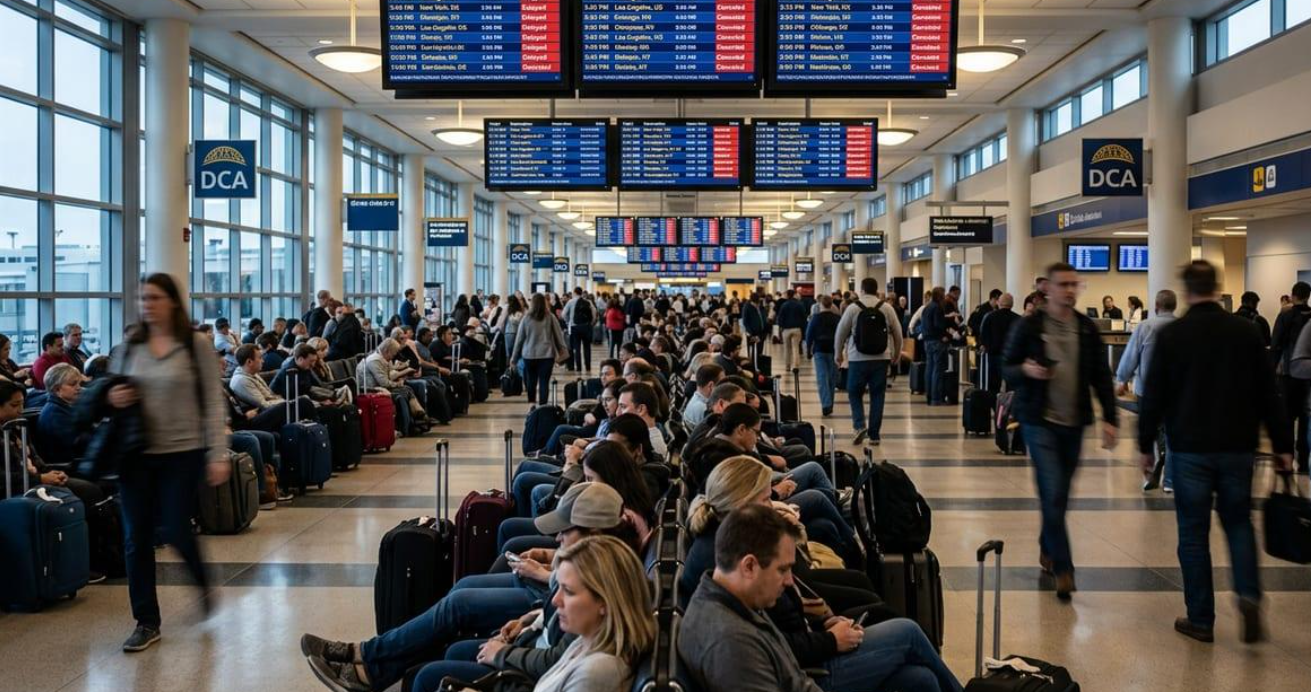
WASHINGTON, November 15, 2026: Air travel across the United States has faced a major disruption following a nationwide outage affecting the Federal Aviation Administration’s air traffic control system.
The technical failure resulted in a ground stop lasting more than four hours, forcing airlines to cancel thousands of flights and leaving passengers stranded at airports across the country.
Although aviation authorities have reported that the system has stabilised, airlines are continuing to manage the operational consequences of the disruption.
According to Associated Press reporting, more than 6,000 flights were cancelled on Saturday alone, while the disruption affected a substantial portion of the approximately 45,000 daily flights operating within, into and out of the United States.
The incident has raised serious questions about the reliability of the country’s aviation infrastructure, the modernisation of air traffic control technology and the ability of the world’s largest aviation market to manage widespread technical failures.
What Happened During the Nationwide Outage?
The disruption began after technical problems affected communications and radar-related systems used by the US air traffic control network.
The Federal Aviation Administration (FAA) subsequently issued a nationwide ground stop, requiring aircraft operations to be restricted while authorities worked to stabilise the system.
A ground stop is an aviation safety measure that prevents or restricts aircraft from departing for specific destinations or across a wider region.
Such restrictions are used when air traffic control cannot safely manage normal operations.
The nationwide restriction remained in place for more than four hours, making it one of the most significant aviation disruptions in the country in recent years.
The outage affected airlines, airports, passengers and aviation operations across the United States.
Why Did the Air Traffic Control System Fail?
According to information released by US officials, the disruption was linked to work involving the replacement of old copper wiring with fibre-optic connections at a remote site.
The work was being carried out by contractor L3Harris.
Officials said a router generated an unusually large volume of connection requests, reportedly more than 1,000 requests every four to five seconds.
The resulting network overload disrupted communications and created intermittent problems affecting radar and air traffic control operations.
Investigators are examining whether the incident resulted from faulty equipment, an installation error or another technical problem.
The authorities have not established a final cause.
The incident has also raised questions about how critical infrastructure upgrades are planned and tested before being introduced into systems that operate continuously
Thousands of Flights Cancelled Across the Country
The nationwide ground stop created immediate operational challenges for airlines.
According to AP reporting, more than 6,000 flights were cancelled on Saturday following the initial disruption.
Thousands of additional flights experienced delays as airlines attempted to reorganise their operations.
The disruption affected major airports and created difficulties for passengers travelling domestically and internationally.
Airlines had to manage aircraft that were unable to depart, crews stranded at different airports and passengers waiting for alternative flights.
Even after restrictions were lifted, normal operations could not immediately resume because aircraft and flight crews were no longer in their planned positions.
This is a major challenge for the aviation industry because airline schedules are interconnected.
A delayed aircraft can affect several later flights, creating a chain reaction across an airline’s network.
Were Passengers and Aircraft in Danger?
Aviation authorities said that more than 3,000 aircraft already airborne were able to land safely during the disruption.
Officials stated that no one had been endangered by the outage.
However, the incident demonstrated why reliable air traffic control systems are essential.
Air traffic controllers coordinate aircraft movements, maintain separation between planes and provide instructions during take-off, landing and flight operations.
Any significant communication or radar failure can reduce the ability of controllers to manage normal traffic levels.
Ground stops are therefore used as a precautionary measure when the system cannot safely handle scheduled operations.
The decision to halt or restrict departures is intended to prevent additional pressure on an already disrupted system.
Aging Technology Raises Questions About US Infrastructure
One of the biggest concerns emerging from the incident is the condition of America’s aviation technology infrastructure.
Many air traffic control systems were developed over several decades and require modernisation to support increasing traffic volumes.
The United States operates one of the world’s largest and busiest aviation networks.
Its infrastructure must handle commercial airlines, cargo aircraft, private aviation and military operations.
Modernisation requires significant investment, but replacing old technology without interrupting daily operations is extremely difficult.
Aviation systems cannot simply be switched off for extended periods while new infrastructure is installed.
This makes testing, gradual replacement and backup systems especially important.
Government Calls for Additional Modernisation Funding
US transportation officials have described the incident as a warning about the condition of critical aviation infrastructure.
Transportation Secretary Sean Duffy has called for additional funding to modernise outdated equipment.
The government has emphasised the importance of upgrading communications systems, radar infrastructure and other components used by air traffic controllers.
Modernisation programmes could involve new fibre-optic networks, advanced digital communications, improved monitoring systems and more resilient backup infrastructure.
However, funding alone will not guarantee reliability.
The successful implementation of upgrades will also require careful planning, technical testing and coordination between the FAA, contractors and airlines.
Could It Have Been a Cyberattack?
The technical failure initially raised questions about whether the incident involved a cyberattack.
However, US officials said there was no indication at that stage that the outage had been caused by a cyberattack.
Authorities have focused on the possibility of equipment or network-related problems.
A distinction between a cyberattack and a technical failure is important because both can disrupt critical infrastructure but require different investigative and preventive measures.
The final investigation will need to determine exactly how the network became overloaded and whether existing safeguards were sufficient.
Economic Impact on Airlines and the Travel Industry
Large-scale flight disruptions can create significant financial losses.
Airlines face expenses associated with passenger accommodation, refunds, rebooking, aircraft repositioning and crew scheduling.
Airport retailers, restaurants, hotels and transportation services may also experience disruption when passengers are unable to travel as planned.
Cargo transportation can be affected as well.
Air freight is particularly important for time-sensitive goods, including pharmaceuticals, electronic components and high-value commercial products.
The economic impact of the outage will depend on how quickly airlines return to normal operations and whether further technical problems occur.
What Does This Mean for Global Aviation?
The US aviation disruption offers an important lesson for international aviation authorities.
Modern airports and airlines depend on highly interconnected digital systems.
These systems support flight scheduling, radar monitoring, communications, passenger processing and airline operations.
A technical failure in one critical component can affect a much wider network.
Countries around the world are therefore investing in modern air traffic management, backup communication networks and digital aviation infrastructure.
The incident highlights the importance of resilience, redundancy and careful technology upgrades.
Conclusion: A Warning for Critical Infrastructure
The nationwide US air traffic control outage has exposed the operational risks associated with ageing technology and complex digital infrastructure.
Although the system has stabilised, the disruption affected thousands of flights and created major challenges for airlines and passengers.
The incident reinforces the importance of modernising aviation infrastructure while maintaining strong backup systems and rigorous technical testing.
As air travel continues to grow, reliable air traffic control technology will remain essential to aviation safety, economic activity and international connectivity.