Ladakh Holds Panchayat and Municipal Elections After Eight Years
|
Getting your Trinity Audio player ready...
|
Leh/Kargil | November 21, 2026
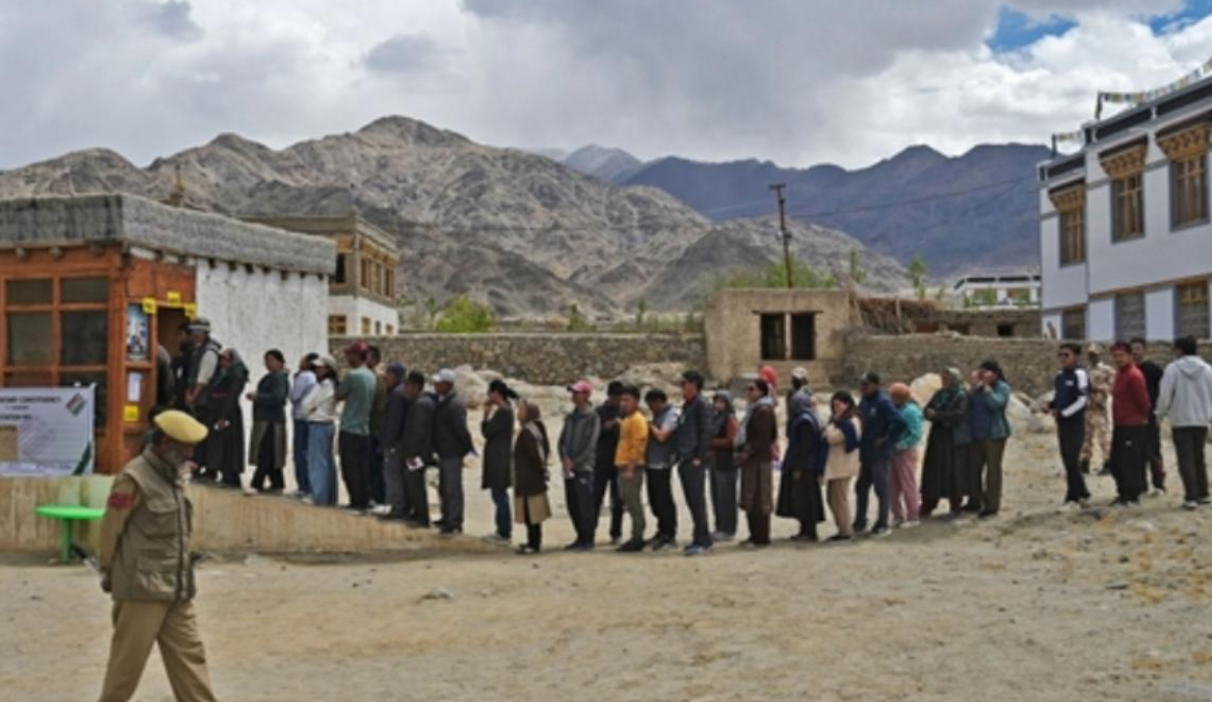
Ladakh is witnessing an important democratic exercise as voters across the Union Territory participate in panchayat and municipal elections after an eight-year gap.
Polling began at approximately 8 AM on Saturday and is scheduled to continue until 5 PM. The elections are particularly significant because they represent the first local body polls since Ladakh became a separate Union Territory in August 2019.
The last local body elections in the region were held in 2018, when Ladakh was still part of the erstwhile state of Jammu and Kashmir.
The election process is being conducted amid challenging winter conditions, tight security arrangements and continuing political discussions over local representation and administrative issues.

Elections across eight administrative districts
Polling arrangements have been made across the eight administrative districts of Ladakh:
- Leh
- Kargil
- Sham
- Changthang
- Drass
- Nubra
- Zanskar
- Sankoo
The municipal elections are taking place in Leh and Kargil, while panchayat elections are being conducted across the wider region.
Authorities have arranged transportation, security personnel, electronic voting machines, ballot materials and monitoring facilities.
Special arrangements have also been made to facilitate voting in remote and high-altitude locations.
Important figures from the election
According to official figures reported ahead of polling, several candidates had already been elected unopposed.
Out of 192 Panchayat Halqas, 55 Sarpanches were elected without a contest, leaving 137 seats for polling.
Similarly, 1,186 candidates were elected unopposed out of a total of 1,428 Panch seats. Elections are being conducted for the remaining 242 seats.
In the Leh Municipal Council, polling is taking place across all 21 wards.
In Kargil, four candidates were elected unopposed in four of the 17 municipal wards, leaving 13 wards for voting.
These figures demonstrate the scale of the grassroots electoral exercise.
Why are these elections important?
Local government institutions play an important role in delivering basic public services.
In geographically challenging regions such as Ladakh, local representatives can help communicate community requirements to administrative authorities.
Some of the most important local issues include:
- Drinking water availability
- Road connectivity
- Healthcare access
- Education facilities
- Electricity supply
- Rural employment
- Tourism development
- Environmental protection
Elected representatives can help identify local priorities and participate in discussions about development plans.
Panchayats are particularly important because they provide a platform for communities in rural areas to participate in local governance.
Municipal councils, meanwhile, are responsible for important urban civic matters.
Voting in extreme weather conditions
Conducting elections in Ladakh during November presents logistical challenges.
Several polling stations are located in remote mountainous areas where temperatures can fall significantly during winter.
The administration has made arrangements to transport polling teams, election materials and security personnel to designated locations.
Heating facilities have also been arranged at polling stations to make voting more accessible.
One particularly notable polling location is Hanley Po village in Changthang, situated approximately 15,000 feet above sea level.
The arrangements demonstrate the logistical requirements involved in conducting elections across difficult Himalayan terrain.
Political tensions and the demand for dialogue
The elections are taking place against the backdrop of ongoing political discussions in Ladakh.
The Leh Apex Body (LAB) has been holding protests and demanding dialogue with the Central Government.
One of the concerns raised by the organisation relates to the timing of the upcoming Ladakh Autonomous Hill Development Council elections, scheduled for December 4.
LAB has sought postponement of those elections until 2027.
The organisation has also raised concerns regarding winter conditions and the participation of residents who migrate seasonally.
These issues reflect the wider debate about political representation, local autonomy and administrative arrangements in Ladakh.
The next major electoral event: December 4
The local body elections will be followed by elections to the eight Ladakh Autonomous Hill Development Councils (LAHDCs).
Those elections are scheduled for December 4, 2026.
The expanded Hill Council electoral structure covers 100 constituencies across Ladakh.
According to the official administration’s announcement, 36 of the 100 seats have been reserved for women.
This provision is an important development in terms of increasing women’s representation in local democratic institutions.
What does this mean for Ladakh’s future?
Local elections are important because democratic participation must extend beyond national and state-level politics.
People living in remote villages need accessible institutions that can raise their concerns and support local development.
The effectiveness of these institutions will depend on their administrative powers, access to financial resources and ability to implement decisions.
The elections may also provide an opportunity to improve communication between communities and government departments.
Conclusion
Ladakh’s panchayat and municipal elections on November 21 mark an important moment for grassroots democracy in the Union Territory.
After an eight-year gap, voters are participating in an electoral process aimed at restoring local representation and strengthening civic institutions.
With the LAHDC elections scheduled for December 4, Ladakh is entering an important phase of local political activity.
The long-term success of this democratic exercise will depend on how effectively elected representatives address the needs of residents and improve local governance