India’s Manufacturing Sector Reaches a 9-Month High in Nov 26
|
Getting your Trinity Audio player ready...
|
India’s Manufacturing PMI Rises to 56 in November; Strong Domestic Demand and New Orders Support Industrial Growth
India’s manufacturing sector recorded a significant improvement in November 2026, indicating continued strength in industrial and private-sector economic activity.
According to the HSBC Flash India Purchasing Managers’ Index (PMI) data released on November 23, India’s manufacturing activity accelerated during the month. Strong domestic demand, an increase in new business orders and improved production activity contributed to the sector’s performance.
The latest figures provide a positive indication of the country’s industrial momentum at a time when policymakers and businesses are closely monitoring economic growth, inflation, employment and international trade.
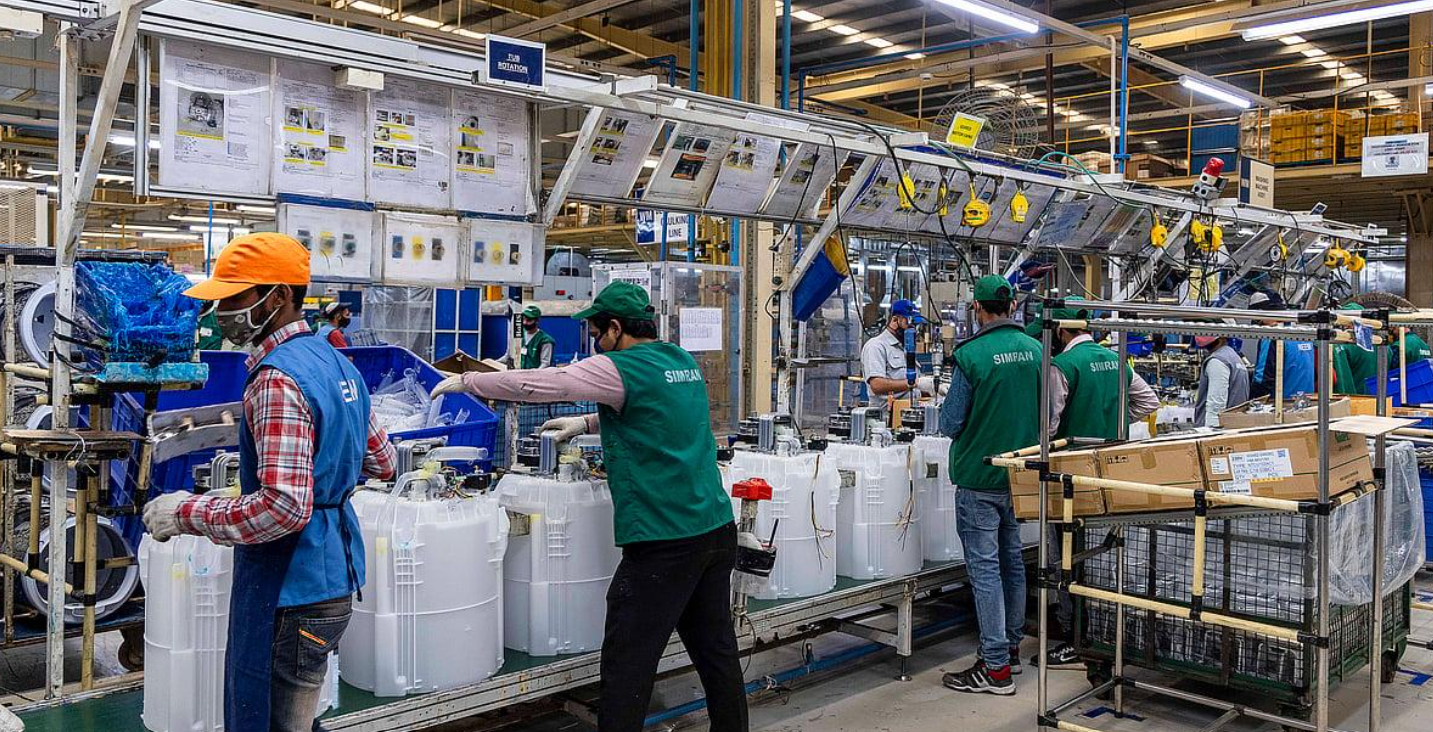
Manufacturing PMI rises to 56
According to the November flash survey, India’s Manufacturing PMI increased from 54.7 in October to 56.0 in November.
This represents the strongest reading in nine months.
The increase indicates that manufacturing companies experienced stronger business conditions compared with the previous month.
Manufacturing PMI is an important economic indicator because it provides an early assessment of industrial activity through surveys of purchasing managers.
A reading above 50 indicates expansion, while a reading below 50 indicates contraction.
Therefore, a reading of 56.0 suggests that the manufacturing sector continued to expand at a healthy pace.
Composite PMI reaches 56.3
The HSBC Flash India Composite PMI increased slightly from 56.2 in October to 56.3 in November.
The composite index combines manufacturing and services activity to provide a broader picture of the private sector.
The latest reading indicates that overall private-sector business activity continued to expand.
Although the improvement was relatively small, the index remained comfortably above the 50-point threshold.
This suggests that India’s private sector maintained positive momentum during November.
Manufacturing output records stronger growth
Another important development was the improvement in manufacturing output.
The manufacturing output index increased from 57.0 in October to 58.3 in November.
This suggests that factories increased production activity during the month.
Several factors contributed to the improvement, including stronger demand, higher order volumes and improved business conditions.
The performance is particularly relevant for industries such as:
- Automobile manufacturing.
- Electronics production.
- Engineering goods.
- Textiles and garments.
- Industrial machinery.
- Consumer goods.
- Electrical equipment.
These industries form an important part of India’s manufacturing ecosystem and contribute to employment, exports and domestic economic activity.
New orders provide strong support
New business orders were among the major drivers of manufacturing growth.
The survey indicated that total new business orders increased at the fastest pace since June.
This suggests that companies received stronger demand from customers and experienced improved business opportunities.
When manufacturers receive additional orders, they generally need to increase production, purchase more raw materials and improve their supply-chain capacity.
This can create positive effects across multiple sectors, including transportation, warehousing, packaging and logistics.
Small and medium-sized enterprises can also benefit when large manufacturers increase their procurement requirements.
Services sector continues expanding, but at a slower pace
While manufacturing activity improved, the services sector experienced a slight moderation.
The HSBC India Services Business Activity Index declined from 55.8 in October to 55.3 in November.
However, the index remained above 50, indicating continued expansion.
India’s services sector includes banking, information technology, telecommunications, tourism, hospitality, transportation, education and healthcare.
These industries account for a substantial share of economic activity and employment.
The November figures suggest that services businesses continued to grow, although the pace was slightly slower than in October.
Export orders show improvement
India’s export performance also received positive signals from the November PMI survey.
New export orders increased at the fastest pace in four months.
Manufacturers reported stronger foreign demand, while services businesses also recorded an improvement in international orders.
Exports are important for India’s economic development because they contribute to foreign exchange earnings, support domestic production and improve the global competitiveness of Indian companies.
However, export performance can still be affected by international trade conditions, geopolitical tensions, currency movements and demand in major overseas markets.
Employment trends across industries
Employment conditions showed mixed developments.
Manufacturing companies increased recruitment at the fastest pace in seven months.
This is an encouraging development because stronger production activity can increase the demand for workers across factories, supply chains and supporting industries.
However, employment in the services sector experienced a marginal decline after nearly a year.
The difference between the two sectors highlights the uneven nature of economic growth.
For policymakers, maintaining employment growth across both manufacturing and services will remain an important priority.
Business confidence improves
The November survey also indicated an improvement in business confidence.
Companies expressed stronger optimism about their business outlook over the next 12 months.
The level of confidence reached its highest point since May 2026.
Businesses may be encouraged by stronger demand, improved production conditions and opportunities in domestic and international markets.
However, confidence remained below its long-term average, indicating that companies still face uncertainty regarding costs, competition and future demand.
What does this mean for India’s economy?
The November PMI data provides several positive signals for India’s economy.
First, the manufacturing sector is showing stronger expansion.
Second, domestic demand is supporting industrial production.
Third, export orders are improving.
Fourth, manufacturing companies are increasing recruitment.
Together, these developments could support economic activity in the coming months.
However, PMI figures should not be confused with GDP growth figures. PMI is a survey-based indicator of business conditions and does not directly measure the total value of goods and services produced in the economy.
A complete assessment of India’s economic performance requires additional data, including GDP, industrial production, inflation, investment, employment and trade.
Conclusion
India’s November 2026 PMI figures indicate continued strength in private-sector activity, with manufacturing emerging as a major contributor to growth.
The manufacturing PMI reached 56.0, its highest level in nine months, while the composite PMI increased to 56.3.
Stronger domestic demand, new business orders and improved production activity provide positive signals for Indian industry.
The coming months will be important in determining whether this momentum translates into sustained investment, employment and export growth.