Russian Drone Strikes Hit Ukraine’s Kyiv Region
|
Getting your Trinity Audio player ready...
|
KYIV, UKRAINE: The Russia–Ukraine war has entered another dangerous phase after Russian aerial attacks struck residential areas in Ukraine’s Kyiv region, killing civilians and damaging apartment buildings.
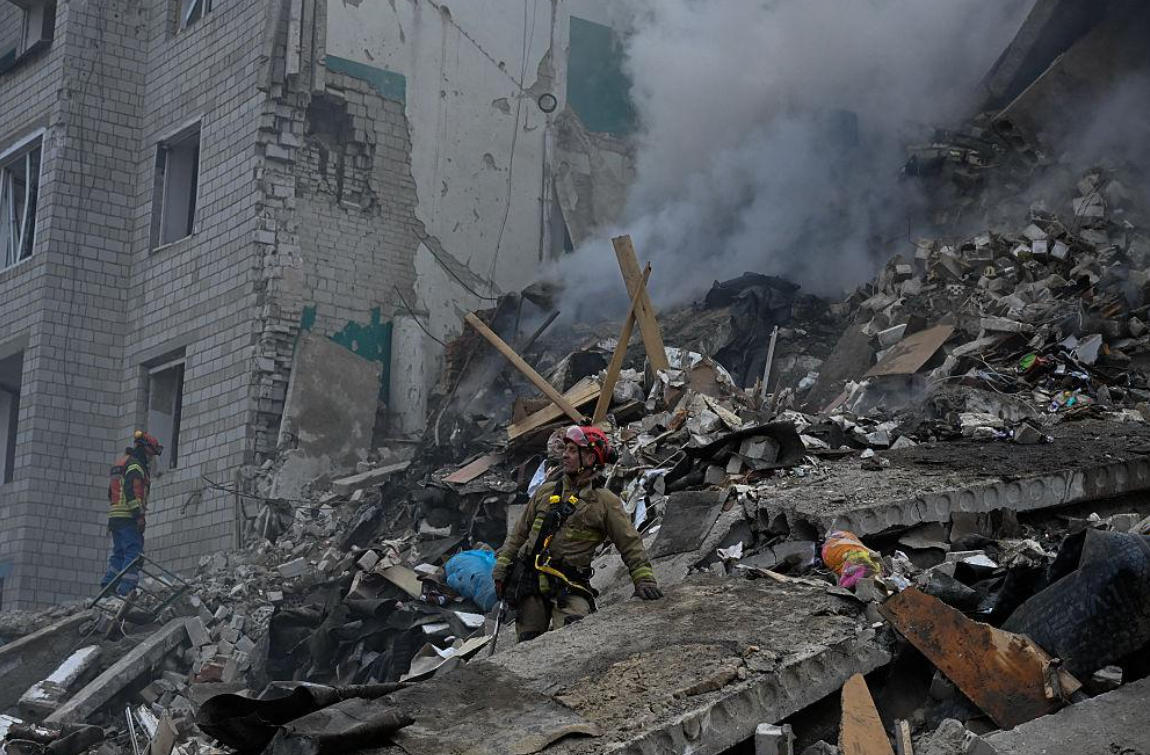
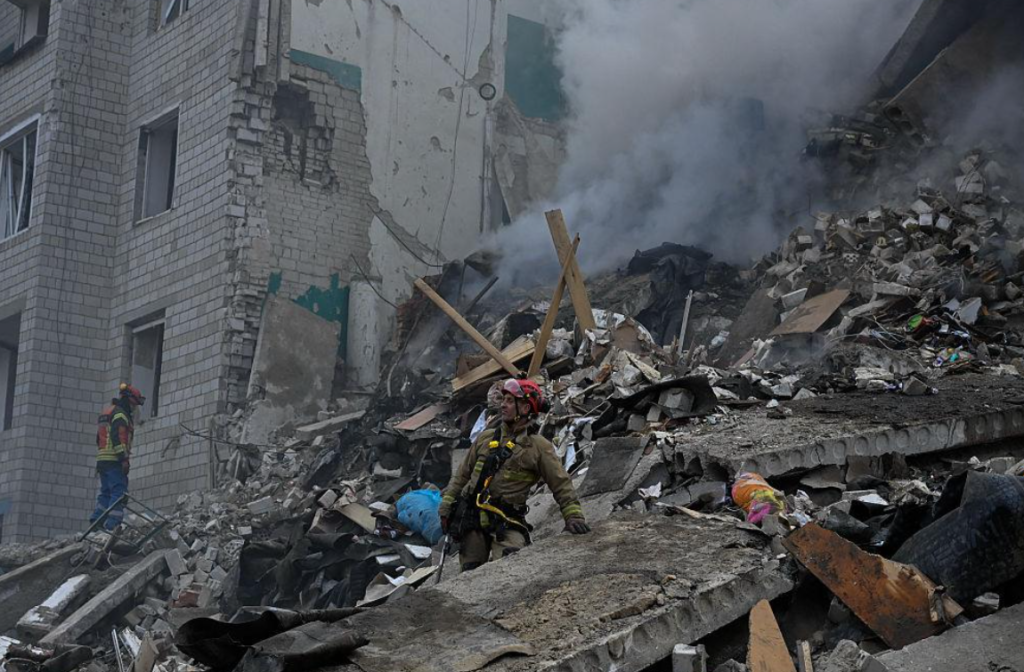
One of the most serious incidents occurred in the town of Dymer, approximately 45 kilometres north of Kyiv, where a Russian drone strike hit a five-storey residential building.
Ukrainian emergency teams continued search-and-rescue operations on Monday, November 23, as several residents were feared trapped beneath the collapsed structure.
What happened in the latest Russian attack?
According to Ukrainian regional officials, the overnight attack on November 22 caused part of a five-storey apartment building to collapse.
The death toll in Dymer rose to at least 11 according to Reuters’ latest report on Monday. Two survivors, including a seven-year-old boy and a 79-year-old woman, were rescued from the rubble.
The elderly woman reportedly survived after being trapped for approximately 22 hours.
Emergency workers used heavy equipment, cranes and specialised rescue teams to search through the debris.
The operation was particularly difficult because repeated air-raid warnings and the threat of additional drone attacks forced rescuers to temporarily suspend their work.
Attacks beyond Dymer
The violence was not limited to one residential building.
Other locations across the Kyiv region also experienced attacks, with reports of civilian casualties, injuries and damage to buildings.
Ukraine reported that its air-defence forces intercepted or suppressed a large number of Russian drones during the overnight assault.
Russia has also reported intercepting Ukrainian drones targeting its territory.
Both countries continue to exchange aerial attacks as the war enters another winter.
Why is the situation becoming more dangerous?
The conflict between Russia and Ukraine began with Russia’s full-scale invasion in February 2022.
Since then, the war has developed into a prolonged military confrontation involving missiles, drones, artillery and attacks on critical infrastructure.
Winter creates additional difficulties for Ukrainian civilians. Damage to electricity facilities, heating networks and transport infrastructure can leave communities vulnerable during extremely cold weather.
Residential attacks also increase pressure on emergency services and humanitarian organisations.
International reaction and diplomatic concerns
The latest attacks have renewed international concerns about civilian protection and the possibility of further escalation.
The conflict also remains a major issue for European security, NATO countries and international diplomatic efforts.
Recent diplomatic discussions involving major powers have not yet produced a comprehensive settlement capable of ending the war.
The international community continues to face the challenge of balancing diplomatic negotiations, military assistance and humanitarian protection.
What could happen next?
Ukraine is expected to continue strengthening its air-defence capabilities while rescue teams work to identify missing residents and assess the damage.
The coming winter could become another major test for the country’s electricity supply, civilian infrastructure and humanitarian support systems.
Why this news matters: The latest attacks demonstrate that the Russia–Ukraine conflict continues to affect ordinary civilians, even far from the main battlefield. The humanitarian consequences and risks to European security remain significant.