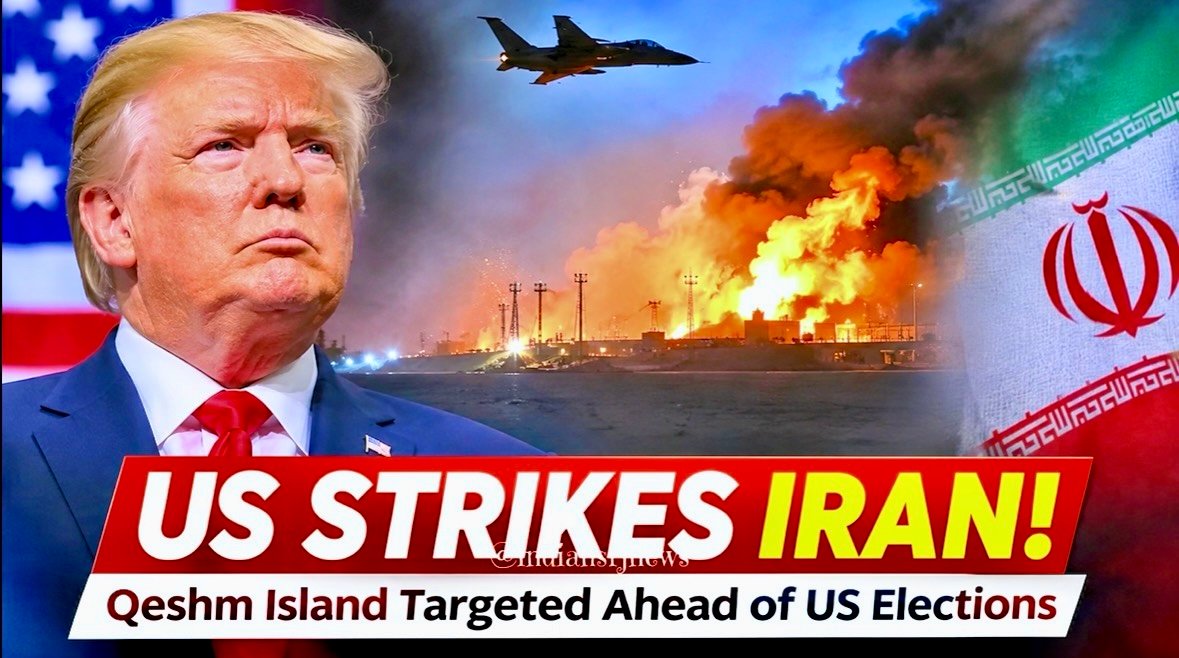
US Launches Limited Strikes on Iran’s Qeshm Island
|
Getting your Trinity Audio player ready...
|
November 3, 2026
The United States has carried out limited military strikes on Iran’s Qeshm Island in the strategically important Strait of Hormuz, according to US officials, in a significant development that comes just ahead of the American midterm elections. The strikes reportedly took place on Monday night, November 2, 2026. US officials described the operation as defensive, saying it was aimed at Iranian military capabilities allegedly being used to threaten American assets in the region.
Why Did the United States Target Qeshm Island?
According to US officials, the strikes were conducted in response to Iranian forces using surface-to-air missile systems against American assets. Reports indicate that the operation targeted military-related positions on Qeshm Island. Iranian state media reported several explosions on the island. However, detailed information about the extent of the damage, possible casualties, and the specific targets has not yet been independently established. US officials have described the strikes as limited military action rather than a resumption of large-scale combat operations.
Why Is Qeshm Island Strategically Important?
Qeshm is Iran’s largest island, located in the Strait of Hormuz, one of the world’s most important maritime trade routes.
The Strait of Hormuz connects the Persian Gulf with the Gulf of Oman and the Arabian Sea. It is a critical passage for international oil and gas shipments.
Any military escalation around this waterway could create serious concerns for global energy markets, international shipping and regional security.
US Midterm Elections Add a Political Dimension
The timing of the strikes has attracted international attention because they came just before the crucial US midterm elections scheduled for November 3.
President Donald Trump had previously indicated that Washington would avoid launching new attacks against Iran before the elections. However, the latest military operation has raised questions about the administration’s strategy toward Tehran.
The Iran conflict has also become a political issue in the United States, particularly because of its impact on fuel prices, economic conditions and public opinion.
The political consequences of the military action remain uncertain.
Diplomatic Efforts Continue Despite Military Escalation
Despite the latest strikes, diplomatic efforts between Washington and Tehran have not completely stopped.
US Vice President JD Vance has expressed optimism about the possibility of reaching a negotiated settlement with Iran.
Meanwhile, regional officials have indicated that discussions are continuing over a possible framework involving the Strait of Hormuz, maritime security and restrictions on Iranian ports.
Iran has also presented proposals linked to reopening the Strait of Hormuz and resuming nuclear negotiations, although major differences between the two sides remain.
What Could Happen Next?
The latest US strikes could further complicate an already fragile situation in the Middle East.
If tensions escalate, potential consequences could include disruptions to international shipping, increased oil price volatility and wider security concerns across the Gulf region.
For now, Washington has described its operation as limited and defensive. However, whether the strikes will lead to further military action or encourage renewed diplomatic negotiations remains to be seen.
The situation remains developing, and further official updates are awaited.