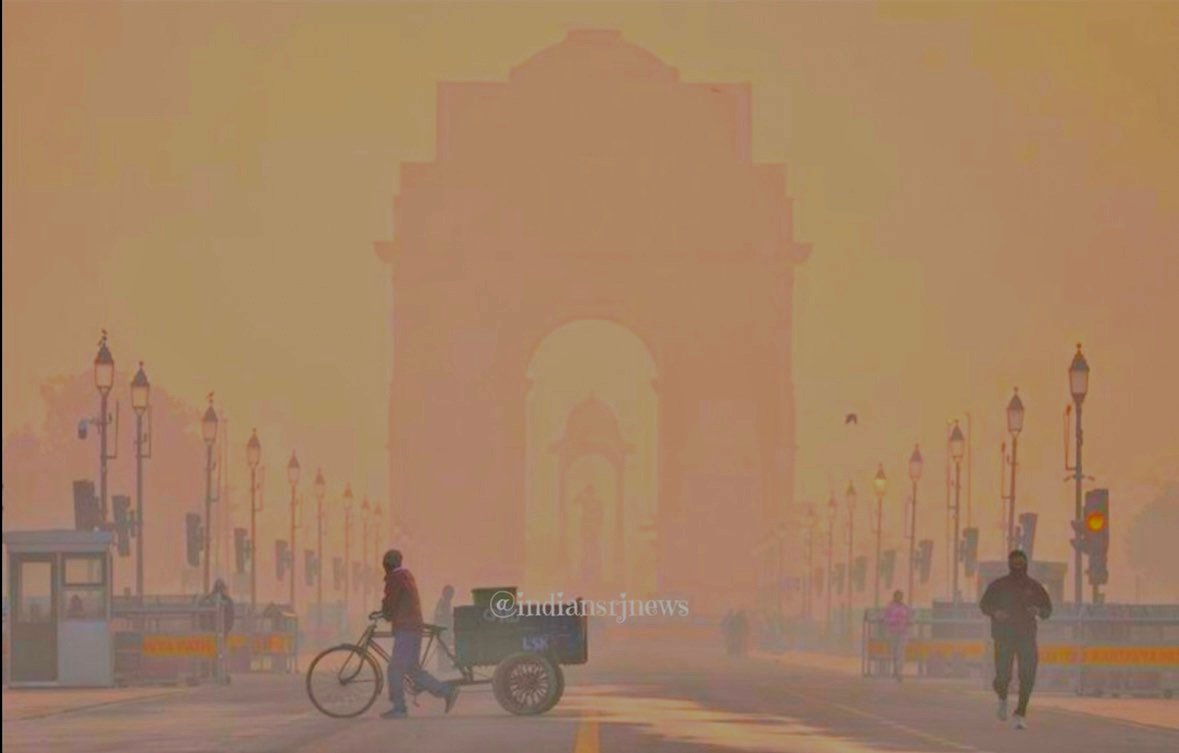
Delhi-NCR Air Pollution Worsens as GRAP Stage III
|
Getting your Trinity Audio player ready...
|
New Delhi: Air pollution across Delhi and the National Capital Region (NCR) has raised fresh concerns as air quality deteriorated ahead of the Diwali period. The Commission for Air Quality Management (CAQM) has invoked Stage III of the Graded Response Action Plan (GRAP) with immediate effect across Delhi-NCR.
According to official information reported on November 7, 2026, Delhi’s Air Quality Index (AQI) reached 380, placing it in the Very Poor category.
The move introduces additional restrictions on construction activities and certain categories of vehicles as authorities attempt to prevent further deterioration in air quality.
Delhi AQI Reaches 380
Air pollution levels have increased across the national capital with the onset of the winter season.
Weather conditions, including low wind speeds and limited dispersion of pollutants, can contribute to the accumulation of harmful particles in the atmosphere.
Following a review of the air quality situation, CAQM decided to activate GRAP Stage III across Delhi-NCR.
The emergency framework is designed to coordinate pollution-control measures among Delhi and the surrounding NCR authorities.
What Restrictions Apply Under GRAP Stage III?
The implementation of GRAP Stage III introduces several restrictions aimed at reducing pollution.
Key measures include:
- Restrictions on dust-generating construction and demolition activities.
- Restrictions on earthwork, trenching and certain road construction activities.
- Restrictions on specified categories of older petrol and diesel vehicles.
- Increased monitoring of construction sites and dust-control measures.
- Additional pollution-control instructions for relevant government departments.
Certain essential public infrastructure activities may receive exemptions subject to applicable conditions.
Which Vehicles May Face Restrictions?
Under the GRAP Stage III framework, restrictions apply to BS-III petrol and BS-IV diesel light motor vehicles in Delhi, subject to the notified rules and applicable exemptions.
Vehicle owners are advised to check the latest official notifications before travelling, particularly if their vehicles fall under the restricted categories.
Construction and Infrastructure Projects May Be Affected
Construction and demolition activities are important sources of dust pollution, particularly during the dry winter months.
Under Stage III, several dust-generating activities, including excavation, trenching and road construction, face restrictions.
However, certain essential infrastructure projects may continue under specified exemptions and conditions.
Authorities are also expected to strengthen inspections and monitoring to ensure compliance with dust-control requirements.
What Should Residents Do?
Residents of Delhi-NCR are advised to take precautions while air quality remains poor.
- Avoid unnecessary outdoor activities during periods of high pollution.
- Reduce prolonged exposure to traffic-heavy and dusty areas.
- Consider using a well-fitting, high-quality mask outdoors.
- Take additional precautions for children and older people.
- Seek medical advice if experiencing breathing difficulties.
- Monitor official AQI updates regularly.
What Happens Next?
The air quality situation will depend on weather conditions, wind movement, temperature and local emissions.
Authorities will continue monitoring pollution levels and may adjust the restrictions depending on future AQI readings and the applicable GRAP framework.
The implementation of Stage III represents an additional emergency measure intended to limit pollution exposure and protect public health across the national capital region.
Disclaimer: This article is based on information available as of November 7, 2026. Vehicle restrictions, exemptions and construction-related measures are subject to the latest official CAQM notifications.