Quad-Summit-2026-Modi-Trump-Manila-Indo-Pacific
|
Getting your Trinity Audio player ready...
|
New Delhi, November 17, 2026: The capital of the Philippines, Manila, is hosting an important diplomatic gathering as leaders of India, the United States, Japan, and Australia are scheduled to participate in a QUAD leaders’ meeting on Tuesday.
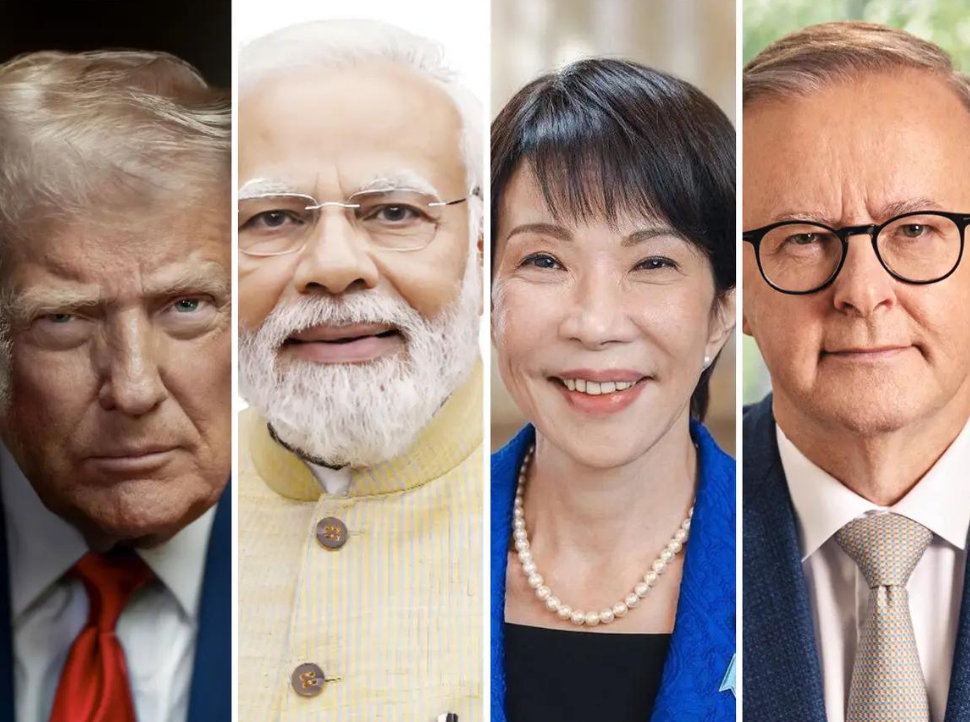
The meeting is expected to bring together Indian Prime Minister Narendra Modi, US President Donald Trump, Japanese Prime Minister Sanae Takaichi and Australian Prime Minister Anthony Albanese.
The discussions come at a time when the Indo-Pacific region is facing significant geopolitical and economic changes. Maritime security, regional stability, freedom of navigation, technological cooperation and resilient supply chains are among the issues attracting international attention.
Why the Manila meeting matters
The QUAD, formally known as the Quadrilateral Security Dialogue, is a strategic partnership involving four countries: India, the United States, Japan and Australia.
Its central objective is to promote a free, open, secure and prosperous Indo-Pacific region.
The four countries bring different strategic strengths to the partnership. India has an important geographical position in the Indian Ocean, the United States has extensive global economic and military capabilities, Japan is a major industrial and technological power, and Australia occupies a strategically important position in the wider Indo-Pacific region.
The partnership is not limited to military matters. It also covers public health, infrastructure, maritime cooperation, critical technologies, disaster response and economic security.
Background of the QUAD
The origins of the QUAD can be traced to cooperation following the Indian Ocean tsunami in 2004. India, the United States, Japan and Australia worked together on humanitarian assistance and disaster relief.
The countries subsequently initiated a strategic dialogue in 2007. Although the arrangement experienced a period of reduced activity, it was revived in 2017.
In 2021, the grouping was elevated to the leaders’ level, giving it greater diplomatic visibility.
The previous leaders’ summit took place in September 2024 in Wilmington, Delaware, hosted by then US President Joe Biden.
The Manila meeting is particularly important because it will be the first QUAD leaders’ meeting since Donald Trump began his second presidential term in January 2025.
PM Modi’s visit to the Philippines
Prime Minister Narendra Modi is visiting Manila from November 16 to 17 at the invitation of Philippine President Ferdinand R. Marcos Jr.
According to the Indian government’s official announcement, Modi will participate in the 23rd ASEAN-India Summit and the 21st East Asia Summit.
The visit reflects India’s continuing commitment to its Act East Policy, which aims to strengthen political, economic and strategic relations with Southeast Asian countries.
India and ASEAN are observing 2026 as the ASEAN-India Year of Maritime Cooperation. The relationship is also approaching two important milestones in 2027: 35 years of dialogue relations and five years of their Comprehensive Strategic Partnership.
China’s regional role and maritime security
One of the most important strategic considerations surrounding the QUAD is China’s growing presence in the Indo-Pacific.
Disagreements involving maritime claims, naval activity, and regional influence have increased the importance of security cooperation among Indo-Pacific countries.
The South China Sea is particularly significant because it carries a substantial volume of international maritime trade. The Philippines is also directly involved in disputes concerning maritime rights in the region.
However, the QUAD should not be described simply as a military alliance against China. Its officially stated objectives include maintaining regional stability, supporting international law and promoting freedom of navigation.
Economic and technological opportunities for India
The partnership also provides India with opportunities to expand cooperation in advanced technology, artificial intelligence, cybersecurity, semiconductors and industrial supply chains.
For India, these sectors are important for long-term economic development and technological self-reliance.
Cooperation with the United States, Japan and Australia could support investment, research partnerships, innovation and access to international markets.
The grouping may also contribute to more reliable supply chains for essential industrial components and critical technologies.
Importance of ASEAN and East Asia Summit
The Prime Minister’s participation in the ASEAN-India Summit and East Asia Summit adds another important dimension to the visit.
ASEAN is a regional grouping of ten Southeast Asian countries. India has developed extensive partnerships with these nations in trade, investment, connectivity, education, maritime security and digital cooperation.
The East Asia Summit provides a broader platform for discussing regional and global challenges involving major Indo-Pacific countries.
India’s participation in these meetings reflects its interest in strengthening regional cooperation beyond traditional bilateral relationships.
What could emerge from the meeting?
The discussions are expected to focus on shared strategic interests, regional stability, maritime security, economic cooperation and critical technologies.
The meeting could also provide an opportunity for leaders to review existing cooperation and identify areas requiring greater coordination.
However, specific agreements or new defence commitments should not be assumed before official announcements are made.
Conclusion
The QUAD leaders’ meeting in Manila on November 17, 2026, is an important diplomatic development for India and the wider Indo-Pacific region.
The participation of Prime Minister Narendra Modi, President Donald Trump, Prime Minister Sanae Takaichi and Prime Minister Anthony Albanese highlights the continued importance of the partnership.
For India, the QUAD offers a platform to strengthen maritime security, technological cooperation, economic partnerships and regional stability.
The official outcome of the meeting will provide a clearer picture of how the four countries intend to shape their cooperation in the coming years.