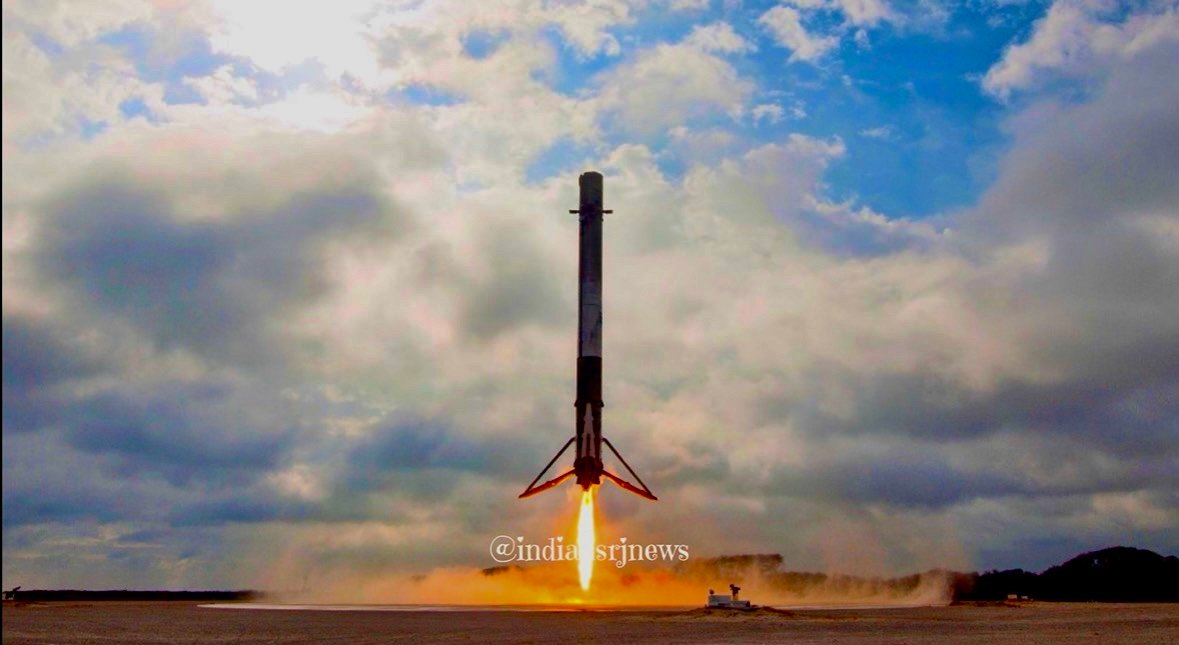
SpaceX Makes History: Starship Spacecraft Successfully Caught by Launch Tower After Returning from Orbit
|
Getting your Trinity Audio player ready...
|
STARBASE, TEXAS, November 15, 2026: SpaceX has achieved a significant milestone in space exploration after its Starship spacecraft successfully returned from orbit and was captured by the mechanical arms of its launch tower in Texas.
The achievement took place during the company’s 15th Starship test flight and represents a major step towards developing a fully reusable rocket system.
The uncrewed spacecraft launched from SpaceX’s Starbase facility in Texas on Friday, November 13. Following its journey around Earth, the spacecraft returned on Saturday after completing 14 orbits and was successfully caught by the launch tower’s giant mechanical arms.
The historic recovery demonstrates progress in SpaceX’s long-term effort to develop a spacecraft capable of travelling into orbit and returning to Earth with minimal refurbishment.
However, the mission was only partially successful in achieving its complete recovery objective because the Super Heavy booster failed to return to the launch tower.
The development is attracting attention across the global space industry because reusable launch systems could significantly change the economics of space transportation.
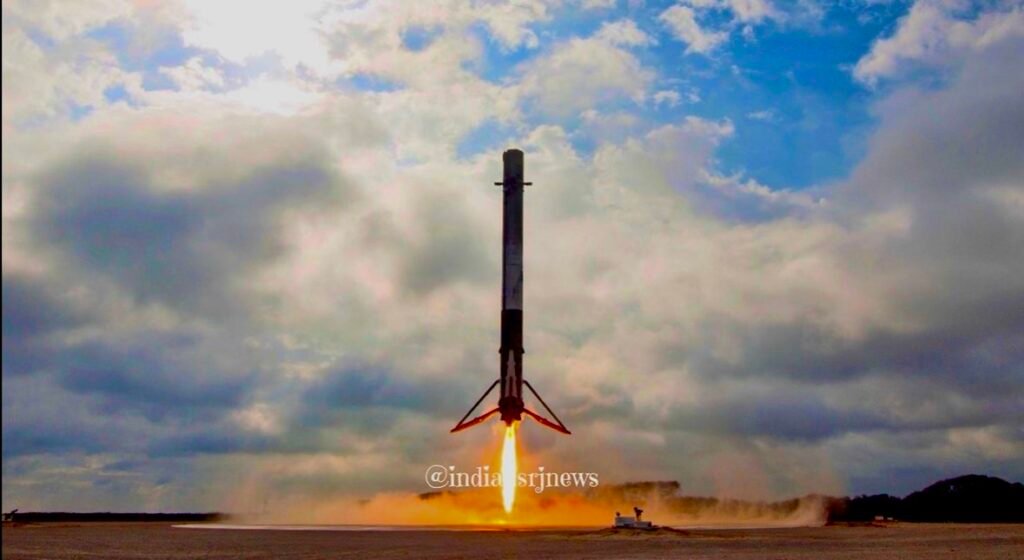
What Happened During Starship’s 15th Test Flight?
SpaceX launched its Starship vehicle from Starbase, Texas, on November 13.
The towering two-stage rocket consists of the Starship spacecraft, which forms the upper stage, and the Super Heavy booster, which provides the initial thrust required to reach space.
During the launch, the Super Heavy booster successfully carried Starship towards space before the two stages separated.
The upper-stage spacecraft continued its mission while the booster attempted to return towards its recovery area.
However, the booster encountered problems during its return flight. Its recovery attempt was abandoned, and it was destroyed over the Gulf of Mexico.
The Starship spacecraft continued its journey independently.
It completed 14 orbits around Earth and deployed 26 Starlink V3 satellites before beginning its return to Earth.
The spacecraft then re-entered the atmosphere and successfully reached the launch tower at Starbase.
First Successful Catch of an Orbital Starship Spacecraft
The most important achievement of the mission was the successful recovery of the Starship upper stage using the mechanical arms of the launch tower.
These giant arms are commonly known as chopsticks because of their appearance and function.
They are designed to catch returning rocket stages during controlled descent rather than allowing them to land on conventional landing legs.
The technology is central to SpaceX’s long-term strategy of making Starship fully reusable.
Recovering the spacecraft at the launch tower could reduce the time required to prepare the vehicle for another mission.
It could also reduce the need for expensive recovery operations and refurbishment procedures.
The successful catch is therefore an important demonstration of the technology required for rapid rocket reuse.
Why Is Reusable Rocket Technology So Important?
Traditional rocket launches have historically involved discarding major rocket components after they complete their missions.
This makes space transportation expensive because manufacturers must repeatedly build new launch vehicles or major stages.
Reusable rockets aim to change this model by recovering and reusing expensive hardware.
SpaceX has already demonstrated the commercial potential of reusable technology through its Falcon 9 programme.
The company routinely recovers and reuses Falcon 9 first-stage boosters, helping reduce launch costs and increase operational frequency.
Starship represents a more ambitious development.
The objective is to recover and reuse both the Super Heavy booster and the Starship spacecraft.
If successful, this approach could allow SpaceX to launch larger payloads more frequently and at lower costs.
It could also support future missions involving satellites, lunar exploration and eventually human travel to Mars.
The Booster Recovery Attempt Failed
Although the upper-stage recovery was successful, the mission did not achieve the complete recovery of both rocket stages.
SpaceX had intended to catch the Super Heavy booster using the launch tower’s mechanical arms.
However, the booster encountered problems during its return sequence.
According to Associated Press reporting, its engines shut down too early and its guidance system initiated a self-destruct sequence over the Gulf of Mexico.
This meant the company achieved one of the two major recovery objectives.
The successful recovery of Starship remains important because it demonstrated that an orbital spacecraft can return to its launch site and be caught by the tower mechanism.
Nevertheless, further testing will be required before SpaceX can demonstrate a consistently reusable two-stage system.
Starship Completed 14 Orbits Around Earth
Another important aspect of the mission was the spacecraft’s extended flight duration.
Starship completed 14 orbits around Earth during approximately 22 hours in space.
It also deployed 26 Starlink V3 satellites.
The mission provided an opportunity to test several aspects of the spacecraft, including its propulsion, orbital operations, thermal protection and controlled atmospheric re-entry.
SpaceX has been developing Starship for approximately a decade.
The vehicle is designed to become a major part of the company’s future launch and space transportation operations.
Its large payload capacity could support the deployment of satellite networks and other commercial space activities.
NASA’s Artemis Programme and the Moon Mission
The success of Starship is also important for NASA’s Artemis programme.
NASA selected Starship as one of the lunar landing systems intended to support future astronaut missions to the Moon.
The agency has provided billions of dollars in funding to support its development.
The spacecraft is expected to play an important role in transporting astronauts from lunar orbit to the Moon’s surface under the planned Artemis architecture.
However, several major technical milestones remain.
One of the most important challenges is demonstrating the ability to transfer propellant between spacecraft in orbit.
This capability is essential because Starship will require additional fuel to travel beyond low Earth orbit towards the Moon.
NASA’s long-term lunar exploration plans also involve infrastructure that could support more sustained human activity on the Moon.
The successful recovery of Starship is therefore an important step, but it does not mean the spacecraft is already ready for human lunar missions.
Why Fuel Transfer in Space Is a Major Challenge
One of the most complicated parts of SpaceX’s long-term Starship programme is orbital refuelling.
Unlike conventional spacecraft, which carry a limited amount of fuel, Starship is designed to receive additional propellant while in orbit.
This would allow the vehicle to begin its journey with enough fuel to reach orbit and then receive additional fuel from tanker spacecraft.
Multiple tanker launches could potentially support a fully fuelled Starship mission to the Moon or other destinations.
However, transferring cryogenic propellants in space is technically challenging.
The process requires accurate docking, fluid management, thermal control and reliable spacecraft operations.
Until this capability is demonstrated successfully, major deep-space missions using Starship will remain dependent on further testing.
What Could Starship Mean for Mars Exploration?
SpaceX has repeatedly described Mars as a long-term objective for Starship.
The company wants to develop a transportation system capable of carrying large amounts of equipment, supplies and eventually humans to the Red Planet.
Mars missions would require much more than a successful rocket launch.
They would involve life-support systems, radiation protection, landing technology, power generation, fuel production and long-duration human habitation.
Reusable launch vehicles could help reduce the cost of sending equipment and supplies to Mars.
However, the technical challenges remain enormous.
Starship’s current development programme is an important early step towards that long-term objective.
Global Competition in the Space Industry
SpaceX is not the only company developing advanced space transportation technology.
Blue Origin, founded by Jeff Bezos, is also developing its Blue Moon lunar lander for NASA’s Artemis programme.
Other companies and national space agencies are investing in reusable rockets, lunar exploration, satellite technology and commercial space services.
The competition is increasingly important because space infrastructure is becoming a major part of telecommunications, navigation, scientific research and national security.
Companies capable of reducing launch costs and improving operational reliability could gain significant advantages in the global space economy.
What Comes Next for SpaceX?
SpaceX will need to conduct further testing to demonstrate reliable recovery of both Starship and Super Heavy.
The company has also indicated ambitions to increase its launch frequency, with a longer-term target of reaching a much faster operational launch schedule.
Future missions will need to demonstrate improvements in engine reliability, orbital refuelling, spacecraft recovery and payload operations.
The company will also need to establish that the spacecraft can be reused safely and economically.
These developments will be particularly important for NASA’s future lunar exploration plans.
Conclusion: A Major Step Towards the Future of Space Travel
The successful recovery of Starship after completing 14 orbits around Earth represents a major milestone in the development of reusable space transportation.
Although the Super Heavy booster recovery attempt failed, the successful catch of the upper-stage spacecraft demonstrates important technological progress.
The achievement could contribute to the development of more affordable and frequent space launches.
It also brings SpaceX closer to demonstrating the technologies required for future lunar and deep-space missions.
The journey towards fully reusable rockets is far from complete, but the November 2026 test flight represents an important chapter in the evolution of commercial space exploration.