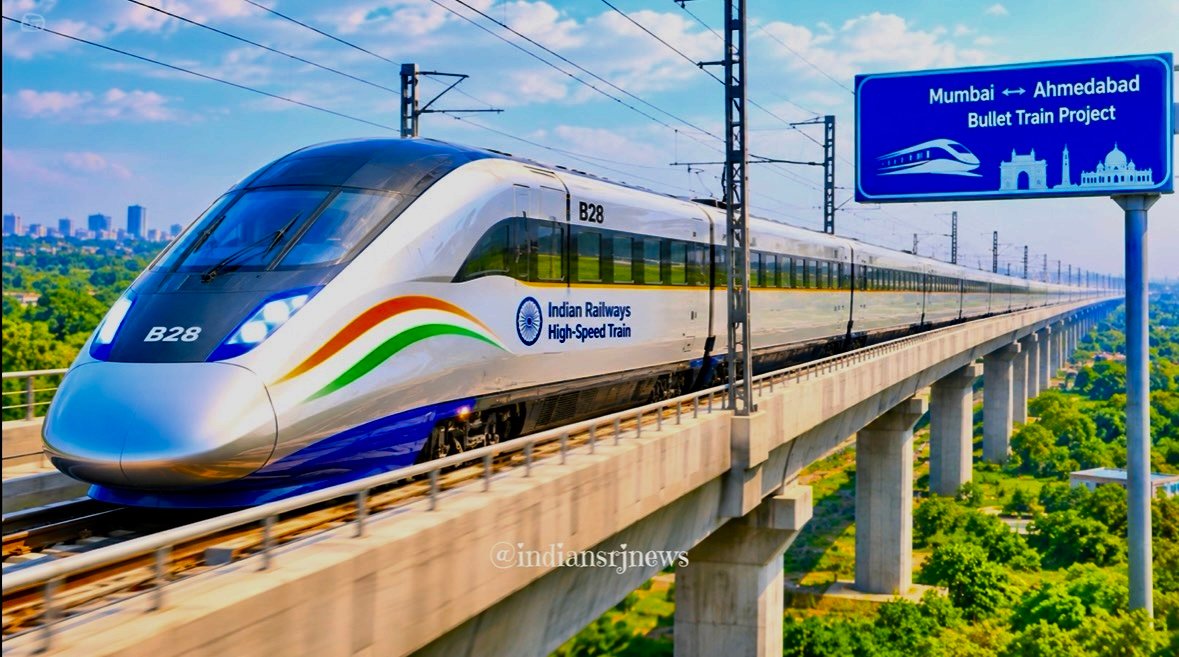
Mumbai-Ahmedabad Bullet Train Project Feature: 280 kmph
|
Getting your Trinity Audio player ready...
|
New Delhi, November 4, 2026: India is moving closer to a new era of high-speed rail transportation with the Mumbai-Ahmedabad Bullet Train project. The ambitious railway corridor is expected to transform intercity connectivity between Maharashtra and Gujarat by introducing advanced high-speed rail technology.
Alongside corridor construction, India is also advancing indigenous high-speed train development. The B28 trainset, manufactured at BEML’s facility in Bengaluru, marks an important step toward building domestic capabilities in high-speed railway technology.
According to information released by the Ministry of Railways on November 1, 2026, the indigenous train has a maximum test speed of 280 kmph and a planned operational speed of 249 kmph.
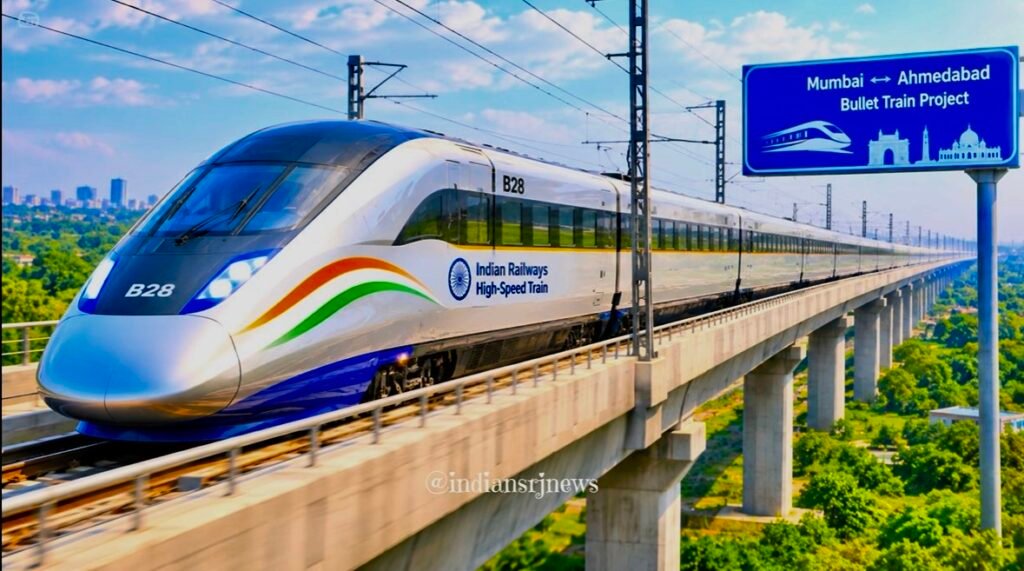
508-Kilometre Mumbai-Ahmedabad High-Speed Rail Corridor
The Mumbai-Ahmedabad High-Speed Rail corridor will cover approximately 508 kilometres, passing through Maharashtra, Gujarat and the Union Territory of Dadra and Nagar Haveli.
The project includes 12 planned stations:
- Mumbai (Bandra Kurla Complex)
- Thane
- Virar
- Boisar
- Vapi
- Bilimora
- Surat
- Bharuch
- Vadodara
- Anand
- Ahmedabad
- Sabarmati
The corridor is designed to improve connectivity between major business centres and industrial cities in western India.
India’s Indigenous B28 Bullet Train: Key Features
The B28 high-speed train is being developed with a focus on Indian operating conditions, passenger comfort and modern railway technology.
According to the Ministry of Railways, the train will feature eight coaches, comprising four motor cars and four trailer cars. Its overall length will be approximately 202 metres, with a passenger capacity of around 557.
The configuration will include seven standard-class coaches with 3×2 seating and one executive-class coach with 2×2 seating.
Passenger amenities will include comfortable seats, adequate legroom, LED lighting, charging points for mobile phones and laptops, modern bio-digester toilets and dedicated luggage storage facilities.
The train will also include accessibility features for passengers with disabilities, including wheelchair-friendly facilities.
280 kmph Test Speed: What Makes This Train Different?
One of the most significant features of the indigenous B28 train is its high-speed capability.
The train has a maximum test speed of 280 kilometres per hour, while its planned operational speed is 249 kilometres per hour.
It is important to distinguish these figures from the design specifications of the Mumbai-Ahmedabad corridor itself.
The high-speed rail corridor has a design speed of 350 kmph and a planned operational speed of 320 kmph. These are infrastructure specifications and should not be confused with the operating speed of the B28 trainset.
Japan’s Technology and India’s Manufacturing Capabilities
The Mumbai-Ahmedabad Bullet Train project is being developed with technical and financial assistance from Japan.
Japanese high-speed railway expertise, engineering practices and safety systems play an important role in the development of the corridor.
At the same time, India is encouraging domestic manufacturing of high-speed railway equipment and trainsets under the Make in India initiative.
Integral Coach Factory (ICF), in collaboration with BEML, is developing indigenous high-speed trainsets, strengthening India’s long-term manufacturing and engineering capabilities.
When Will India’s First Bullet Train Service Begin?
One of the biggest questions surrounding the project is its expected operational timeline.
A government factsheet released in July 2026 indicated that the first high-speed rail service was expected to begin in August 2027, initially on the Surat-to-Vapi section.
However, the actual commencement of passenger services will depend on the completion of associated civil construction, track installation, electrical systems, signalling and trainset-related work.
Therefore, August 2027 should be treated as an announced target rather than a guaranteed opening date.
How Could the Bullet Train Transform India’s Transport Sector?
The Mumbai-Ahmedabad Bullet Train project is expected to contribute to improved regional connectivity, business mobility and economic activity.
By connecting important cities such as Mumbai, Surat, Vadodara and Ahmedabad, the corridor could make intercity travel more convenient and support commercial development.
The project may also create opportunities in engineering, infrastructure construction, manufacturing, maintenance and specialised railway services.
Conclusion: India’s Mumbai-Ahmedabad Bullet Train project represents a major development in the country’s transportation infrastructure. With the construction of a dedicated high-speed corridor and progress in indigenous train manufacturing, India is building the foundation for a new generation of railway connectivity.
Disclaimer: This article is based on publicly available government information and project updates. Operational dates and other project details remain subject to official confirmation and further announcements.