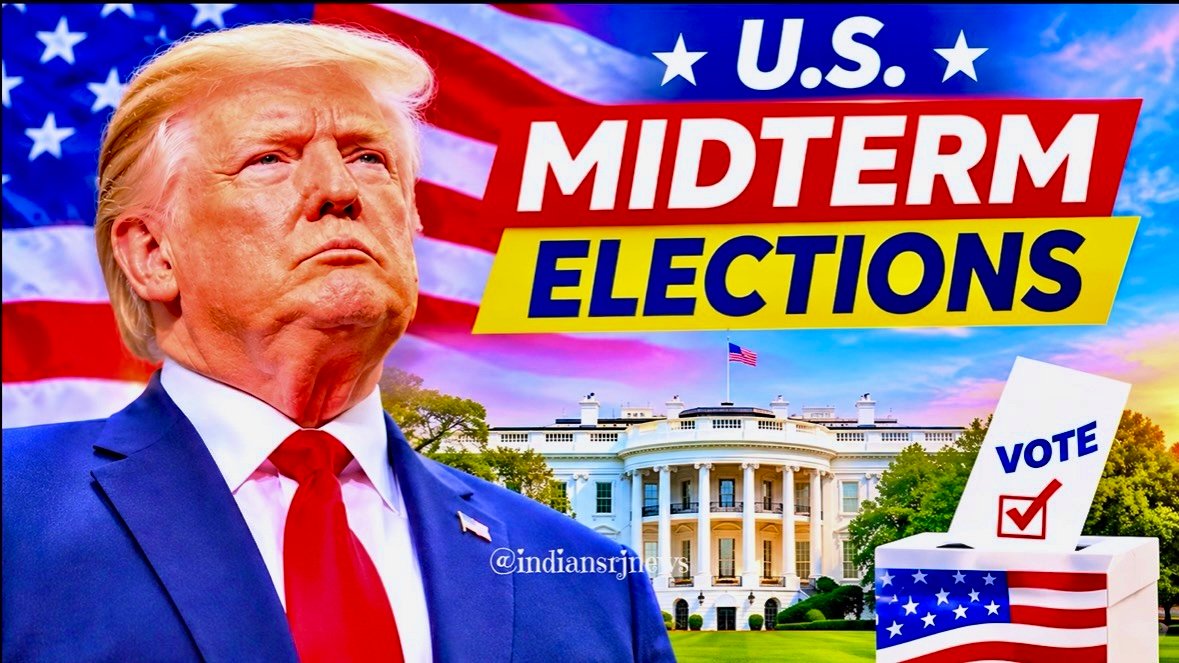
US Midterm Elections 2026: What They Mean for Trump
|
Getting your Trinity Audio player ready...
|
November 3, 2026
Millions of Americans are heading to the polls on November 3, 2026, for the United States Midterm Elections, a major political event that could reshape the balance of power in Washington. Although President Donald Trump is not running for re-election, the outcome could significantly affect his administration, its policies, and its ability to govern during the remaining two years of his presidential term. The elections are widely viewed as a public assessment of the President’s performance since returning to the White House in January 2025. The central question is whether Republicans will retain control of both chambers of Congress or whether Democrats will gain enough seats to challenge Trump’s political agenda.
What Are US Midterm Elections?
Midterm Elections are national elections held halfway through a US President’s four-year term. Since American presidential elections take place every four years, midterms are conducted approximately two years after a presidential election. For example, Donald Trump won the 2024 presidential election and began his second term on January 20, 2025. The 2026 Midterm Elections therefore take place halfway through his current presidential term. Unlike presidential elections, voters do not elect a new President during midterms. Instead, they elect members of Congress, including representatives and senators, who determine which political party controls the legislative branch of the federal government. The system lets American voters review government performance and shift the balance of power without waiting for another presidential election.
Why Are Midterm Elections Held?
The United States follows a system of separation of powers, in which the President, Congress and judiciary have different constitutional responsibilities.
Congress plays a crucial role in passing laws, approving federal spending, overseeing government departments and examining the actions of the executive branch.
Midterm Elections allow voters to decide whether the President’s political party should continue controlling Congress or whether the opposition party should gain greater influence.
There are several major reasons behind these elections:
- Public accountability: Voters can express their satisfaction or dissatisfaction with the President’s performance.
- Balance of power: Elections determine which party controls the House of Representatives and Senate.
- Legislative decisions: The results influence how easily the President can pass new laws and implement policies.
- Government oversight: Congressional committees can investigate federal agencies and administration decisions.
- Representation: Americans get an opportunity to elect representatives who reflect their political and economic concerns.
In simple terms, midterms act as a political report card for the President and the ruling party.
What Is Actually Being Elected in 2026?
The 2026 Midterm Elections involve two major chambers of the US Congress.
1. House of Representatives
All 435 voting seats in the House of Representatives are being contested.
Members of the House serve two-year terms, which means every seat is subject to election every two years.
The party that secures at least 218 seats in the 435-member House generally holds the majority, subject to vacancies and the chamber’s rules.
2. US Senate
Approximately one-third of the Senate is elected every two years because senators serve six-year terms.
In the 2026 elections, 35 Senate seats are being contested, including two special elections.
The Senate has 100 members, with two senators representing each of the 50 states.
A party generally needs 51 seats to hold a majority, although the Vice President can cast a tie-breaking vote when the chamber is evenly divided.
Apart from Congress, several states are also holding gubernatorial, state legislative and local elections.
Why Is This Election So Important for Donald Trump?
Donald Trump won the 2024 presidential election and returned to the White House for his second term.
His current presidential term is scheduled to end on January 20, 2029. The 2026 Midterm Elections will not directly decide whether he remains President.
However, the results could determine how much political power he has during the second half of his presidency.
If Republicans retain control of both the House and Senate, Trump will have a comparatively easier path to advance his legislative priorities, negotiate budgets and secure congressional support for his policies.
However, if Democrats gain control of either chamber, the political situation could become significantly more complicated.
An opposition-controlled House could launch investigations into administration decisions, conduct congressional hearings, challenge government policies and make it harder to pass legislation.
If Democrats gain control of the Senate, they could also influence confirmation proceedings for important government officials and federal judges.
This is why the midterm results matter even though Trump’s presidential term does not end in 2026.
What Happens If Donald Trump’s Republican Party Loses?
A Republican defeat could have several important political consequences.
1. Stronger Opposition in Congress
Democrats could gain control of one or both chambers, giving them greater influence over legislation and government oversight.
2. Investigations and Congressional Hearings
Opposition lawmakers could use committee leadership and investigative powers to examine decisions made by the Trump administration.
3. Delays in Government Policies
Major legislative proposals, spending plans and political priorities could face greater resistance.
4. Pressure on the Trump Administration
A poor election result could increase political pressure on the President and raise questions about public confidence in his leadership.
5. Impact on the 2028 Presidential Election
The results could influence the political strategies of both parties ahead of the next presidential election in 2028.
However, losing control of Congress does not automatically remove a President from office. A President can continue serving the full four-year term unless a separate constitutional process changes that situation.
What Is the Historical Record of Midterm Elections?
American political history shows that the President’s party often loses congressional seats during midterm elections.
According to historical analysis by the Brookings Institution, the President’s party lost ground in the House of Representatives in 20 of the 22 midterm elections held between 1938 and 2022.
That represents approximately 91% of those elections.
Another analysis covering the 20 midterms between 1946 and 2022 found that the President’s party lost House seats in 18 elections, with an average loss of approximately 26 seats.
There have been notable exceptions.
- 1998: President Bill Clinton’s Democratic Party gained House seats despite the political controversy surrounding his administration.
- 2002: President George W. Bush’s Republican Party gained seats following the September 11, 2001 terrorist attacks and the resulting increase in public support.
These examples demonstrate that midterm outcomes are not guaranteed. Major national events, economic conditions, presidential approval ratings and the political environment can influence the results.
It is also important to understand that these historical percentages refer to the President’s party gaining or losing House seats, not to the President personally winning or losing a presidential election.
What Factors Could Influence the 2026 Results?
Several issues could influence how Americans vote in the 2026 Midterm Elections.
Cost of living and inflation: Household expenses, food prices, housing costs, and healthcare affordability are major concerns for voters.
Economy and employment: Job creation, wages, economic growth, and business confidence could influence public opinion.
Immigration policies: Trump’s approach to border security and immigration remains an important political issue.
Foreign policy: The administration’s decisions regarding Iran, the Middle East, and international relations could also affect voter perceptions.
Presidential approval ratings: Public satisfaction with the President is historically one of the important indicators of midterm performance.
The results will reflect how voters assess the government’s overall performance rather than just one individual policy.
What Is Trump’s Political Strategy If Republicans Are Losing?
It is not possible to know Donald Trump’s private thoughts or political calculations without direct evidence. However, from a political perspective, a President facing the possibility of losing congressional control has several incentives.
Trump would have an interest in mobilising Republican voters, defending vulnerable congressional candidates, highlighting his administration’s achievements and presenting the election as a choice between competing national agendas.
He could also seek to keep Republican lawmakers united around his legislative priorities and use public campaigning to put pressure on undecided voters.
If Republicans lose control of Congress, the administration may need to negotiate more frequently with Democrats, adjust its legislative strategy and rely more heavily on executive actions within constitutional limits.
A midterm defeat could therefore weaken the President’s political influence, but it would not automatically end his presidency.
Will Donald Trump Get Another Four-Year Term If He Wins?
This is one of the most common misunderstandings about U.S. midterm elections. Donald Trump is not competing for another presidential term in 2026. He won the 2024 presidential election for a second time, and his current term runs from January 20, 2025, to January 20, 2029. If Republicans win the 2026 Midterm Elections, Trump will continue serving his existing term with potentially stronger congressional support. If Republicans lose, he will remain President until the end of his current term, unless removed through a separate constitutional process or otherwise leaving office. The next scheduled US presidential election is in November 2028, followed by the next inauguration in January 2029. Under the 22nd Amendment to the US Constitution, no person can be elected President more than twice. Since Trump has already been elected twice, he cannot be elected President for a third time under the current constitutional rule.
Conclusion: More Than Just an Election
The 2026 US Midterm Elections are much more than a routine political exercise. They represent a crucial test of public opinion, congressional power, and the future direction of American politics. While Donald Trump will remain President regardless of the midterm outcome, the results could determine whether he governs with the support of a Republican-controlled Congress or faces a stronger Democratic opposition. Ultimately, the election will decide the balance of power in Washington and could shape the final two years of Trump’s current presidential term.