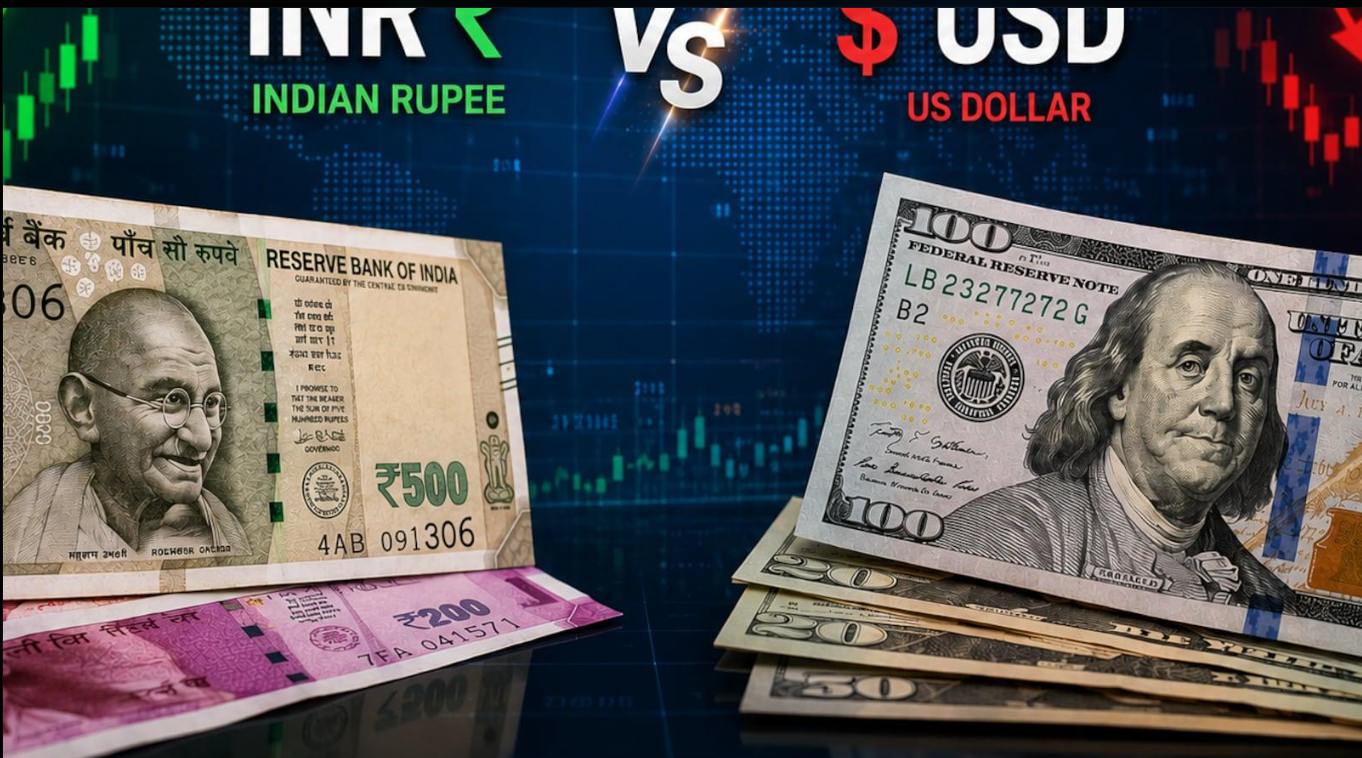
Indian Rupee Rises to Six-Month High Against US Dollar
|
Getting your Trinity Audio player ready...
|
Mumbai, November 9, 2026: The Indian rupee has registered a significant recovery against the US dollar, reaching a six-month high amid improving market conditions, lower crude oil prices and renewed foreign investment in Indian equities.
According to a Reuters report published on November 9, the rupee touched an intraday high of 93.70 against the US dollar on Monday. The recovery follows a period of pressure on the domestic currency and represents an improvement in India’s foreign exchange market.
The currency’s recent performance has attracted attention from investors, financial analysts and market participants who are closely monitoring the Reserve Bank of India’s next steps.
Why Is the Indian Rupee Strengthening?
Several domestic and international factors have contributed to the recent improvement in the rupee’s value.
One of the major factors is the decline in international crude oil prices. India imports a substantial portion of its crude oil requirements, and lower prices can reduce the country’s overall import bill and demand for foreign currency.
Another important factor is renewed foreign investment in Indian equities. Increased investment flows can support demand for the domestic currency.
Recent measures by the Reserve Bank of India have also helped ease some of the imbalance between the demand and supply of foreign currency.
What Is the Role of the Reserve Bank of India?
The Reserve Bank of India plays an important role in maintaining stability in the foreign exchange market.
Market participants are watching whether the central bank will purchase dollars to rebuild foreign exchange reserves and manage the pace of rupee appreciation.
The RBI must balance currency stability, foreign exchange reserves and the country’s broader economic requirements.
How Could a Stronger Rupee Affect Ordinary People?
A stronger rupee can have several economic implications.
Importers may benefit because purchasing goods and raw materials from international markets can become relatively cheaper when the exchange rate improves.
The impact may also be relevant for industries that depend heavily on imported machinery, electronics and other components.
However, the benefits are not necessarily immediate for consumers. Petrol and diesel prices, for example, are influenced by international crude prices, taxes, refining costs and other factors in addition to the exchange rate.
What Does the Future Hold for the Rupee?
The rupee’s future movement will depend on several developments, including international oil prices, foreign investment flows, global market conditions and RBI policy.
Financial markets will continue to monitor these factors to understand whether the recent recovery can be sustained.
The latest appreciation represents a positive development for the domestic currency, although market movements remain subject to global economic uncertainty.