Akash Deep Tradition in Kashi: Ghats During Kartik Maas?
|
Getting your Trinity Audio player ready...
|
Varanasi
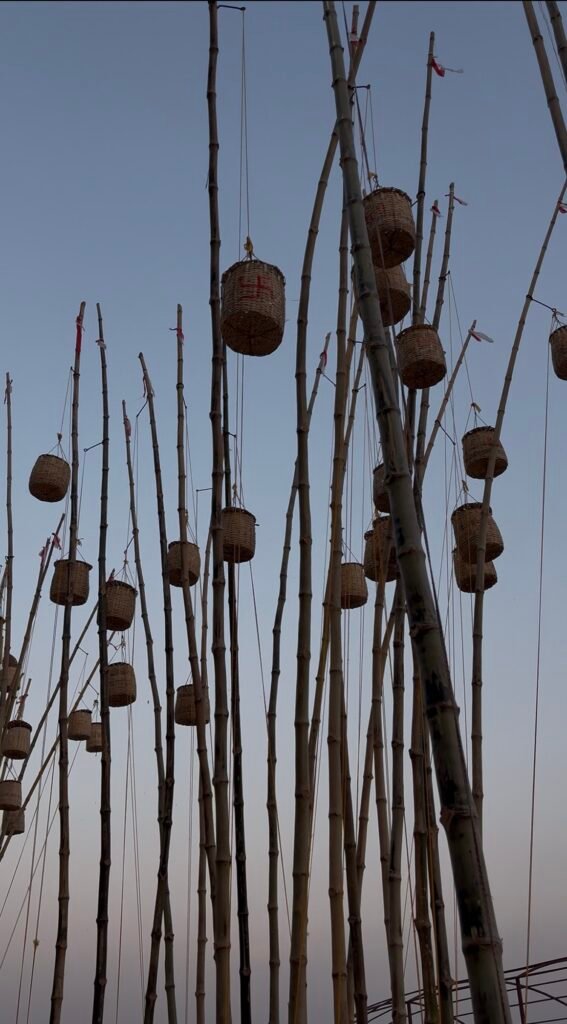
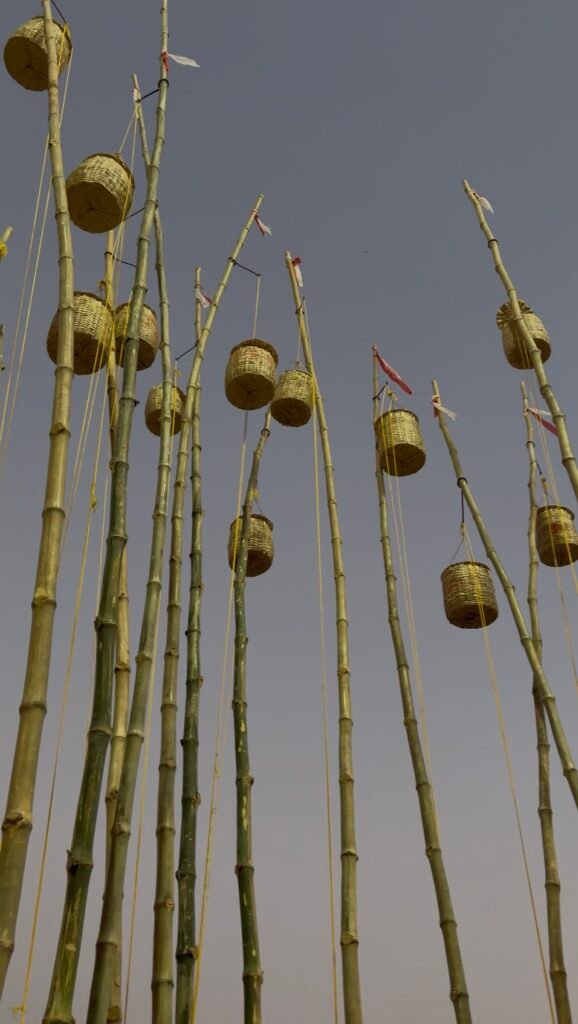
During Kartik Maas, Akash Deep lamps glowing above the Ganga ghats are a distinctive feature of Varanasi’s religious culture. Small baskets holding burning lamps are suspended from tall bamboo poles, creating a unique evening atmosphere along the riverfront. Beyond their visual beauty, these lamps are associated with religious beliefs, respect for ancestors, and traditions that have been passed down through generations.
Panchganga Ghat is particularly associated with the Akash Deep tradition. Other ghats, including Dashashwamedh, Assi, Kedar, and Gaighat, are also mentioned in accounts of this practice. However, it would be inaccurate to suggest that Akash Deep is limited exclusively to these locations. During Kartik Maas, devotees observe the tradition at different places according to their religious customs.
What Is the Akash Deep Tradition?
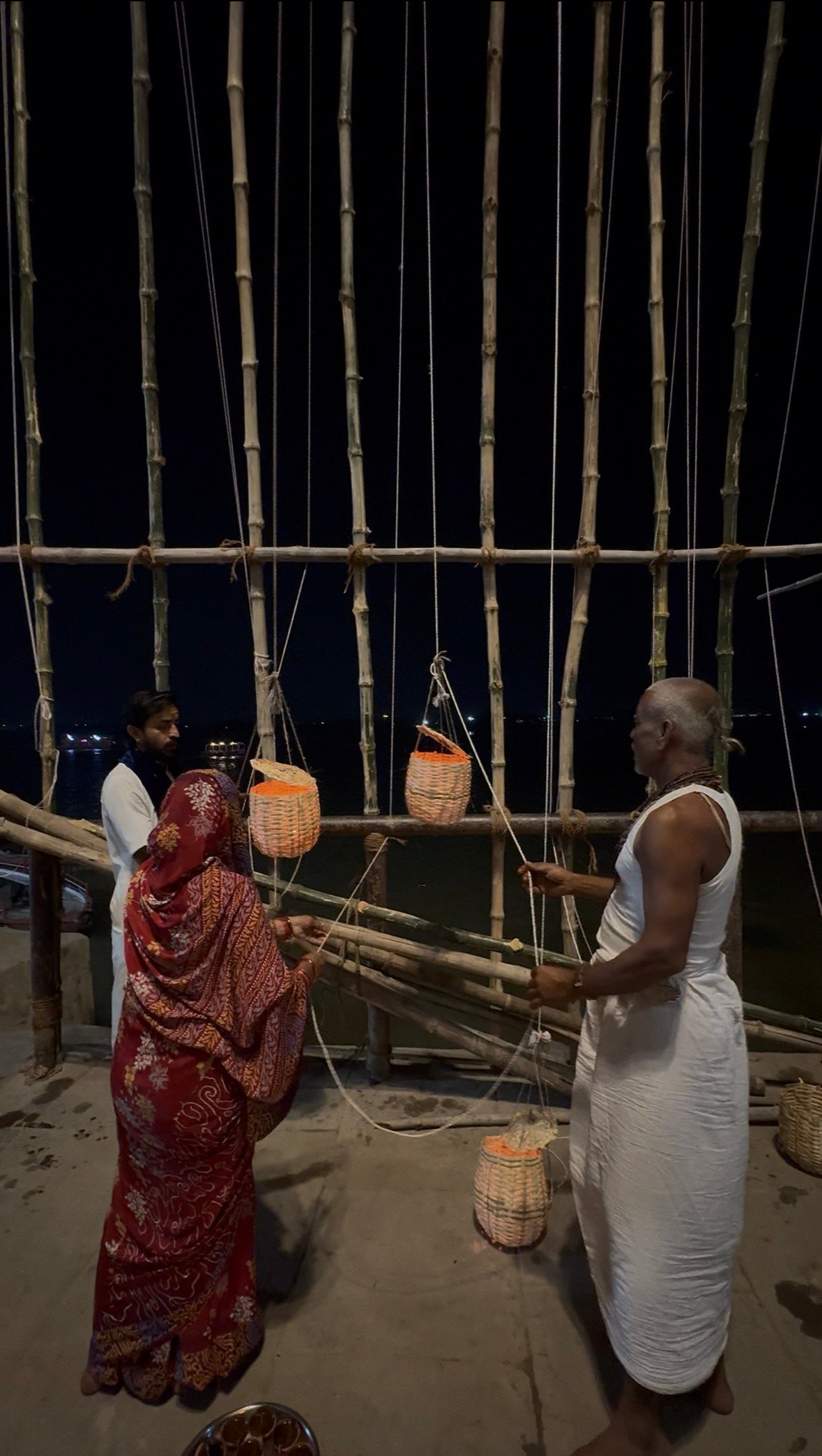
The term Akash Deep literally refers to a lamp placed high above the ground. Unlike an ordinary lamp kept on the ground, at a temple or at a place of worship, an Akash Deep is placed inside a small basket attached to the upper portion of a tall bamboo pole. The lamp is then lit so that its light can be seen from a distance.
According to religious beliefs, lighting Akash Deep during Kartik Maas is a way of expressing devotion and respect towards one’s ancestors. The practice is associated with remembering departed family members and symbolically offering them light. Some traditions also connect the ritual with the worship of Lord Vishnu and the accumulation of spiritual merit.
These are religious beliefs rooted in traditional practices. The manner in which the ritual is observed may vary among families, religious institutions, and different communities.
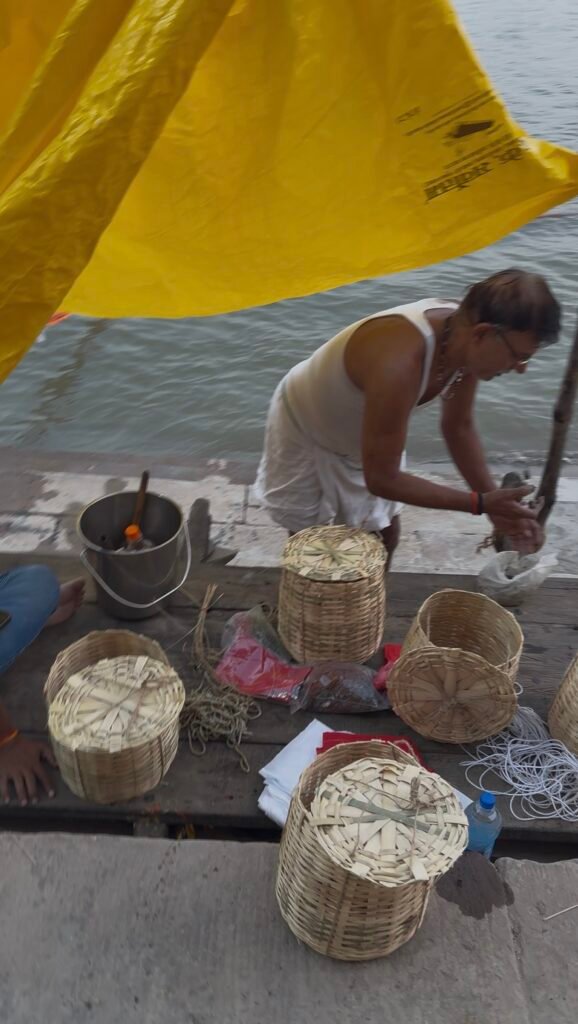
From Sharad Purnima to Dev Deepawali
In Kashi, the period from Sharad Purnima to Kartik Purnima is commonly associated with the Akash Deep tradition. In many places, the lamps begin appearing around Sharad Purnima and continue to be lit until Dev Deepawali.
However, descriptions of the precise starting date are not uniform. Some accounts of Panchganga Ghat describe the daily lighting of Akash Deep from Kartik Pratipada until Kartik Purnima. Therefore, the starting date may differ according to local traditions and the practices followed at individual locations.
Kartik Purnima is the most significant day of this period. It coincides with Dev Deepawali, when the ghats of Varanasi witness extensive lamp offerings and special religious ceremonies.
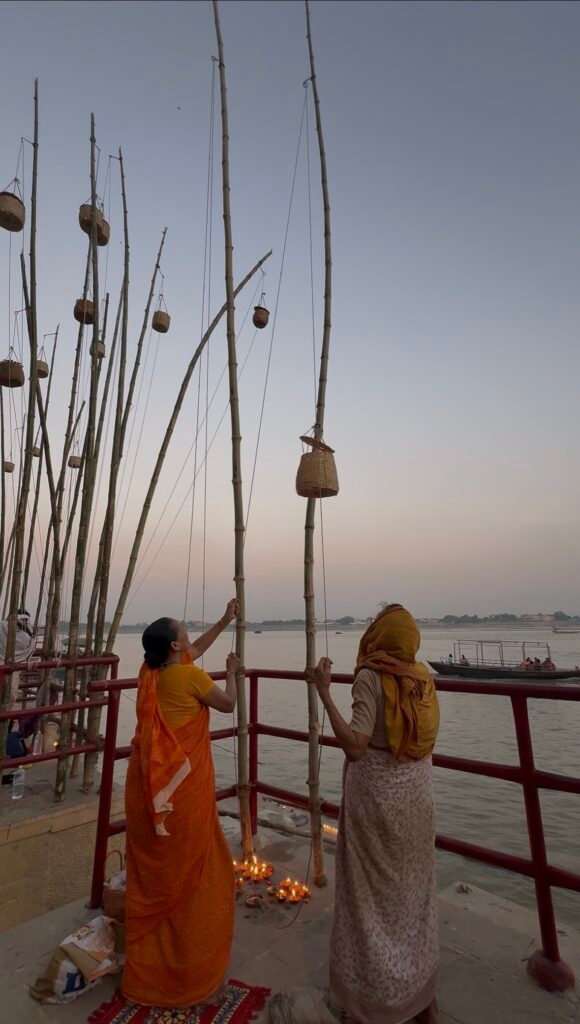
How Are Akash Deep Lamps Prepared?
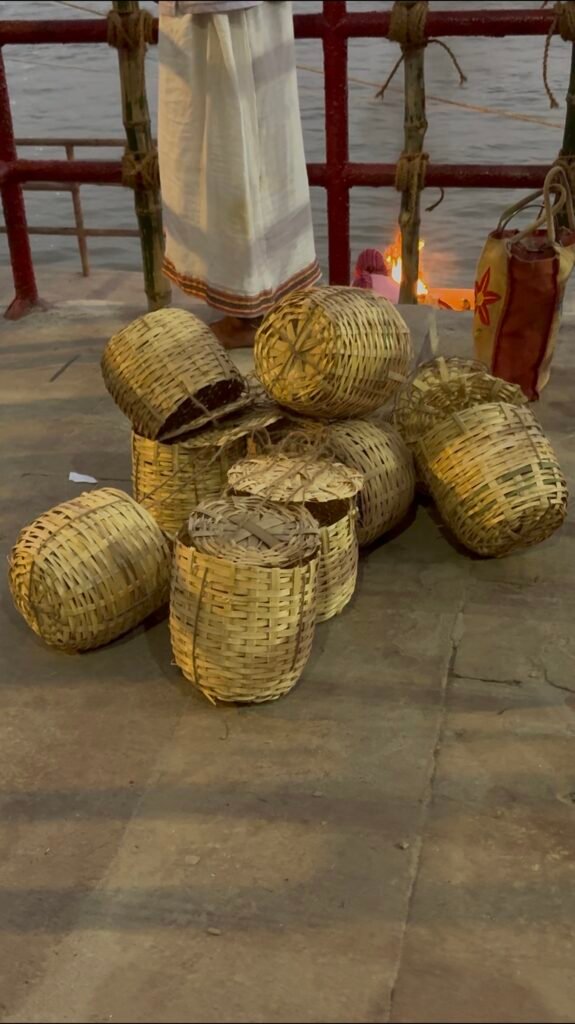
Long bamboo poles are commonly used to prepare Akash Deep. A small basket or container is attached to the upper end of the pole to hold the lamp. Ropes may be used to raise and secure the arrangement at the required height.
The lamp may use oil or ghee along with a cotton wick. Traditional descriptions also mention the use of sesame oil. The arrangement is designed to keep the flame elevated, allowing its light to be visible from the surrounding area.
As evening falls, the lamps create a distinctive scene along the Ganga. Their flickering flames, suspended above the ground, form a recognisable part of Kashi’s traditional riverfront landscape.
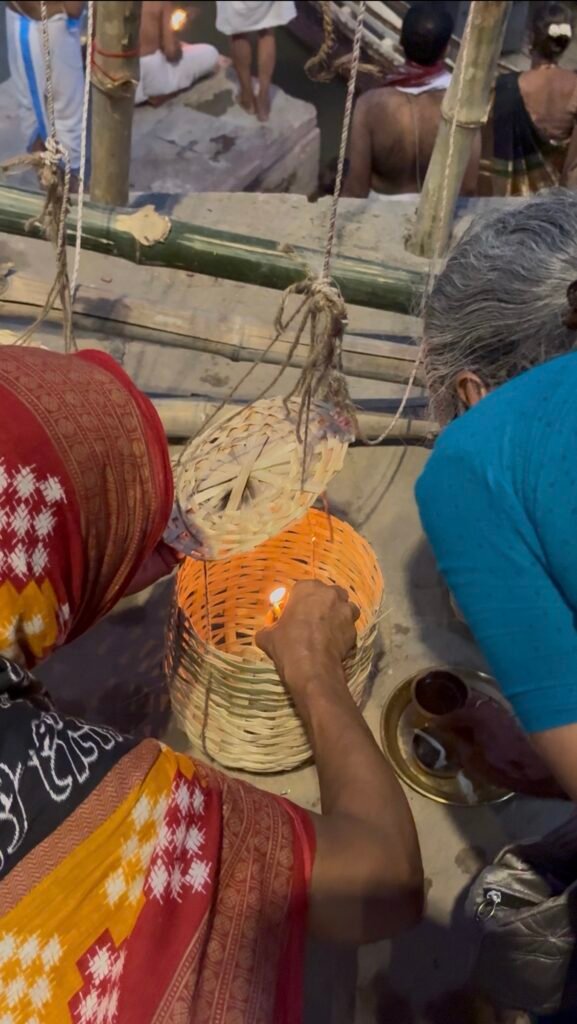
Why Is Panchganga Ghat Particularly Important?
Panchganga Ghat holds a special place in the Akash Deep tradition. Its religious significance is associated with Bindumadhav Temple, Shri Math and the observances performed during Kartik Maas.
One of the most important historical features connected with the tradition is the Hazara Deepstambh, a distinctive lamp pillar located within the Shri Math complex. Published historical accounts state that Maharani Ahilyabai Holkar of Indore commissioned a red-stone lamp pillar here in 1780. The structure was designed to accommodate a large number of lamps.
Lighting the lamps on this pillar during occasions such as Dev Deepawali is an important attraction. The structure reflects the connection between Kashi’s religious heritage and its long-standing tradition of offering lamps.
Panchganga Ghat is also significant for morning bathing and worship during Kartik Maas. However, the morning ritual of Kartik Snan and the evening lighting of Akash Deep are separate religious activities and should not be confused with one another.
Akash Deep at Dashashwamedh Ghat: A Tribute to Martyrs
Dashashwamedh Ghat is among the most prominent ghats of Varanasi. Along with its famous Ganga Aarti, the ghat hosts various religious and cultural programmes throughout the year.
One important aspect of the Akash Deep tradition here is the remembrance of police personnel and members of the Provincial Armed Constabulary (PAC) who lost their lives in the line of duty.
In 2026, reports described an Akash Deep lighting ceremony at Dashashwamedh Ghat on the occasion of Sharad Purnima, dedicated to fallen personnel. Such programmes may include Ganga worship, lamp offerings and commemorative ceremonies to honour those who sacrificed their lives for the safety of the country and society.
In this context, Akash Deep represents not only religious devotion but also remembrance, gratitude and respect. However, the Ganga Aarti and the lighting of Akash Deep remain separate activities, even when they take place at the same ghat.
The Kartik Maas Tradition at Assi Ghat
Assi Ghat is a prominent ghat in the southern part of Varanasi. Devotees and visitors come here throughout the year, while religious activities and lamp offerings add to its atmosphere during Kartik Maas.
Some accounts of the Akash Deep tradition also mention Assi Ghat. However, uniform official information about the exact number of lamps installed each year or the organisations responsible for every arrangement is not readily available.
Assi Ghat represents the southern stretch of Kashi’s extensive riverfront, where religious customs continue alongside the everyday life of the local community.
Religious Significance of Kedar Ghat
Kedar Ghat is closely associated with the Gauri Kedareshwar Mahadev Temple. Worship and other religious activities take place in this area during Kartik Maas.
Kedar Ghat is also mentioned in broader accounts of the Akash Deep tradition. Nevertheless, special temple worship, Annakoot celebrations, Kartik Snan, and Akash Deep lighting should be understood as separate religious activities.
The ghat reflects the relationship between Varanasi’s temple traditions and the religious practices observed along the banks of the Ganga.
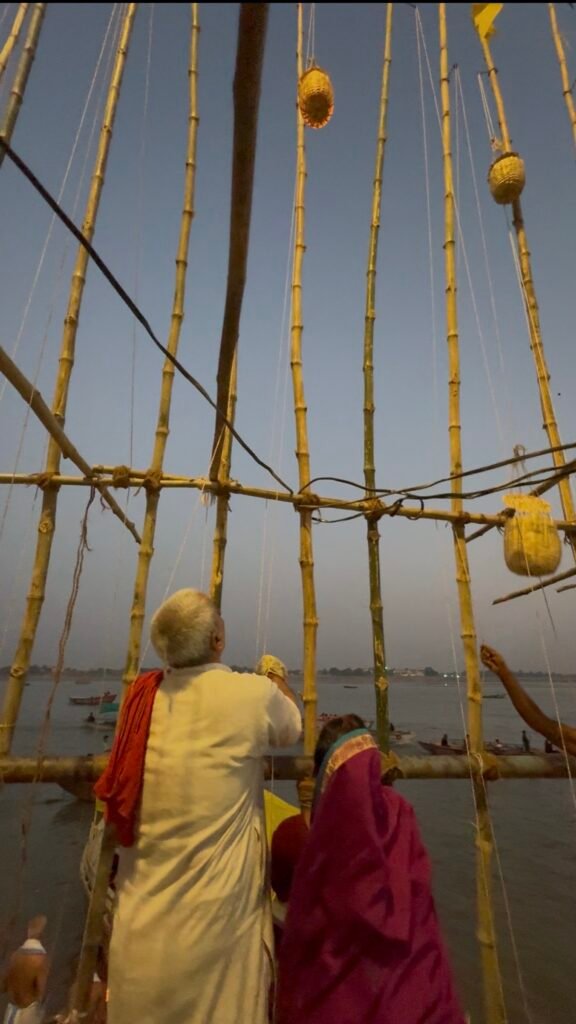
Akash Deep at Gaighat and Other Locations
Apart from Panchganga, Dashashwamedh, Assi and Kedar ghats, Gaighat is also mentioned in accounts of the Akash Deep tradition. However, it would be incorrect to claim that these lamps are lit only at five or six specific ghats.
During Kartik Maas, devotees offer lamps at different ghats, temples, monasteries and homes across Varanasi. The method of lighting, the number of lamps and the scale of the arrangements can vary from one location to another.
Some ghats host larger public ceremonies, while at other locations, devotees light lamps as part of personal or family observances. The list of prominent ghats should therefore not be treated as the complete geographical extent of the tradition.
What Is the Difference Between Morning Bathing and Evening Lamp Lighting?
During Kartik Maas, devotees visit the ghats in the early morning for bathing in the Ganga and performing religious rituals. Akash Deep lamps, on the other hand, are generally associated with evening illumination.
At Panchganga Ghat, accounts describe morning Kartik Snan and the evening lighting of lamps suspended from tall bamboo poles. Some descriptions also refer to the lamps remaining lit overnight until morning.
If a particular event is said to involve lighting lamps in the morning, that detail should be confirmed with local organisers before publication. In a general account of the tradition, it is more accurate to distinguish morning bathing from evening lamp lighting.
Why Does Akash Deep Become Especially Significant During Dev Deepawali?
Dev Deepawali, celebrated on Kartik Purnima, is one of the major religious festivals of Varanasi. On this occasion, the ghats witness extensive lamp offerings, Ganga Aarti ceremonies and other public programmes.
Akash Deep and Dev Deepawali are connected through the wider tradition of offering lamps during Kartik Maas, but they are not identical practices. Akash Deep refers to lamps installed at a height on bamboo poles and traditionally lit over a designated period. During Dev Deepawali, thousands of earthen lamps are also arranged along the steps of the ghats and surrounding areas.
The Hazara Deepstambh at Panchganga Ghat becomes a special attraction during this period. The lighting of numerous lamps on the historic structure highlights the relationship between the architectural heritage of the area and its religious traditions.
Thus, the lamp-lighting practices observed during Kartik Maas form part of a wider religious celebration that reaches its most prominent expression on Kartik Purnima.
Akash Deep: A Living Cultural Heritage of Kashi
The Akash Deep tradition is more than a visual feature of Varanasi’s riverfront. It brings together religious devotion, remembrance of ancestors, and the symbolic significance of light. The historic lamp pillar at Panchganga Ghat, commemorative ceremonies at Dashashwamedh Ghat, and lamp offerings at other locations illustrate different aspects of this tradition.
There is no single, conclusively established historical date that can be identified as the beginning of the entire Akash Deep tradition. The Hazara Deepstambh associated with Panchganga Ghat, dated to 1780 in published accounts, is an important historical reference, but it should not be described as definitive proof that the whole tradition began in that year.
Even today, Akash Deep lamps continue to reflect the cultural identity of Kashi during Kartik Maas. Their light represents devotion, respect for departed ancestors, and the continuity of religious customs passed down through generations.
The Akash Deep lamps of Kashi do more than illuminate its ghats; they keep alive the faith, traditions, and cultural heritage of this ancient city.