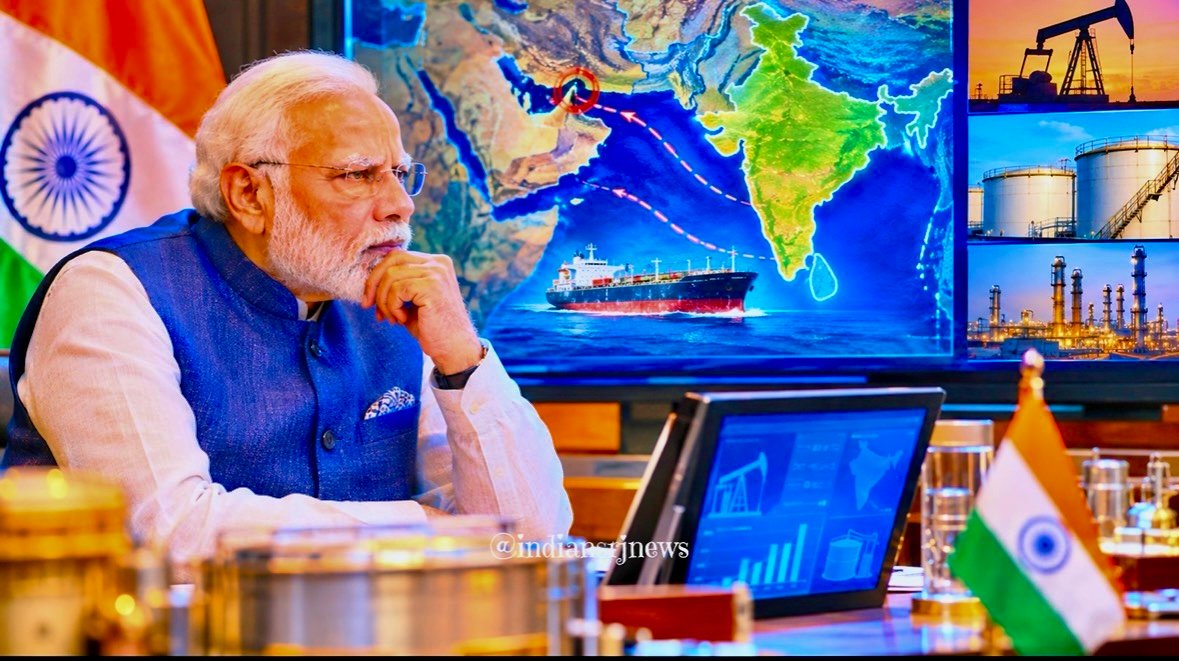
How Is India Managing the Strait of Hormuz Oil Crisis? Inside PM Narendra Modi’s Energy Security Strategy
|
Getting your Trinity Audio player ready...
|
New Delhi: The ongoing conflict in West Asia and disruptions around the Strait of Hormuz have created significant uncertainty in the global energy market. For India, one of the world’s largest crude oil importers, the situation presents a major challenge to energy security.
India depends heavily on imported crude oil to meet domestic demand. Any prolonged disruption in international shipping routes could affect fuel prices, cooking gas supplies, transportation costs, and industrial production.
Under Prime Minister Narendra Modi’s leadership, the Indian government has focused on diversifying oil imports, strengthening domestic refining capacity, increasing LPG production, and maintaining diplomatic engagement with international partners
1. Why Is the Strait of Hormuz Important for India?
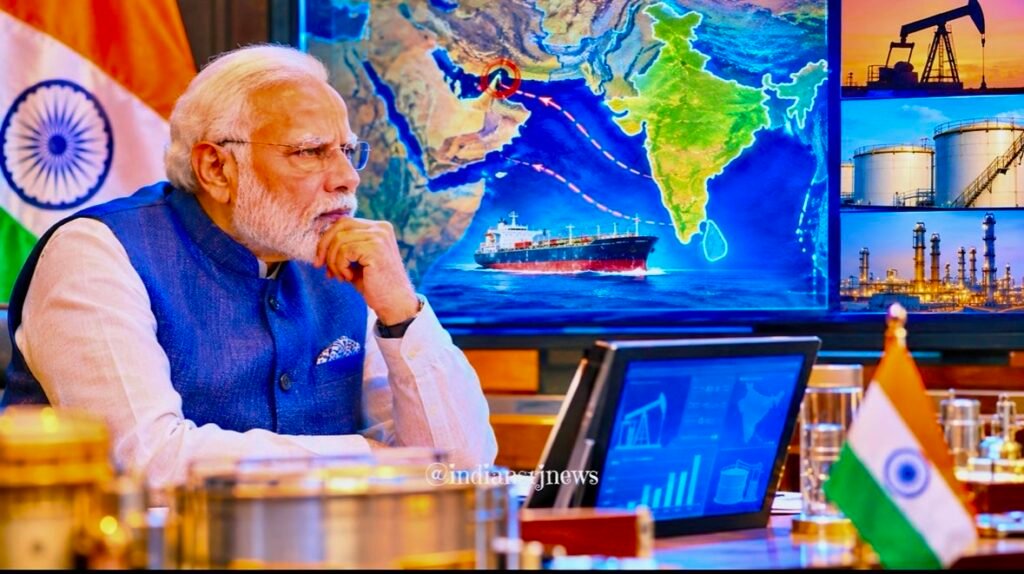
The Strait of Hormuz is a narrow maritime passage located between Iran and Oman. It connects the Persian Gulf with the Gulf of Oman and the Arabian Sea.
Under normal conditions, approximately 20 per cent of the world’s petroleum supplies pass through this strategic route.
Major oil-producing countries, including Saudi Arabia, Iraq, Kuwait, the United Arab Emirates and Qatar, depend on this waterway to transport energy supplies to international markets.
According to information presented in India’s Parliament on March 12, 2026, approximately 45 per cent of India’s crude oil imports passed through the Strait before the crisis.
2. Diversifying Crude Oil Imports
India’s first major strategy has been to reduce dependence on a single geographical region.
The government has encouraged oil companies to explore alternative suppliers, including Russia, the United States and other international producers.
According to the Petroleum Minister’s statement in Parliament on March 12, 2026, India expanded the number of countries supplying crude oil to 40, compared with 27 in 2006–07.
The government also reported that the share of crude oil arriving through routes outside the Strait increased from approximately 55 per cent to 70 per cent during the initial phase of the crisis.
3. Strengthening Domestic Oil Refineries
India’s refining industry plays a crucial role in protecting domestic fuel supplies.
The country has substantial refining capacity and can convert imported crude oil into petrol, diesel, aviation fuel and other petroleum products.
During the crisis, the government focused on maintaining high refinery utilisation and ensuring sufficient domestic production.
This capacity provides an important advantage because India does not have to depend entirely on imported finished petroleum products.
4. Protecting LPG Supplies for Indian Households
Cooking gas availability has been another major concern.
India imports a significant proportion of its LPG requirements, making the country vulnerable to disruptions in Gulf energy shipments.
To protect domestic consumers, the government introduced several measures:
- Increasing LPG production at domestic refineries.
- Arranging supplies from alternative international markets.
- Giving priority to household consumers.
- Regulating commercial LPG distribution.
- Strengthening monitoring to prevent hoarding.
According to the information presented in Parliament on March 12, 2026, domestic LPG production increased by 28 per cent within five days following government directives.
5. Monitoring Petrol and Diesel Availability
The government also strengthened its monitoring system to maintain uninterrupted fuel distribution.
A 24-hour control room was established to monitor petroleum product inventories and supply conditions.
Authorities coordinated with state governments to monitor fuel availability and prevent black marketing and unnecessary stockpiling.
The government also appealed to citizens not to engage in panic buying.
6. PM Narendra Modi’s Role in Managing the Crisis
Energy security has become an important national priority during the West Asia conflict.
Prime Minister Narendra Modi chaired high-level meetings of the Cabinet Committee on Security to review the implications of the crisis.
During the July 30, 2026 meeting, the government reviewed the availability of petroleum products, LPG, natural gas and fertilisers.
The discussions also covered the safety of Indian citizens living in affected regions and the need for coordination between government departments.
The Prime Minister also emphasised the importance of renewable energy and reducing India’s long-term dependence on imported fossil fuels.
7. What Challenges Does India Still Face?
Despite the government’s efforts, several challenges remain.
Rising crude oil prices: Higher international prices can increase India’s import expenditure.
Shipping costs: Maritime security risks can increase transportation and insurance expenses.
LPG dependence: Domestic production helps, but India continues to rely on international suppliers.
Inflation: Higher energy prices can affect transportation, manufacturing, and consumer prices.
Strategic reserves: Expanding emergency petroleum storage remains important for long-term energy security.
8. Will India Run Out of Petrol and Diesel?
A disruption in the Strait of Hormuz does not automatically mean India will run out of petrol or diesel.
India has alternative oil suppliers, domestic refineries, different shipping routes, and petroleum inventories.
These provide a degree of protection against short-term disruptions.
However, a prolonged conflict could increase oil import costs and create inflationary pressure across the economy.
Conclusion
The Strait of Hormuz crisis has become a major test of India’s energy security.
The government has responded through diversified oil procurement, higher domestic refining activity, increased LPG production, international diplomacy and renewable energy development.
Under Prime Minister Narendra Modi’s leadership, India is attempting to protect its energy supplies while reducing its vulnerability to geopolitical disruptions.
The country’s long-term objective is to ensure reliable energy availability, protect domestic consumers and strengthen its ability to withstand future global energy crises.
Disclaimer: This article has been independently written for informational and educational purposes using publicly available information and reports. Every effort has been made to ensure accuracy