Trump, Xi Jinping and Putin Meet in Historic Shenzhen Summit
|
Getting your Trinity Audio player ready...
|
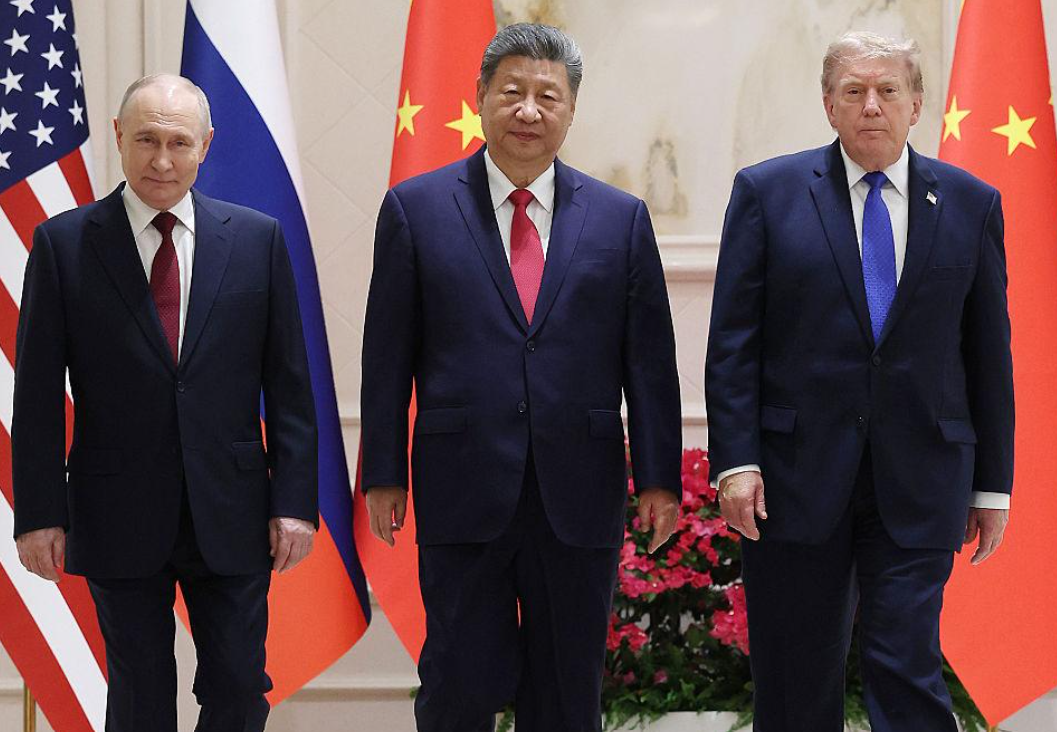
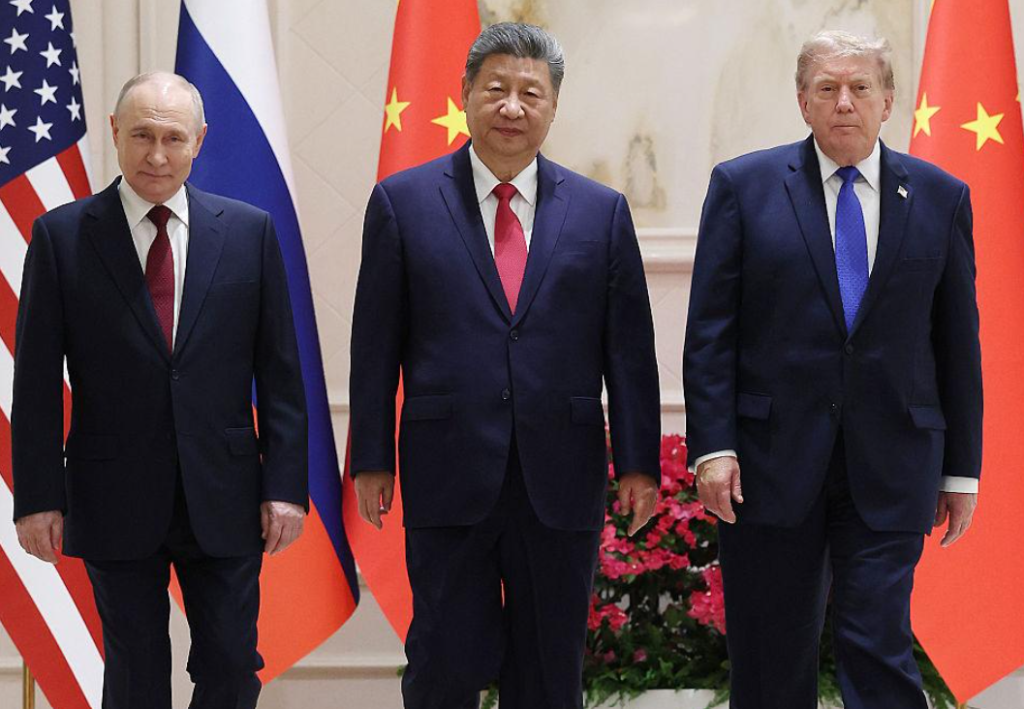
A historic diplomatic meeting involving United States President Donald Trump, Chinese President Xi Jinping and Russian President Vladimir Putin has attracted international attention after the three leaders held a trilateral summit in Shenzhen, China.
The meeting, held on November 19 alongside the Asia-Pacific Economic Cooperation (APEC) gathering, brought together three of the world’s most influential political leaders at a time of rising geopolitical tensions, international conflicts and uncertainty surrounding global economic relations.
The summit was particularly significant because Washington, Beijing and Moscow have major disagreements over security, international trade, military policy, technology and the ongoing conflicts involving Ukraine and Iran.
Although the meeting generated considerable diplomatic attention, it did not produce major breakthroughs on the most contentious international issues.
According to Reuters, the leaders issued a symbolic declaration reaffirming that nuclear war must never be fought and agreed to establish a nuclear risk-reduction dialogue.
However, no timetable for the dialogue was announced, and the meeting did not produce a concrete arms-control agreement.
Why Did the Three Leaders Meet?
The meeting took place against the backdrop of increasing international tensions.
The United States, China and Russia possess enormous economic, military and diplomatic influence.
Their relationship has become increasingly important to global stability, particularly because disagreements between these countries can affect international trade, energy markets, technological development and military security.
President Trump has repeatedly promoted direct engagement with foreign leaders as a way to resolve international disagreements.
His approach focuses on high-level personal diplomacy, bilateral meetings and direct negotiations.
The Shenzhen summit reflected this strategy by bringing together leaders who have sharply different views on several global issues.
Nuclear Security Emerges as a Central Issue
One of the most important subjects discussed during the summit was nuclear security.
The three countries possess some of the world’s largest nuclear arsenals, making their cooperation particularly important for international security.
Following the meeting, the leaders issued a declaration stating that nuclear war must never be fought.
They also agreed to pursue a nuclear risk-reduction dialogue.
However, arms-control experts noted that a declaration alone cannot guarantee a reduction in nuclear weapons or prevent future military escalation.
A meaningful agreement would require further negotiations, transparency and mechanisms to reduce the risk of accidental military confrontation.
The lack of a specific timetable for the proposed dialogue also raises questions about how quickly the initiative will move forward.
Ukraine War Remains a Major Point of Disagreement
The conflict between Russia and Ukraine remains one of the most important challenges facing international diplomacy.
The meeting between Trump and Putin attracted particular attention because the United States has been involved in efforts to negotiate an end to the conflict.
Ukraine and several European countries have expressed concerns that direct negotiations between major powers could influence decisions about the country’s future without adequate participation from Kyiv.
According to Reuters, the Shenzhen summit did not produce a major breakthrough on Ukraine.
European leaders also expressed concern about their absence from the meeting.
Germany’s Chancellor Friedrich Merz reportedly described the gathering as primarily a photo opportunity.
Following the summit, American representatives continued diplomatic discussions involving Ukraine and European partners in Berlin.
The key issue remains whether any future peace arrangement can provide credible security guarantees and respect Ukraine’s sovereignty.
Iran Conflict and Middle East Tensions
The situation involving Iran also remained unresolved.
The United States has been facing continuing tensions with Tehran, and the conflict has become a major issue in international diplomacy.
The Shenzhen meeting did not produce an announced settlement or significant breakthrough on Iran.
The absence of concrete progress means that international attention will continue to focus on diplomatic efforts, regional security and the possibility of further escalation.
The situation is particularly important for global energy markets because instability in the Middle East can affect oil transportation, shipping routes and international fuel prices.
China Strengthens Its Diplomatic Position
For China, hosting the summit provided an opportunity to strengthen its international diplomatic profile.
President Xi Jinping brought together two major global leaders at a time when international politics are increasingly shaped by competition between powerful countries.
China has also been promoting international trade cooperation and technological development through the APEC platform.
The gathering allowed Beijing to present itself as an important centre for international dialogue.
However, disagreements between Washington and Beijing remain significant, particularly over advanced semiconductor technology, artificial intelligence and trade restrictions.
Russia’s International Position
For Russia, the meeting provided an opportunity to participate in high-level diplomatic discussions with the American and Chinese presidents.
The summit allowed Moscow to demonstrate that it continues to play an important role in global security discussions despite tensions with Western countries.
However, Russia did not announce major concessions on Ukraine or other disputed issues during the meeting.
What Does This Mean for the Global Economy?
The relationship between the United States, China and Russia has consequences beyond political diplomacy.
Their decisions influence international investment, supply chains, energy markets, technology industries and global trade.
Any improvement in relations could reduce uncertainty for international businesses.
On the other hand, continued disagreements over trade restrictions, artificial intelligence and strategic resources could create additional pressure on the global economy.
The APEC summit also highlighted the importance of technological cooperation and the need to maintain open international trade.
Conclusion
The Shenzhen summit has become an important diplomatic event because it brought together the leaders of three major global powers.
However, the absence of concrete agreements on Ukraine, Iran, Taiwan, trade and artificial intelligence shows that major international disagreements remain unresolved.
The declaration on nuclear security is a positive diplomatic signal, but its long-term importance will depend on whether the three countries translate their statements into meaningful negotiations.
The international community will now watch closely to see whether this historic meeting produces lasting diplomatic progress or remains primarily a symbolic exercise in high-level diplomacy.