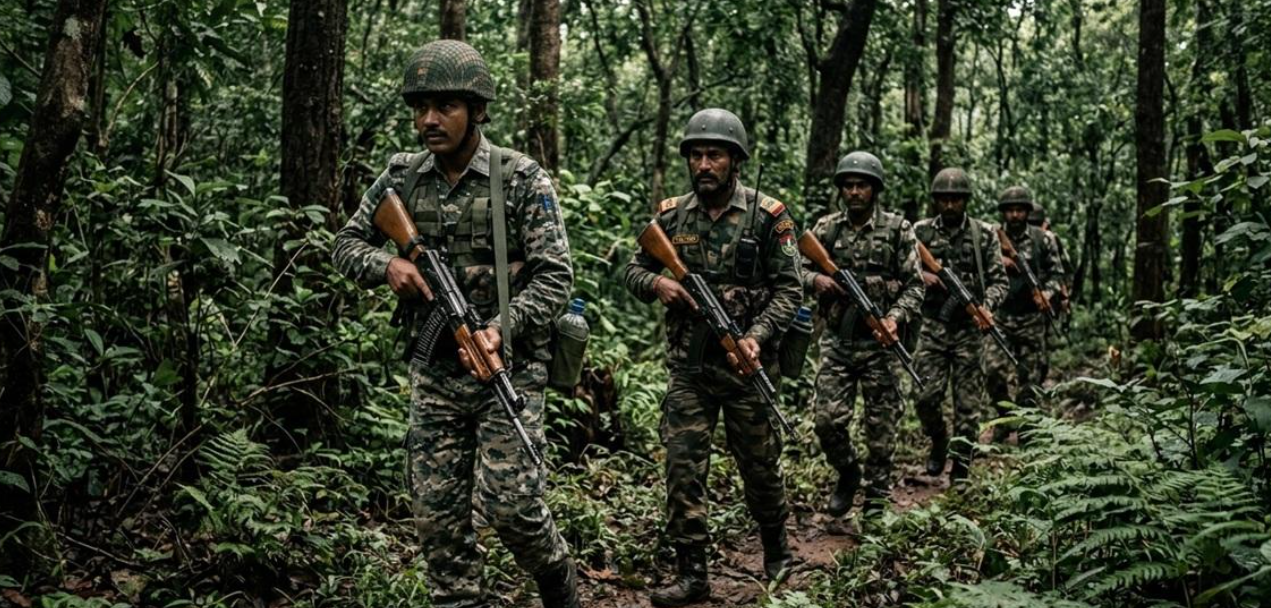
India Reports Major Progress Against Left-Wing Extremism
|
Getting your Trinity Audio player ready...
|
India has reported a major development in its campaign against Left-Wing Extremism (LWE), with a government backgrounder released on November 24, 2026, stating that the number of LWE-affected districts has declined from 126 in 2014 to zero by March 2026.
The development represents a significant milestone in India’s internal security efforts.
The government’s strategy has combined security operations with infrastructure development, improved communication facilities and rehabilitation programmes.
Understanding Left-Wing Extremism
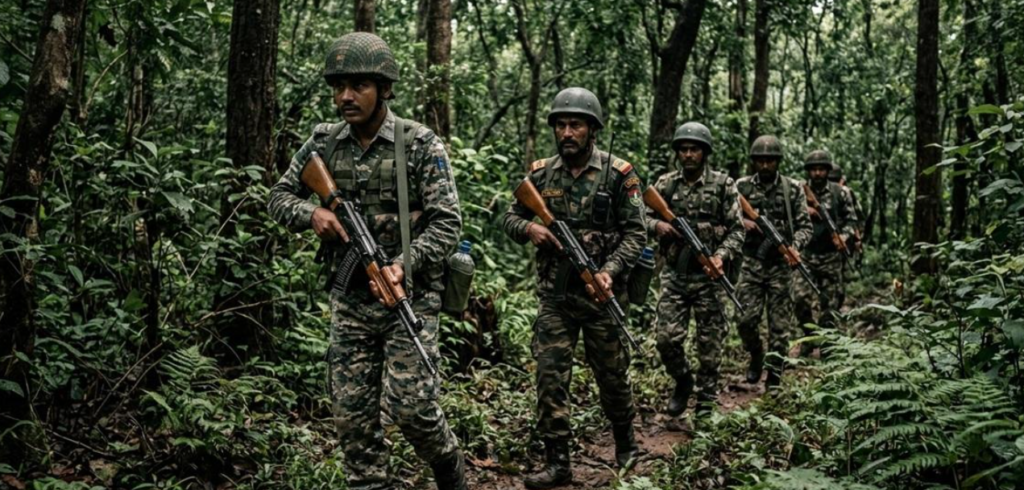
Naxalism originated in the Naxalbari region of West Bengal in 1967. Over the following decades, armed extremist activities spread to several rural and tribal regions across India.
States such as Chhattisgarh, Jharkhand, Odisha and Maharashtra faced prolonged challenges related to insurgency and internal security.
Security Infrastructure Expansion
According to the government backgrounder, 668 new security camps were established during the period, alongside 615 fortified police stations and 68 night-landing helipads.
These facilities have helped strengthen the security infrastructure in remote and previously affected areas.
Decline in Violence
Government figures show a reduction in reported incidents of LWE-related violence from 870 in 2014 to 33 in 2026 up to July 29.
Reported fatalities declined from 310 to 12 over the corresponding comparison.
Approximately 8,526 individuals had surrendered by November 2026, according to the backgrounder.
Infrastructure and Development
Development initiatives have also played an important role.
The government reported the construction of 15,189 kilometres of roads under relevant programmes and the commissioning of 9,561 mobile towers.
Approximately 96% of villages in the most affected areas reportedly have mobile connectivity.
Better connectivity can improve access to education, healthcare, administration and economic opportunities.
Challenges Ahead
Despite the reported progress, continued attention will be necessary to maintain peace and prevent extremist activities from returning.
Long-term stability requires employment opportunities, public services, community participation and effective administration.
Conclusion
The reported decline in LWE-affected districts marks an important milestone in India’s internal security efforts. Sustaining this progress will require continued development, rehabilitation and public trust.