COP31 Climate Summit Faces Major Deadlock as Nations Fail to Agree on Fossil Fuel Reduction
|
Getting your Trinity Audio player ready...
|
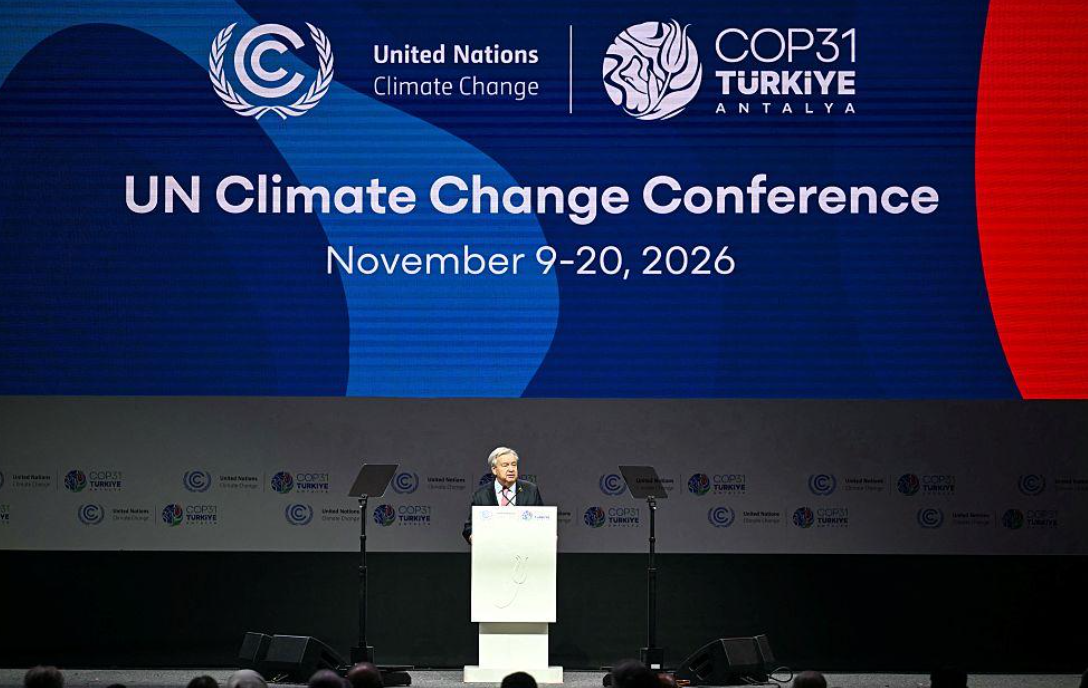
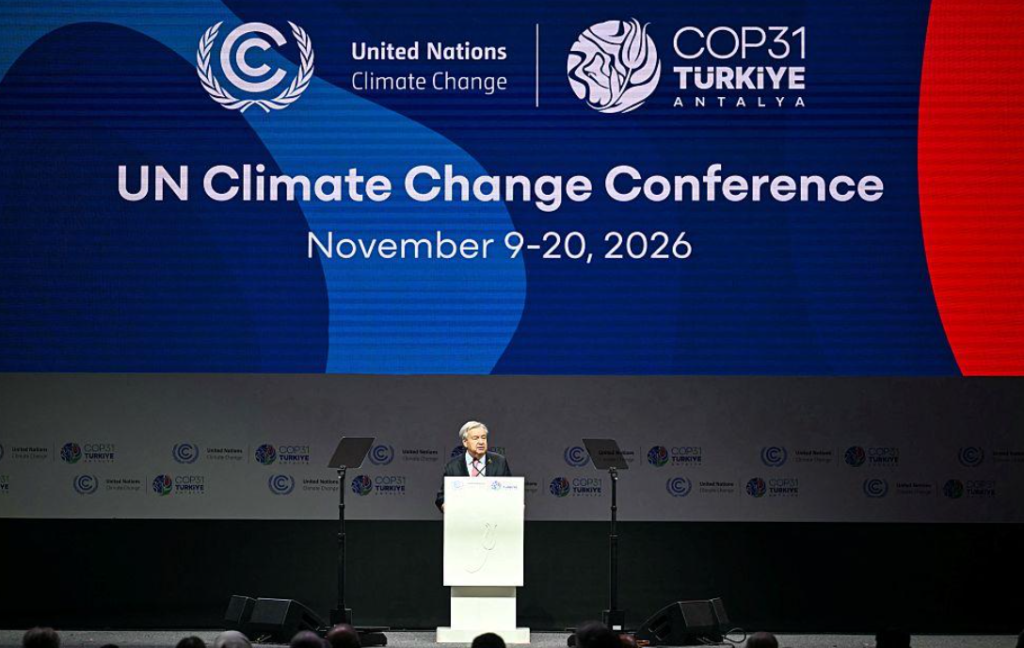
The United Nations Climate Change Conference, COP31, has entered its final stage in Antalya, Turkey, amid growing disagreements between countries over fossil fuel consumption, global warming and financial assistance for climate-vulnerable nations.
The two-week international conference has brought together government representatives, climate negotiators, environmental organisations and other stakeholders to discuss strategies for addressing the global climate crisis.
However, negotiations have faced significant challenges, particularly regarding the future of coal, oil and natural gas.
As the summit approaches its scheduled conclusion on November 20, countries remain divided over how quickly the global economy should transition away from fossil fuels.
The disagreement is particularly important because scientists have repeatedly warned that continued greenhouse gas emissions will increase the frequency and intensity of extreme weather events.
These include heatwaves, droughts, floods, wildfires and other climate-related disasters.
1. Fossil Fuel Reduction Becomes the Biggest Disagreement
One of the central issues at COP31 has been whether participating countries should agree to stronger commitments to reduce their dependence on fossil fuels.
Coal, oil and natural gas remain major sources of energy for transportation, electricity generation, manufacturing and industrial production.
However, their use releases greenhouse gases, particularly carbon dioxide, which contribute to global warming.
Several countries have called for a clearer international roadmap to reduce fossil fuel consumption.
Climate-vulnerable nations have argued that delaying the transition will increase the economic and environmental costs faced by countries already experiencing extreme weather conditions.
However, negotiations have struggled to produce a strong consensus.
According to the Associated Press report published on November 19, negotiators were still seeking meaningful commitments to reduce fossil fuel emissions as the conference entered its final day.
The absence of stronger commitments has raised concerns among environmental organisations and climate campaigners.
2. Developing Countries Demand More Climate Finance
Climate finance has emerged as another major point of disagreement.
Developing countries argue that they are disproportionately affected by climate change despite contributing relatively little to historical greenhouse gas emissions.
Many vulnerable nations face increasing costs associated with floods, droughts, rising sea levels and damage to infrastructure.
They therefore want developed countries to provide greater financial assistance for climate adaptation and disaster recovery.
Climate finance is important because poorer countries often lack the financial resources required to build stronger infrastructure, improve agricultural resilience and protect coastal communities.
For example, island nations facing rising sea levels require investment in coastal protection, emergency planning and water management.
Similarly, African countries experiencing severe drought conditions need financial support for agriculture, irrigation and food security.
At COP31, representatives from climate-vulnerable nations expressed concerns that existing international funding arrangements were insufficient to meet their requirements.
The disagreement highlights the continuing gap between the financial commitments announced at international climate conferences and the actual resources available to vulnerable communities.
3. Renewable Energy Target Raises Questions
Another important discussion at COP31 concerns the role of electricity in global energy consumption.
A proposal discussed during the negotiations seeks to increase electricity’s share of total global energy consumption from approximately 21% to 35% by 2035.
The proposal places emphasis on renewable energy sources such as solar, wind and hydropower.
Increasing electrification could help reduce dependence on fossil fuels in sectors such as transportation, heating and industrial production.
However, the proposal has also raised concerns because it does not necessarily prevent continued use of coal and other fossil fuels.
Countries have different energy requirements and economic conditions.
Some economies continue to depend heavily on coal-based electricity, while others have made substantial investments in renewable energy.
The challenge is to establish an international transition strategy that reduces emissions without creating severe economic disruption or energy shortages.
4. United States Absence Adds Complexity to Negotiations
The participation of major global economies is essential for effective climate negotiations.
However, the United States was absent from the summit for the second consecutive year, according to the Associated Press.
The country is one of the world’s largest greenhouse gas emitters and plays a significant role in international energy markets and technological development.
Its absence has complicated discussions because international climate agreements require cooperation among major emitting economies.
China, the United States, India and other industrial economies have significant influence over global emissions trends.
Without meaningful cooperation from major economies, reaching ambitious international climate targets becomes more difficult.
The absence also raises questions about how countries will coordinate their future climate commitments.
5. The 1.5°C Climate Target Faces Growing Pressure
The 2015 Paris Agreement established an international objective of limiting global warming to well below 2°C above pre-industrial levels while pursuing efforts to limit the increase to 1.5°C.
The 1.5°C threshold has become a major reference point in international climate policy.
However, the latest assessments indicate that current climate commitments are insufficient to guarantee that the target will be achieved.
Climate Action Tracker has warned that progress in slowing global warming has effectively stalled over the past five years.
According to the assessment cited by AP, the world is expected to exceed the 1.5°C threshold.
Without substantially deeper emissions reductions, global temperatures could rise approximately 2.6°C above pre-industrial levels by the end of the century.
Such an increase could significantly intensify climate-related risks.
6. Why Does COP31 Matter for India?
The developments at COP31 are particularly important for countries such as India.
India faces multiple climate-related challenges, including extreme heat, irregular monsoon rainfall, flooding, drought and coastal vulnerability.
Agriculture remains particularly sensitive to changing rainfall patterns and rising temperatures.
A delayed monsoon, prolonged heatwave or extreme rainfall event can affect crop production, rural incomes and food prices.
Indian cities also face growing challenges involving air pollution, water availability and urban flooding.
India has been expanding its renewable energy capacity, particularly solar and wind power.
However, the country also needs to balance its climate objectives with economic development, electricity demand and energy security.
International climate finance and technology cooperation are therefore important for supporting India’s energy transition.
The negotiations at COP31 could influence future international funding arrangements, clean energy investments and climate policy discussions.
7. What Happens After COP31?
The final stage of the conference is expected to focus on reaching agreement over climate commitments, financing and international cooperation.
The outcome will be important for determining whether countries can establish stronger mechanisms to address emissions and support vulnerable populations.
However, even if an agreement is reached, its success will depend on implementation.
Governments will need to translate international commitments into domestic policies, investment programmes and measurable emissions reductions.
Businesses will also have an important role in developing cleaner technologies and improving energy efficiency.
Climate adaptation will remain equally important because many countries are already experiencing the effects of global warming.
Conclusion
COP31 has highlighted the continuing difficulty of building international consensus on climate action.
While countries recognise the seriousness of global warming, disagreements over fossil fuels, financial responsibility and energy security continue to slow negotiations.
The growing concerns surrounding the 1.5°C target demonstrate the urgency of stronger climate policies.
For developing nations, particularly those vulnerable to extreme weather events, international climate finance and technology cooperation will remain essential.
The outcome of COP31 will therefore be important not only for governments but also for businesses, communities and future generations.