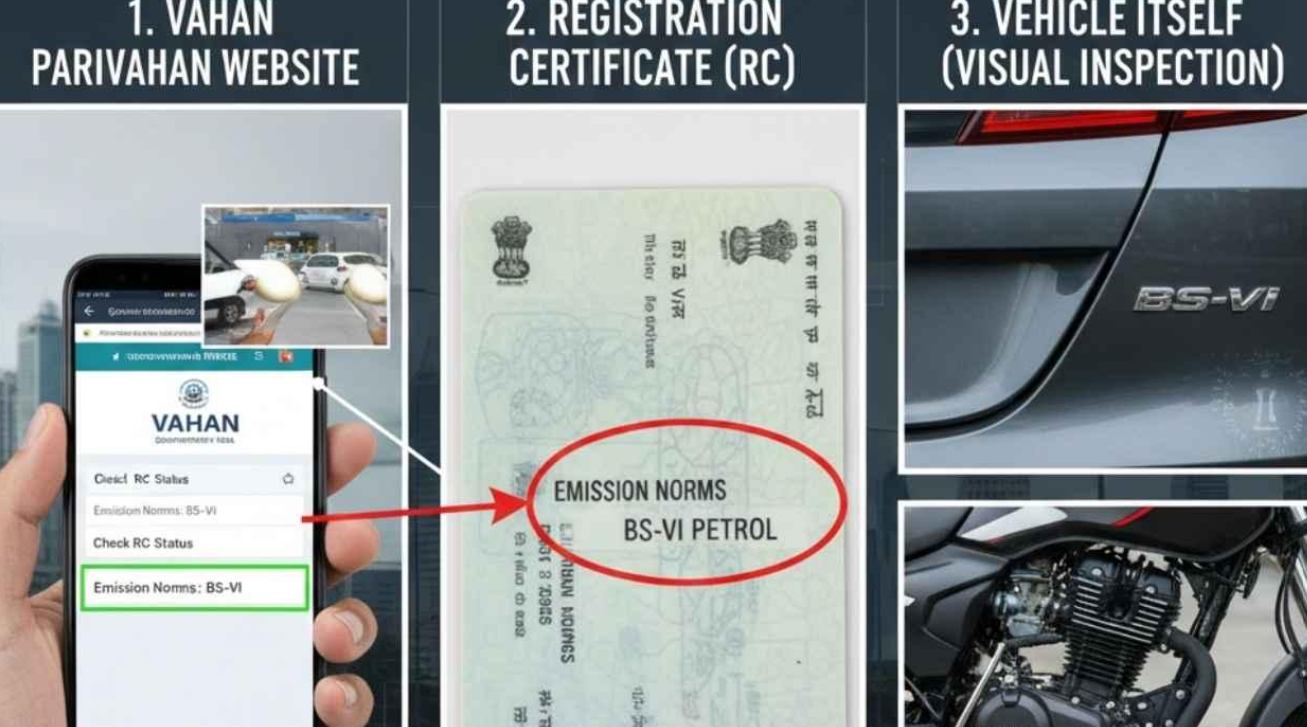
New PUC Rules for Vehicle Owners: BS-VI Private Vehicles Get Three-Year Validity
|
Getting your Trinity Audio player ready...
|
The Central Government has introduced significant changes to the validity period of Pollution Under Control (PUC) certificates, bringing relief to owners of newer BS-VI vehicles while maintaining more frequent emission checks for older vehicles.
The Ministry of Road Transport and Highways (MoRTH) has revised the certificate renewal schedule based on three important factors: the vehicle’s emission standard, its age and whether it is registered for private or commercial transportation.
The most significant change concerns private BS-VI-compliant vehicles that are up to six years old. Under the revised framework, these vehicles will now receive PUC certificates valid for three years instead of the earlier one-year renewal interval.
The move is expected to reduce the compliance burden on millions of vehicle owners who previously had to visit authorised emission testing centres regularly to renew their certificates.
The revised provisions were introduced through the Central Motor Vehicles (Sixteenth Amendment) Rules, 2026, which amend Rule 115 of the Central Motor Vehicles Rules, 1989.
The Ministry notified the amendment on November 13, 2026, through G.S.R. 991(E). The Ministry subsequently explained the revised framework in a press release issued on November 19.
The government’s stated objective is to align emission-testing frequency with vehicle age and emission standards. It also aims to reduce unnecessary administrative requirements for owners of newer vehicles while maintaining monitoring of older vehicles.
The decision is particularly relevant as several Indian cities continue to face serious air-quality challenges, especially during the winter season.
1. New PUC Validity Schedule: How Long Will Each Vehicle Certificate Remain Valid?
The revised rules establish different certificate validity periods for vehicles depending on their emission category and age.
The schedule is designed to distinguish between newer vehicles complying with BS-VI emission standards and older vehicles that require more frequent emission monitoring.
The revised validity periods are as follows:
| Vehicle category | PUC certificate validity |
|---|---|
| BS-I, BS-II and BS-III vehicles | 3 months |
| BS-IV vehicles | 6 months |
| BS-VI private vehicles up to 6 years | 3 years |
| BS-VI private vehicles over 6 to 10 years | 1 year |
| BS-VI private vehicles over 10 years | 6 months |
| BS-VI transport vehicles up to 6 years | 2 years |
| BS-VI transport vehicles over 6 to 10 years | 1 year |
| BS-VI transport vehicles over 10 years | 6 months |
An important distinction is that the rules do not provide the same validity period for private and commercial vehicles.
For example, a private BS-VI car that is five years old will qualify for a three-year PUC validity period. However, a BS-VI commercial transport vehicle of the same age will receive a two-year validity period.
Similarly, private BS-VI vehicles older than six years will need annual renewal, while vehicles exceeding ten years will require fresh emission certification every six months.
This age-based structure is intended to ensure that older vehicles remain under more regular emission surveillance.
2. Why Are New BS-VI Private Vehicles Getting Three-Year PUC Validity?
The extension of PUC certificate validity for newer BS-VI private vehicles is the most significant feature of the revised policy.
BS-VI, or Bharat Stage VI, represents India’s advanced vehicle emission standard designed to reduce harmful pollutants released by automobiles.
The BS-VI emission standards became applicable across India from April 2020.
Under these standards, automobile manufacturers were required to introduce improved engine technologies and more advanced emission-control systems.
Depending on the vehicle and fuel type, these technologies include improved fuel injection, catalytic converters, diesel particulate filters and selective catalytic reduction systems.
Such technologies help reduce harmful emissions, including nitrogen oxides, particulate matter and other pollutants.
The government has therefore introduced longer PUC validity periods for newer vehicles that comply with BS-VI emission standards.
This is expected to make the certification process more convenient for vehicle owners while reducing repeated visits to testing centres.
However, a longer certificate validity period should not be interpreted as a guarantee that every newer vehicle will remain pollution-free.
Vehicle maintenance, engine condition, fuel quality and the proper functioning of emission-control equipment can all influence actual emissions.
A poorly maintained BS-VI vehicle can still produce emissions beyond the prescribed limits.
Therefore, vehicle owners must continue following manufacturer-recommended servicing schedules and ensure that their vehicles remain in proper operating condition.
3. Older BS-I, BS-II, BS-III and BS-IV Vehicles Face More Frequent Testing
While the government has relaxed the renewal schedule for newer BS-VI vehicles, older emission categories will continue to face more frequent certification requirements.
Under the revised rules, vehicles complying with BS-I, BS-II and BS-III standards will have a PUC certificate validity of three months.
For BS-IV vehicles, the validity period will be six months.
This means owners of older vehicles will need to undergo emission testing more frequently than owners of newer BS-VI vehicles.
The policy is based on the understanding that older vehicles may require closer monitoring because their engines and emission-control components can deteriorate over time.
Poor maintenance, engine wear, damaged exhaust systems and malfunctioning emission-control devices can increase the amount of pollutants released into the atmosphere.
This is particularly relevant in major Indian cities where high traffic density and large numbers of older vehicles contribute to air-quality problems.
However, emission standards alone cannot determine the actual pollution level of an individual vehicle.
The vehicle’s present mechanical condition and its performance during an authorised emission test remain important.
The shorter validity period for older emission categories is intended to ensure that these vehicles undergo more regular monitoring.
4. Separate PUC Rules for Commercial and Transport Vehicles
The amended rules also establish a separate renewal schedule for BS-VI transport vehicles.
Transport vehicles include vehicles registered for carrying passengers or goods for commercial and public transportation purposes.
These vehicles often cover longer distances and operate more frequently than privately used automobiles.
Consequently, the government has established a different certificate validity schedule for this category.
BS-VI transport vehicles up to six years old will receive a PUC certificate valid for two years.
Vehicles older than six years but not exceeding ten years will require annual renewal.
Those exceeding ten years will need a fresh certificate every six months.
For example, a transport company operating a five-year-old BS-VI truck will not need to renew its PUC certificate annually under the revised schedule. It will receive a two-year validity period.
However, if the same vehicle is eight years old, the applicable validity will be one year.
This approach is expected to provide some compliance relief to commercial transport operators while retaining regular monitoring of older vehicles.
The revised schedule may also help transport companies plan their vehicle maintenance and certification activities more efficiently.
5. What Happens to Existing PUC Certificates?
The government has also clarified how the new rules will apply to certificates issued before the amendment came into force.
Existing certificates will not automatically become invalid merely because the new rules have been introduced.
Under the transitional provision, the revised validity schedule will apply to an existing PUC certificate only when it undergoes its first renewal after the commencement of the amended rules.
This is an important clarification because it prevents confusion among vehicle owners who already possess valid certificates.
For example, if a private BS-VI vehicle currently has a certificate that expires in December 2026, the owner does not need to immediately obtain another certificate simply because the new framework has been announced.
The revised schedule will be applied when the existing certificate comes up for its first renewal under the new rules.
The provision is intended to provide a smooth transition from the earlier certification system to the revised framework.
It also reduces the possibility of unnecessary visits to testing centres immediately after the amendment.
6. New Rules Clarify When a Renewed PUC Certificate Becomes Valid
Another important feature of the amendment concerns the effective date of a renewed PUC certificate.
The government has clarified the procedure for renewal applications submitted shortly before or after the existing certificate expires.
If a vehicle owner applies for renewal within the ten days preceding the expiry of the existing certificate, the renewed certificate will take effect from the date on which the existing certificate expires.
For example, consider a vehicle whose current PUC certificate expires on November 30, 2026.
If the owner obtains a renewal on November 25, the new certificate will take effect from November 30.
However, if the owner applies for renewal after the existing certificate has already expired, the new certificate will take effect from the actual renewal date.
For example, if a certificate expires on November 30 and the owner obtains a new certificate on December 5, the new validity will begin on December 5.
This provision makes the renewal process more transparent and clarifies how certificate validity should be calculated.
Vehicle owners should therefore check their certificate expiry dates and avoid unnecessary delays.
7. What Is a PUC Certificate and Why Is It Important?
A Pollution Under Control certificate is an official document confirming that a vehicle has passed the prescribed emission test.
It forms an important part of India’s vehicle pollution monitoring framework.
Under the Motor Vehicles Act and applicable Central Motor Vehicles Rules, vehicles are required to possess valid PUC certification where applicable.
The testing process measures emissions released by a vehicle under prescribed operating conditions.
For petrol and CNG vehicles, testing generally includes measurements of carbon monoxide and hydrocarbons.
For diesel vehicles, the test includes the measurement of smoke emissions according to applicable standards.
The vehicle is taken to an authorised PUC testing centre, where specialised equipment is used to measure its emissions.
If the vehicle meets the applicable emission limits, the testing centre issues a certificate.
If the vehicle fails the test, the owner may need to repair the relevant mechanical or emission-control problem before obtaining certification.
A PUC certificate is therefore important not only for regulatory compliance but also for monitoring the environmental impact of vehicles operating on public roads.
8. Does the New Rule Mean BS-VI Vehicle Owners No Longer Need Pollution Testing?
The introduction of longer PUC validity periods has raised questions among vehicle owners about whether newer BS-VI vehicles will be exempt from regular emission testing.
The answer is no.
The government has extended the validity of PUC certificates for eligible vehicles. It has not abolished emission-control requirements.
A three-year certificate validity means that eligible private BS-VI vehicles will have a longer period before their next scheduled certification renewal.
It does not mean that vehicles can continue operating regardless of their actual emission performance.
If a vehicle develops engine problems, emits excessive smoke or has a malfunctioning emission-control system, it may still require inspection and repairs.
Vehicle owners should also understand that a PUC certificate is not a complete vehicle fitness certificate.
It primarily relates to compliance with prescribed emission-testing standards.
Regular servicing, proper engine maintenance, timely replacement of filters and maintenance of exhaust systems remain important.
9. Why the Revised PUC Rules Matter for Cities Such as Delhi, Lucknow and Varanasi
Air pollution continues to be a major environmental challenge across several Indian cities.
Delhi-NCR frequently experiences deteriorating air quality during winter, while cities such as Lucknow, Kanpur and Varanasi also face concerns about urban air pollution.
Vehicular emissions are among the important contributors to pollution in urban areas.
High traffic density, congestion, poorly maintained engines and older commercial vehicles can all contribute to harmful emissions.
In a growing city such as Varanasi, increasing vehicle numbers and urban transport requirements make emission monitoring an important part of environmental management.
The revised PUC framework attempts to balance two objectives.
First, it reduces repetitive certification requirements for newer vehicles that comply with advanced emission standards.
Second, it maintains shorter testing intervals for older vehicles that may require more frequent monitoring.
However, changing the validity period of a certificate alone cannot solve the problem of urban air pollution.
Effective pollution control also requires better public transport, cleaner fuel, proper vehicle maintenance, improved emission-testing infrastructure and effective enforcement.
The quality and reliability of authorised PUC testing centres will be particularly important in determining how successfully the revised framework works.
10. Where Can Vehicle Owners Obtain or Renew Their PUC Certificates?
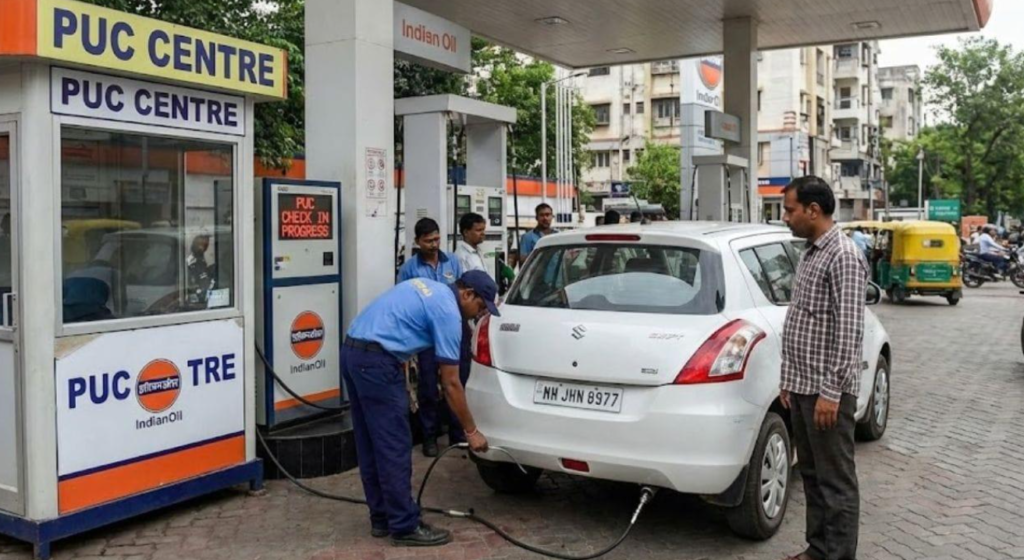
Vehicle owners can obtain or renew their PUC certificates through authorised pollution-testing centres.
These centres operate at various petrol pumps and other authorised testing locations across the country.
Owners should verify that the testing centre is authorised and that the information recorded during testing is accurate.
They should check:
- The vehicle registration number.
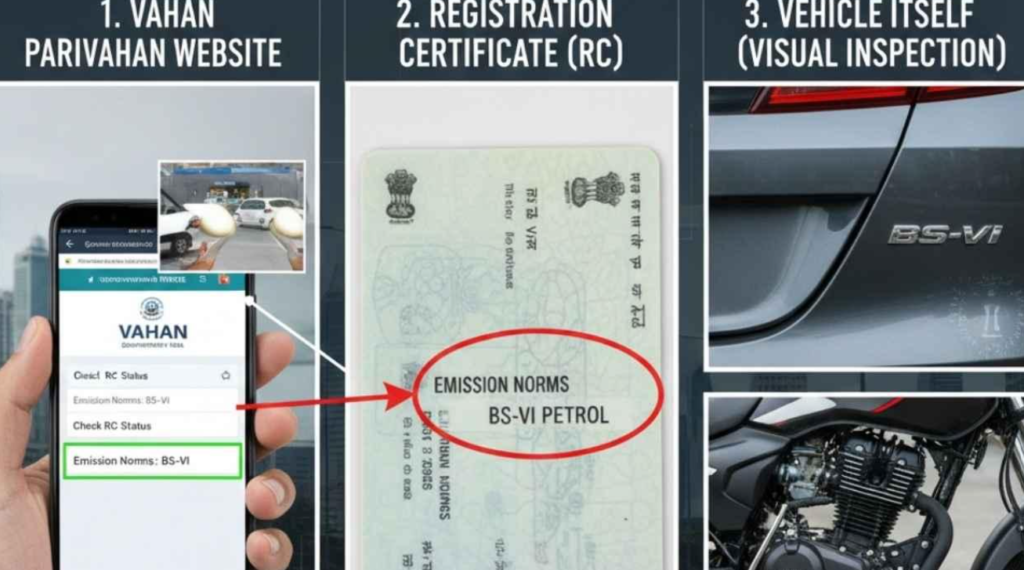
- The vehicle’s emission category.
- The certificate issue date.
- The certificate expiry date.
- The accuracy of the vehicle category and registration details.
Vehicle owners can also access official vehicle-related services through the Parivahan Sewa Portal.
Keeping a digital or printed copy of the certificate is advisable.
Conclusion: New PUC Rules Bring Relief to Newer Vehicles While Strengthening Monitoring of Older Ones
The government’s revised PUC certificate framework represents an important change in India’s vehicle emission compliance system.
The three-year validity period for private BS-VI vehicles up to six years old is expected to reduce the frequency of certificate renewals for millions of eligible vehicle owners.
The two-year validity period for newer BS-VI transport vehicles also provides some relief to commercial operators.
At the same time, older BS-I, BS-II, BS-III and BS-IV vehicles will continue to face shorter certification intervals.
The policy aims to make the certification system more practical by connecting testing frequency with vehicle age and emission standards.
Its success, however, will depend on effective implementation, reliable testing equipment and proper monitoring of vehicle emissions.
For vehicle owners, the most important step is to understand the new validity schedule, check their vehicle’s registration date and emission category, and ensure that their PUC certificates remain valid.
The broader objective remains unchanged: reducing vehicular pollution while making regulatory compliance more efficient for citizens.