Israel’s New Parliament Faces Political Uncertainty as Coalition Talks Begin
|
Getting your Trinity Audio player ready...
|
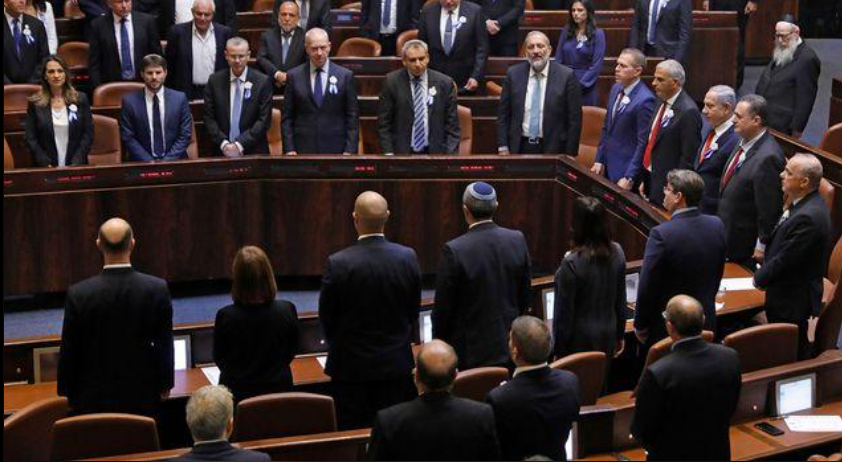
JERUSALEM – Israel has entered another important phase of political uncertainty following the swearing-in of its newly elected parliament. The country’s latest election has produced a divided political landscape, making the formation of a stable government a difficult challenge.
The new Knesset, Israel’s 26th parliament, began its work after the October 27 election. However, no political bloc has secured enough seats to independently establish a government.
Former military chief Gadi Eisenkot is now facing the challenging task of bringing together enough parliamentary support to form a governing coalition.
The election results have created a complicated political situation. Benjamin Netanyahu’s Likud-led alliance holds 53 seats in the 120-member parliament, while Eisenkot’s political group and its partners have 48 seats. Arab-led parties hold the remaining 19 seats, creating another important factor in coalition negotiations.
President Isaac Herzog has urged political leaders to find common ground and avoid another election. His appeal reflects concerns that prolonged political instability could affect governance and the country’s ability to address major domestic and international challenges.
Eisenkot has until December 6 to form a government, with a possible extension until December 20. His options include negotiations with different political groups or exploring the possibility of a broader unity arrangement.
The new parliament is also expected to debate several important political issues, including proposals concerning the October 7, 2023 attacks, judicial changes and possible limits on the prime minister’s tenure.
Israel’s political developments are being closely watched internationally because of their potential impact on regional diplomacy, security policy and relations with neighbouring countries.
The coming weeks will determine whether the newly elected parliament can produce a stable government or whether the country may face another round of political uncertainty.